I'll get to some more Glee-bashing tomorrow (Sandinista! will eventually get its treatment as well-- we have plenty of time). For now, I have a question to pose. On Valentine's Day, I plan to post a special Valentine's Rockaliser mix CD, and I need your help. Which of these themes sounds the most conducive to good music-pickin'?
1. The Ambivalent playlist: Either songs about how people don't feel strongly about love, or songs about how love turns you into a cowering, insipid cipher of a man/woman.
2. The Classic Valentine's playlist: Love songs are the cancer of popular music--they limit the functionality of other types of songs, multiplying and metastasizing to the point where you either buy into the madness unreservedly or resolve how actually meaningless and miserable life can be. Nevertheless, putting this together would take like two seconds.
3. The Anti-Valentine's playlist: Probably my least favorite type of playlist, as I don't want to be playing "Love Stinks" or an equally obvious number. That would just make me sound bitter and sullen!
4. The Songs About Unrequited Love playlist: Sound Opinions is doing that theme this week, so chances are slim. Still, if I had to choose, I'd probably just throw this song on nine times and call it a day.
5. The Aggro playlist: this would be a nonstop rush of the hardest-rocking songs I can think of, with no letup, no ballads, not even anything slower than, say, 130 BPM. Nothing to do with the holiday whatsoever. This is probably my personal favorite.
6. The "Goodie Bag" playlist: This collection of divergent tunes would probably include the Goodie Mob song "Goodie Bag," which has one of my favorite Cee-Lo verses (peep it starting at 2:03 America! I almost cried when I first heard this verse, it is so good). Don't know what else I would throw on it, but know that I listen to a lot of Souls Of Mischief and the Boys these days. And Dedringer.
Vote below. Or not. If you don't, I'll carry on as if someone cares.
EDITED: Does "Valentine's" normally have an apostrophe?
Tuesday, February 8, 2011

Monday, February 7, 2011
Glee Against The Music: Nathan Watches The Post-Superbowl Show (Part One)
It might be said, many years from now, that Glee came to stand for the last thundering death rattle of the flouted, rotting corpse that was once the American music industry, eaten from within by its own preponderance for recycling easy-listening classicist junk, forced in a last-ditch rescue effort to brand American Idol groupthink onto a nation of impressionable high schoolers, dooming them forever to repeat the mistakes of "Don't Stop Believin'"--this may all come to be true. But for now, this FOX show, despite being a relatively recent joint, has become a substantial brand on its own, with overall revenue supposedly peaking nearly a half-billion dollars. Not only that, but the show has its defenders, too, some of whom should know better. Glee is a high school musical featuring no original music--basically, it takes the song-cycle structure of an American Idol episode, adds some plot in between to explain why the characters in the show are singing a particular type of music each week, and then throws into that mixture a weird veneer of self-referential humor. The result is supposedly insane spectacle (tonight's episode must have been the most expensive hour of scripted television I've ever seen) that masquerades as an after-school special, featuring high schoolers and teachers behaving suspiciously like characters in the Reese Witherspoon movie Election.
The music, or rather show creator Ryan Murphy's opinion on Glee's role in foisting music appreciation on the sullen youths of America, was what finally drew me to the show's post-Superbowl episode after doing a good job of avoiding it for 1.5 years. The show obviously wasn't made for me, and I didn't spend much time thinking about the type of people the show would be for (now that I have seen it, of course, that's about all I can think about). At its best, Glee turns even the best of tunes into pablum; at its worst, it does Katy Perry. And since none of the high school drama was going to interest me (John Hughes films mostly piss me off, to give you an idea) watching it was never on the agenda. But here I am, having been motivated after reading about something Mr. Murphy said, in the same article I quoted above:
I was happy to see any article endeavoring to piss on KOL (as I'm sure their misguided fans call them), but my attention quickly turned to what Mr. Murphy offered in defense, honestly equating dislike of Glee with "hating on arts education." I beg to differ. In fact, I think it is perfectly appropriate to dislike Glee intensely on the grounds that it actively does a disservice to arts education. For everyone on the show, music serves one simple, grindingly capitalistic and utilitarian purpose--to provide a vehicle to celebrity. Nothing about this show has anything to do with the individual performance of music, of learning how to play instruments, of scenes where kids listen to tunes and jam with friends. All this show ever builds up to is the performance, the moment where musical catharsis transfers itself into the adulation and appreciation of an audience. People who will then be moved to start a billion dollar brand around your name. All without ever having to pick up a guitar. It's sort of sick, and it is entirely 100% accurate in showing how pop stars get ahead in America today.
Glee is not a show, I think, where music spontaneously busts out of nowhere, and in the background of a lot of shots you can see the background musician ably playing behind the handsome football jocks and comely cheerleaders (and yes, cheerful, bespectacled nerds) of the Glee club. Who are these people, and what are their stories? You don't even see them move in and out of the picture, they just sort of disappear when they're not needed. In particular, there's one bearded guy on the piano who keeps popping up everywhere. And what's the deal with the people who just stop playing their instruments sometimes, in the middle of songs? Why does one mohawked dude even bother picking up an acoustic guitar if he won't even acknowledge the other musicians?
I know, these are old man complaints. But they get at the heart of what makes Glee feel so wrong, so disappointingly appropriate for a generation raised on Facebook. Glee doesn't particularly seem to care about its characters, who constantly act is if stationed in Bizarro World, where sensible behavior is particularly frowned upon. Nor does music qua music get much respect--you never hear anyone talk about music except immediately before and after a number, and no one has any particular taste or style of music, any individual predilections at all really, that would be uniquely their specialty. It's a homogenized, Clear Channel vision of the Nü American songbook as a solution to America's Great Economic Woes, and don't even get me started on the show's take on high school cliques: it is in the football team scenes of this new episode that the true stupidity of this show really shines through. On the other hand, Jane Lynch has some funny lines. Tune in tomorrow when I break the show and its choice of musical numbers.
The music, or rather show creator Ryan Murphy's opinion on Glee's role in foisting music appreciation on the sullen youths of America, was what finally drew me to the show's post-Superbowl episode after doing a good job of avoiding it for 1.5 years. The show obviously wasn't made for me, and I didn't spend much time thinking about the type of people the show would be for (now that I have seen it, of course, that's about all I can think about). At its best, Glee turns even the best of tunes into pablum; at its worst, it does Katy Perry. And since none of the high school drama was going to interest me (John Hughes films mostly piss me off, to give you an idea) watching it was never on the agenda. But here I am, having been motivated after reading about something Mr. Murphy said, in the same article I quoted above:
Then there are artists whose catalogs are off-limits. Glee’s best-known rejection: Kings of Leon, who rarely license their music. Murphy’s message to nonbelievers the Followill brothers? “F--- you, Kings of Leon,” he says, raising the volume of his monotonal interview voice ever so lightly. “They’re self-centered assholes, and they missed the big picture. They missed that a 7-year-old kid can see someone close to their age singing a Kings of Leon song, which will maybe make them want to join a glee club or pick up a musical instrument. It’s like, OK, hate on arts education. You can make fun of Glee all you want, but at its heart, what we really do is turn kids on to music.”[Another fun fact from that article: honorary Black Eyed Pea Slash also refuses to license his songs on Glee! Quoth the guitarist/whore: "Glee is worse than Grease, and Grease is bad enough." Wait a minute, didn't Slash and Duff KcKagan sign over the rights to the GnR name to Axl Rose back in the early 90s? And that's why Axl can go around with Buckethead and the like and call himself Guns N' Roses? Unless there are some killer Velvet Revolver dance numbers which will remain unaired...]
I was happy to see any article endeavoring to piss on KOL (as I'm sure their misguided fans call them), but my attention quickly turned to what Mr. Murphy offered in defense, honestly equating dislike of Glee with "hating on arts education." I beg to differ. In fact, I think it is perfectly appropriate to dislike Glee intensely on the grounds that it actively does a disservice to arts education. For everyone on the show, music serves one simple, grindingly capitalistic and utilitarian purpose--to provide a vehicle to celebrity. Nothing about this show has anything to do with the individual performance of music, of learning how to play instruments, of scenes where kids listen to tunes and jam with friends. All this show ever builds up to is the performance, the moment where musical catharsis transfers itself into the adulation and appreciation of an audience. People who will then be moved to start a billion dollar brand around your name. All without ever having to pick up a guitar. It's sort of sick, and it is entirely 100% accurate in showing how pop stars get ahead in America today.
Glee is not a show, I think, where music spontaneously busts out of nowhere, and in the background of a lot of shots you can see the background musician ably playing behind the handsome football jocks and comely cheerleaders (and yes, cheerful, bespectacled nerds) of the Glee club. Who are these people, and what are their stories? You don't even see them move in and out of the picture, they just sort of disappear when they're not needed. In particular, there's one bearded guy on the piano who keeps popping up everywhere. And what's the deal with the people who just stop playing their instruments sometimes, in the middle of songs? Why does one mohawked dude even bother picking up an acoustic guitar if he won't even acknowledge the other musicians?
I know, these are old man complaints. But they get at the heart of what makes Glee feel so wrong, so disappointingly appropriate for a generation raised on Facebook. Glee doesn't particularly seem to care about its characters, who constantly act is if stationed in Bizarro World, where sensible behavior is particularly frowned upon. Nor does music qua music get much respect--you never hear anyone talk about music except immediately before and after a number, and no one has any particular taste or style of music, any individual predilections at all really, that would be uniquely their specialty. It's a homogenized, Clear Channel vision of the Nü American songbook as a solution to America's Great Economic Woes, and don't even get me started on the show's take on high school cliques: it is in the football team scenes of this new episode that the true stupidity of this show really shines through. On the other hand, Jane Lynch has some funny lines. Tune in tomorrow when I break the show and its choice of musical numbers.
Sunday, February 6, 2011
Marnie Stern and Some Thoughts on the Ethics of Guitar Playing
I said this a few weeks back, but now I'll repeat it in bold for posterity: Marnie Stern is the best guitarist in America. She may not be the fastest, the most well-rounded, or the most technically-gifted player out there, but those were never criteria for judgment in the first place. Style and ingenuity, as well as a desire to play and sound different than anyone else in the game, have always mattered to me more than blues scale memorization skills, and she has a handle on the instrument that just seems clearer, more unique and eager to take chances than the exalted standard-bearers of 21st century guitar (we'll get to them in a second). And now that Battles has lost its singer and one if its key players, it's looking more like Marnie Stern is the last great practitioner of that most hoary of guitar tricks: fret-tapping.
When Ms. Stern does get the love she deserves, the props come almost exclusively from experimental and post-rock circles, the types that fall into the same tradition as Battles and its rough antecedents Don Caballero, Helmet and Lynx. These bands have all, at one point or another, moved past the label of "math rock," which really isn't that offensive of a term as long as you learn to associate "math" in musical terms with something entirely unrelated, namely "crazy irregular time signatures and manic, digressive drumming." Ms. Stern's closest collaborator Zach Hill came out of that tradition, having drummed for Hella and the Ladies and dozens of other poly-roly rhythm groups. Mr. Hill is the second integral component of Marnie Stern's latest album: to call such an dexterous dude a "drummer" is to call Albert Einstein a guy with some thoughts about relativity.
With or without Zach Hill's underground cred, there are other reasons why Ms. Stern won't be showing up on the cover of Rolling Stone or Guitar World anytime soon. For starters, there's that lack of a Y-Chromosome preventing her from symbolizing anything beyond token female guitarism, which is to say acoustic, feminized rock of the Joni sort. A few years ago, RS came out with its "New School Of Guitar Gods" issue, a typically embarrassing affair in which the heirs of Hendrix and Clapton were revealed to be cover stars John Frusciante (who started playing with the Chili Peppers in the late 80s), Derek Trucks (Allman Brothers royalty and the slipperiest slide player north of Gainesville) and John Mayer (have I mentioned yet today how much of a raving whore Jann Wenner is?). Also included on this list of up-and-coming firebrands: Tom Morello, Ed O'Brien and Jonny Greenwood (paired needlessly, as usual), Omar Rodriguez-Lopez, and most alarmingly, Stone Gossard and Mike McCready from Pearl Jam. You might note that all of these people are firmly "of" the 90s. Only one female, Kaki King was featured, and she was probably the RS pick for blandly virtuosic coffeehouse offal (with some weird chords!). As usual, the message was: women are allowed to jam soothingly, acoustically, but they can't rock.
Marnie Stern's existence is a challenge to nearly every rock guitar tradition. For starters, she started playing seriously in her late 20s, which is almost unheard of for a professional musician (think of any artist at all who didn't start in their teens--all I get is Haruki Murakami). The fact that she could play as well as she does in general astonishes me, but it makes no sense that she hadn't been cultivating this style until a few years ago. Like language, musical literacy is best inculcated in the extremely young, and the fact that someone in their 30's can thrive, especially someone female and not 10 years old, shows that the spectrum of acceptable female roles in indie rock and popular music alike may have shrunk over time, causing a certain number of progressive-minded artists (I'm thinking of Janelle as well) to rebel against such stratified social roles. This is a good thing.
Fret-tapping gets a deservedly bad rap amongst guitar players with taste, but there isn't anything necessarily wrong it, as a concept. The technique, supposedly developed by Eddie Van Halen as a way to figure out a part in the middle of Jimmy Page's "Heartbreaker" solo, has seen its share of overuse, especially in the days of hair metal. Hardly anyone can do it well, and at the same time it is among the oldest of traditions for duff guitar players to add some wiggilty-wiggilty into the normalistic wahhh wahhh of blues solo-dom. Marnie Stern doesn't do anything like that. She is to fret-tapping what Zappa was to the wah-wah pedal, someone uses the notes as the vehicle for her ideas, not to show off. Her honesty comes through in her playing. If female guitarists are indeed "the new black," then Marnie Stern's music is perhaps the greatest argument for their New Prevalence.
Who are some other great female guitar players? No points for Kaki King, Joni Mitchell, or Joan Jett--it's time to get beyond the Rolling Stone mentality.
Friday, February 4, 2011
Sandinista!: Side Two
 With a cymbal splash, a word of truth
And a rocking bass and drums
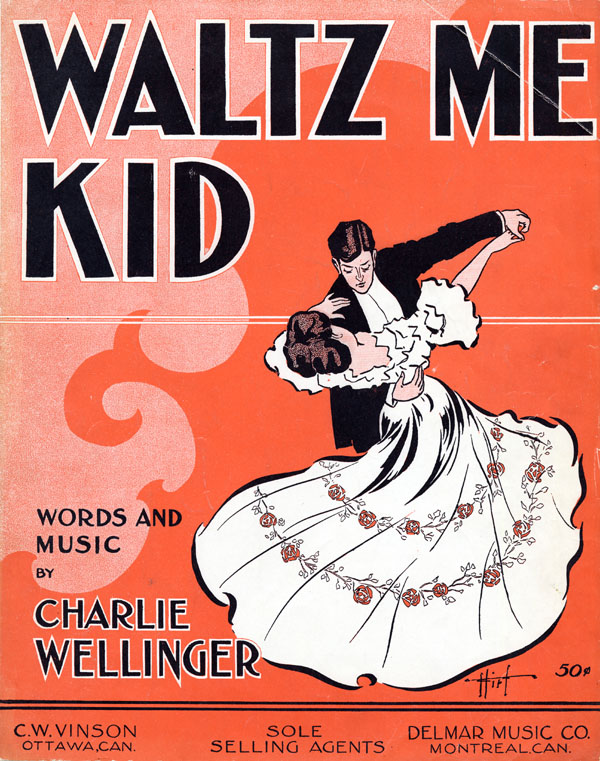
7. Rebel Waltz
"Rebel Waltz" is perhaps the first real oddity of Sandinista!, following as it does the basic structure of a waltz with rudimentary guitar exercises, themselves harbingers of very un-punk echoey reverb. Add in a harpsichord, some strained, deflated horn parts and random percussion and you get an idea of everything there is to this song. I can hardly imagining listening to it except within the context of the album, but positioned as it is between the brassy "Something About England" and the breezy "Look Here," it sounds even more like a sequencing gaffe, which I only imagine is intentional on the part of the band.
8. Look Here
With jazz/heroin enthusiast Topper Headon at the helm, this speedy yet sensible take on a Mose Allison tune is another successful piece of genre-poaching, albeit still beholden to that patented Sandinista! weirdness sheen. The song begins with a chanting chorus of Strummers before Headon takes off double time, outpacing even Jones' bluesy fill-ins and Simonon's steady, laconic bass descent. It's not often that the Clash take time to "jam," and it's not exactly clear what (if any) extra musicians are banging on the piano and the marimba, respectively. Nevertheless, I still think it ends too soon.
9. The Crooked Beat
No one expected Paul Simonon to top a song as good as "The Guns Of Brixton" for this record, but it would have been nice. Unfortunately, "The Crooked Beat" is not only a significant step down from London Calling's greatest protest anthem--it's one of the worst songs on Sandinista! as a whole, and probably the album's worst reggae composition. There's something vaguely uneven and half-formed about Simonon's bass line, which of course is heavily influenced by dub, except this time it sounds as if Simonon lacks the timing to work a steady groove. His vocals are even more haphazard, and it seems as if either he or the rest of the band is having a hard time keeping time with everyone else. The organ and one guitar chord in the background add very little. On the plus side, the lyrics read well, as was the case with "Guns of Brixton."
10. Somebody Got Murdered
In addition to being the band's hip-hop ambassador, Mick Jones was about the only one left in the Clash interested in writing proper rock tunes, as Strummer and Simonon started indulging in reggae and Tin Pan Alley and the like. Because of this, "Somebody Got Murdered" is, believe it or not, the first rock tune proper on the album. Yes, that's ten tracks in from a band that once got its rocks out of the way immediately with "Janie Jones." There's not much to the song besides an exultant cyclical guitar riff and some placid, sweeping Jones lyrics, but that's enough to place it more in the company of The Clash than the reggae tracks which bookend it. In sum, a Mick Jones classic, although it's Strummer who really kills it with the backing vocals: "Someone's...dead forever!" This song might bother you if you don't like people using "someone" and "somebody" interchangeably.
11. One More Time
One of the Clash's most overlooked reggae tracks, this Strummer tune is perhaps not given its proper due given the bad residuals from "The Crooked Beat" (to say nothing of the confusing dub version that follows--more on that later), but this is perhaps my favorite Strummer vocal performance, arresting in its simplicity and full of odd enunciations (check out the way he mumbles the word "Kung Fu," for instance). His opening lines rank among the most heartfelt and authentic on the album--it might even be one of the best moments of the Clash's entire repertoire. As a piece of songwriting, the song doesn't do much but shuffle between two chords, and the reggae piano stabs are among the most predictable staples in all of reggae, but this time Strummer transcends the baseness of the material, and co-writer Mikey Dread's vocals are an intelligent addition as well.
12. One More Dub
Any residual goodwill left over from "One More Time" is once again seriously tested by "One More Dub," which in classic reggae fashion is a dub version immediately following the regular version of a song, as opposed to being appended as a bonus remix at the end. So, for our intents and purposes, "One More Time" basically plays twice, with the exact same vocal performance and instrumentation as far as I can tell. What are the operative differences, then? Brother, I'd like to introduce you to a little something called flange. "One More Dub" falls short of being a classic dub remix, but it's far from the most inexplicable sequencing choice on this album or even this side.
Tomorrow: Another songwriting collaboration with Mikey Dread, Another Strummer rap, and another slice of old-school anthemic Mick Jones rock. Plus, the search for "that great big jazz note that destroyed the walls of Jericho."
Rockaliser At 100
Over the wayward course of the last 20 months, Rockaliser has gotten to its first big milestone: 100 posts. While Nathan and I make a point to link back to our writing when relevant, the level of self-promotion around here has never been very high. You’ll forgive us, then, if we rest on our laurels this once, and reflect on a few memorable posts.
Aaron's Choices
From The Rockaliser News Desk: King Khan and BBQ Break Up: The impetus for this was my friend’s email, which is excerpted in the post. Khan and BBQ’s antics sounded an awful lot like a break-up to me, but I wasn’t able to find out anything about it on the internet. I figured if no one was going to cover it, that I might as well share what I had. The comments section was the best part: the tour promoter weighed in, and Mark Sultan raged. I stayed up really late that night, fact-checking everything, refreshing the comments page, and reveling in how weird it all was.
Deleted Scenes From The American Indie Underground: I often have difficulty forming ideas that I feel are worth writing about. No such problem with this one. It turned out pretty well, but taken with the ideas offered in the comments, you have the outlines of a book nearly as worthwhile as Our Band Could Be Your Life.
A List Of This Summer's Jams: Sometimes I miss Rockaliser’s first summer, when things were a bit more freewheeling. A post that places Pavement’s R.E.M. song alongside The-Dream’s R. Kelly one? Why not?--just make sure to include the fragment of a failed essay. Things have gotten a little more formal since then, but I like this list of summer jams.
Eric Clapton’s Evil Speech: Occasionally, I’ll really enjoy writing posts for this blog (these two were the most fun, and pretty much wrote themselves). That was not the case for this 2,500 worder; I had about as much fun writing it as I would listening to a Clapton album. Since piecing it together (which took forever) I chanced across Clapton’s memoir at the library. The awful, troubling non-response contained in Clapton: The Autobiography made me even angrier.
Nathan's Choices
My Christgau Problem: I've never been very interested in going back and looking at the particulars of my writings (not the least because, like many, I tend to see little besides my mistakes, turgid attempts at humor, and failed sentences that could be half as long if I learned to edit myself), but I'm always curious when something I write engenders a passionate response, particularly from someone I don't know. This article, for instance, still gets new comments from time to time (Xgauians are a protective bunch, as well as a constantly Googling bunch), ranging from productive criticism to the more classical Internet-y rhetoric of "You suck, Christgau rules," which may also be a legitimate point.
On Why Cameron Crowe Is Often Incorrect: This article is a pretty clear example of what I often do on Rockaliser, which is harp on the most obscure and needlessly specific pop music minutia in Vox-like detail. The impetus for this particular piece came while watching Cameron Crowe's Fast Times At Ridgemont High, particularly the part where a character claims that the first side of Led Zeppelin IV is like an aphrodisiac for females. Having had some relatedly embarrassing experiences, I knew that to be basically untrue, and being the nerd that I was I put on In Through The Out Door instead, thinking that basically any other Led Zeppelin album works better as a make-out album than the punishing rhythms of the opening "Black Dog"/"Rock & Roll" combo. So that was basically my point, to which I added a bunch of jokes. Let it be said, though, that I still like Almost Famous, despite the cheese.
Ten Questions For The Lady Gaga Apologist: I had been confused for a while about the critical and commercial success of Ms. Gaga's music, which featured some of the most unimaginative synthwork and retrograde pop-isms this side of the Black-Eyed Peas (little did I know then, of Ke$ha). Seeing critics I admired declaring The Fame Monster a pop masterwork on par with Prince made me even angrier, and originally I planned some sort of extra-lengthy rebuttal, but realizing I had already run out of adjectives to describe how shitty this music sounded, I chose a different tack: why not ask people who liked her music to explain how and why they like it? Ironically, this gesture of attempted understanding was misinterpreted as an attack on the character of Lady Gaga fans. Nevertheless, I am still willing to bet my the whole of my reputation on the observation I made then, that Lady Gaga will be in ten years what Creed is to us now: an "I can't believe people used to listen to this" joke.
Frank Zappa's Ten Best Albums: I made this list because I couldn't find any list of Zappa albums that went much beyond the first few Mother Of Invention albums and Hot Rats. Lists are indulgent, obviously, and too often they are used as automatic traffic-boosters/collector's items, but at their best rock lists can at least point curious music fans in different directions than what they are used to. After writing this, a commenter named bnm responded that I had forgotten One Size Fits All, and you know what? He was completely right. Not including that awesome album in this list might have been the biggest mistake of my blog tenure. Another reason why Zappa will always be the bomb.
Thursday, February 3, 2011
Sandinista!: Side One
 No expensive accounts, or lunch discounts, or hyping in the charts
The band went in and knocked 'em dead, in 2 minutes 59.
1. The Magnificent Seven
Beginning with what could reasonably be called the best three-second opening to an album ever (sorry Loveless), "The Magnificent Seven" doesn't just serve the function of being Sandinista!'s lead single and bounciest number--it also announces the recalibrated political and musical intentions of what had become, in the aftermath of London Calling, a band repurposed. The litany of societal complaints that Strummer spits over that most limber of bass lines (important to point out that it was not Paul Simonon playing on this track, and you can tell--he was a great player in his own way, but never that fast or precise) is more specifically political and more ranged than something vaguely apocalyptic like "London Calling," sounding at once like a cross between the domestic protestations of "Career Opportunities" and the globalist critique of "Koka Kola" and "Lost In The Supermarket." Sandinista! was the album where the Clash started to get really personal and political simultaneously, as the added length of a triple album allowed them to expound upon those issues at sometimes absurd lengths. It also helped, having absorbed the sounds and styles of early hip-hop, that Strummer found perhaps the most suitable vehicle for rattling off lists of grievances at a breezy pace.
2. Hitsville UK
You are unlikely to find a more unlikely sequencing contrast on the record between this and "The Magnificent Seven," as this collaboration between Mick Jones and his then-girlfriend (as well as--and this is important--former Meat Loaf collaborator) Ellen Foley begins with some unexpectedly lush synths before transforming into a propulsive yet simplistic pop number. Lots of unexpected chimes and motown guitars can be heard bouncing in the ether surrounding Jones and Foley's harmonies, and automatically you're thinking: this doesn't sound like a Clash number. The lyrics, however, ironically stake territory similar to early Clash single "Complete Control," in that it unceremoniously upbraids the record industry for its emphasis on non-musical brand packaging. But whereas "Complete Control" was an angry, vituperative J'Accuse moment, "Hitsville UK" gets by on its easy listening vibes due to the hopefulness of Jones' tenor as he alludes to the independent labels he loves and hopes for: "It's Fast Rough Factory Trade." This song is one of many on the album that gets significantly better upon repeated listens--if you don't trust me, trust the litany of individuals on the song's last.fm page who write "Yes, it did in fact grow on me!"
3. Junco Partner
The first of many, many reggae numbers on the album, "Junco Partner" belongs more or less in the "Revolution Rock" department of mid-tempo punky reggae feel-goodness, or something (it's a cover of an old New Orleans standard but demonstrates more of a debt to popular late 70s reggae artists in my eyes). Moreso than "Hitsville UK," this seems like the first significantly slight track on the album, and it's probably the first side's weakest. Nevertheless, there are hooks to enjoy, if you look--some crazy woozy violin filling in some of the sound gaps, and a bright vocal performance from Strummer, clearly steeped in the lyricisms as well as the aural space offered by the structure of this oft-covered song. At its best, "Junco Partner" is a bright reimagining, and at its worst it's listenable and engaging.
4. Ivan Meets G.I. Joe
Even before he wrote the piano line to "Rock The Casbah," Topper Headon had established himself as perhaps the band's best and most necessary player, despite his lack of songwriting cred (not unusual among punk drummers, although we all know the exceptions). This track, which I think was his first solo credit, is as awesome an opening shot as "The Guns Of Brixton" was, for Paul Simonon. Headon was dubbed "The Human Drum Machine" by Sandy Pearlman due to the drummer's metronomic virtuosity, and that ease with which he juggled rhythm and structure translate smoothly enough into the writing of this tough yet economic disco track. Lyrically, it's pretty good, too--the title is equal parts comic book imagery and cold war commentary, and like Elvis Costello before him, Headon posits some interesting parallels between dance music and globalized fascism. This is also one of Headon's best drumming performances on an album that contains a lot of sampled drum tracks and auxiliary session players.
5. The Leader
Some songs on Sandinista! sound more like incomplete snippets of longer tracks than full-blown verse-chorus type satisfaction engines. "The Leader" is another fascinating example of a song that, while feeling abridged and unnecessary, also comes off perhaps too pleasantly, and even more surprisingly, it finds an unexpected hook through the strange refrain "The people must have something to read/on Sunday!" It's a low-key rockabilly-surf number for sure, equal parts the Cramps and "Brand New Cadillac," and there isn't enough momentum to even sustain two minutes, but contained within the retro instrumentation lies a pretty sharp explanation of the social currents undergirding the Profumo Affair, where in 1963 a British war secretary was caught sleeping with the mistress of a Russian spy. Historical exegesis in rockabilly form doesn't get better than this.
6. Something About England
"Something About England" starts out as the kind of tinkly piano-rock that might best be compared to 70s radio stalwarts like Elton John, but I don't imagine Sir Elton ever singing about English anti-immigrant sentiment, especially with such loose-flying bile. One of the great things about Sandinista! is that it isn't reflective of one of those band situations where someone writes the "political songs" and someone else writes the "love songs" or one gets the reputation of being the John and the other, by elimination, is therefore Paul. In this case, Strummer and Jones each have their own pet political projects (as does Simonon, although he tends to be even more blunt), and by combining their concerns you get one of the most politically dense rock albums in the history of the genre. The tune, though ablated and somewhat empty-sounding, still makes its case in a rousing fashion as the tinkly pianos build. Great horn parts too.
Tomorrow: Strummer carries on the King Tubby tradition of immediately following a reggae song with a dub version of that same song, Paul Simonon half-asses his one solo shot, and a rare number in 3/4 time. Those of you waiting for some traditional '77-sounding punk will have to continue to wait. This will take a while.
Tuesday, February 1, 2011
Sandinista!: An Introduction
 A few days ago, I read an article about music on the Internet that made me mad. It did so by invoking one of the hoariest of music crit formulas: "[X-band] that everyone loves is actually not as great as [Y-Band], which fewer people love." The X-band in question happened to be one of my favorites, the Clash, and the Y-band was Mick Jones' post-Clash outfit Big Audio Dynamite (of this song, among others). Yes, it seems The Guardian saw fit to publish an article called "Big Audio Dynamite: More Pioneering Than The Clash?", written by Ben Myers, which advances its brave thesis statement with all the confidence of a prospective troll. Here's the passage that has inspired me to write about Sandinista! for the next few days:
For all the lengthy magazine retrospectives and weighty biographies that rightly claim the Clash were musical pioneers, there's also a strong argument to be made that BAD were more forward-thinking – or perhaps more of their time, more now – than Jones's previous band. Less confined by the constraints of rock'n'roll and determined to shake off the Clash's formidable legacy, Jones – the member who brought hip-hop into the Clash and wrote their sole No 1 single – set out to create a sound that utilised the emerging technologies used by dance and rap music and took a more multimedia approach to their presentation.I've listened to the first few BAD albums, and I know the Clash repertoire fairly well (ask me about Cut The Crap sometime, preferably later), and this statement is simply not true. We'll start off by putting aside the possibility that BAD was simultaneously forward-thinking, of its time, and of now, and focus more on the Clash side of the equation. The Only Band That Mattered happened to matter as much as they did in part because they regularly escaped the "constraints of rock 'n roll", starting at least as early as 1978 when they released a really good reggae track called "White Man In Hammersmith Palais." Their beloved third album, London Calling, includes old-school rockabilly ("Brand New Cadillac"), ska ("Rudie Can't Fail"), advertising jingles ("Koka Kola") along with some of the most exciting punk tracks to ever grace my untrained teenage ears.
Even if the Clash had never made anything prior to Sandinista!, though, Ben Myers' statement would still be absurd, because by itself Sandinista! is one of the most expansive, diverse, dense, and downright creative displays of rock prowess ever to grace three LPs. Yes, there's plenty of chaff (particularly, as we'll see, toward the end), but even the most interminable tracks somehow contribute to the overall Sandinista! experience. No one has ever asked me what my personal choice for a "desert island" album would be, but for the last few years it has felt as if Sandinista! is the only logical choice: at 2 1/2 hours, it's one of the longest albums ever, and with 36 diverse songs to choose from I am far less likely to get bored than I would if I brought in, say, the first New York Dolls album.
Another reason I wanted to do a track-by-track is that I felt, reading reviews of this album on Allmusic and elsewhere, that most people ignore all but a few of the most popular songs, and thirty years later it's about time that someone has something to say about "Junkie Slip," even if it isn't much. So, with that in mind, we'll see what happens tomorrow as I turn over side one, aka "the side with most of the hits," including "The Magnificent Seven" and "Hitsville UK" among others. See you then.
*Why is it guitars that are always so restrictive of creativity? Why not the sampler, or the beabox? Every instrument has its limits...**
**...Except the Moog.
Solicitations For A Month Full Of Content
Last year, there was M.A.R.C.H., and it was good. My distinguished colleague set a deadline to write a new blog post every week, which resulted in gems like these.
This year, I'll try something similar, but (in Mountain Dew parlance) more x-treme. It's called February (no acronym this time--I'm not a masochist). Starting today, you should see new content from me for an entire month, every day, sometimes a little at a time but hopefully enough to increase traffic around these parts.
I have some ideas and some writings in the pipeline, but any suggestions you have for music-related issues you'd like me to write about would be greatly appreciated (in the comments or through email). For the next week or so, I'm going to take the template of our track-by-track reviews and apply it to an older album, namely The Clash's triple album Sandinista! Why that overstuffed album of all albums? There are a few reasons, some of which will be explained over the course of this project, but it mostly has to do with its insane length and manifold genre-crosses. Given that there are 36 songs total on three records (amounting to six tracks per side), I'll spread out these reviews over the course of six days.
Otherwise, you should expect a review of Glee's post-Superbowl show (I'm no fan, but recent comments made by show creator Ryan Murphy re: Glee's contributions to music education have me thinking I should check it out). Given that it will be February, I suppose I should probably do something about Valentine's Day, but I'm not sure what--the only thing lamer then a Valentine's Day mix is an anti-Valentine's Day mix (maybe I'll just post this Replacements song, the only I can think of that qualifies as neither). By the end of the month, I hope this will all lead to one gigantic post which would be a grand, extended scholarly exegesis on the socio-political factors guiding Brooklyn music criticism, borrowing the template and some of the terms first posited by NYU journalism professor Jay Rosen in this PressThink piece on the supposed political biases of the Washington press corps. This project in particular will be different from anything featured on Rockaliser so far, I think, in that it would be a less colloquial and more reasoned longer piece complete with footnotes and sources and the like. Interested? I can explain it to you in more detail upon request, and would love to get you involved.
Subscribe to:
Posts (Atom)