Saturday, July 7, 2012

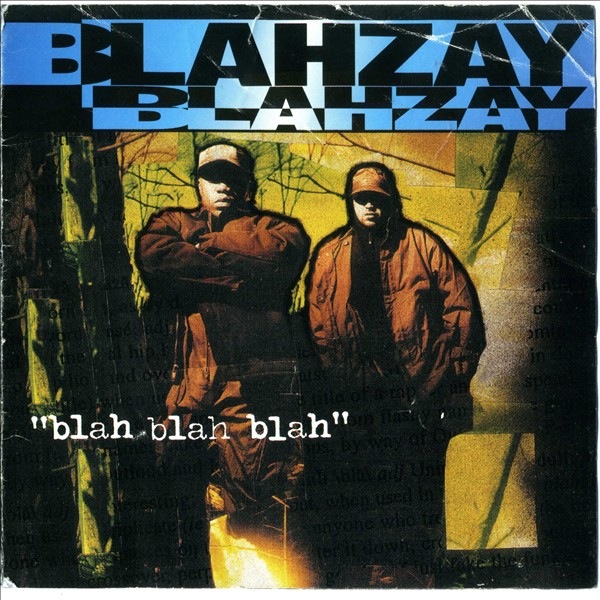
The Rockaliser 30: Blahzay Blahzay, Blah Blah Blah (1996)

[Welcome To the Rockaliser 30, a month-long series devoted to classic albums that have been eclipsed, forgotten, misheard, or otherwise not given their propers. This is Day Seven. Archive here.]

There’s what some enthusiasts refer to, perhaps too casually, as “no-bullshit” hip-hop, and then there are albums like Blahzay Blahzay’s Blah Blah Blah, which sidestep determinations of BS altogether by inverting the principles of normative rap posturing. This is one of the finest East Coast releases of the mid-90s, but it doesn’t sound exactly of its time—parts of it hit the purest pleasure centers of the brain like an early 90s Golden Age record, other parts summon the ghosts of earlier eras. It’s a record that resists easy determinations, especially since it’s the only full-length release ever put out by Blahzay Blahzay. There’s something refreshingly literal about the duo’s approach to hip-hop sonics, as one might expect from the union of a rapper who calls himself “Outloud” and a DJ with the moniker “Cuttin’”. The name Blah Blah Blah may invoke literal nonsense as its cover, but the content inside couldn’t contrast more sharply—as Outloud brags on standout track “Pain I Feel,” “I drop clarity like keratin.”

Blahzay Blahzay was designed from the beginning to be an important but peripheral force on New York rap. Outloud and Cuttin’ first got together in 1985, more than a decade before Blah Blah Blah was released, and in that period the duo produced songs for Juice Crew artists like Craig G. and Masta Ace. They took a lot of time putting out their own material, but their careful approach paid off when their 1995 single “Danger” became a smash hit. “Danger” also features Outloud’s densely orchestrated flow schemes, really laying the accents on internal rhymes like “Surged most preferred from the verbs and the words.” The rapping is amazingly good on “Danger,” and on Blah Blah Blah in full. One particularly ambiguous rap performance is “Good Cop/Bad Cop,” which dramatizes the interactions between two NYPD officers as one “good” cop becomes suspicious of a “bad” cop’s racism and abuse of power. It’s one of the few hip-hop songs that really sells a policeman’s perspective in an engaging, non-reductive fashion.

Cuttin’s beats are often even more extraordinary than Outloud’s thoughtful, critical raps. The sample featured on Blah Blah Blah’s “Intro” is taken from the Mahavishnu Orchestra’s mesmerizing fusion anthem “You Know You Know” (New York hip-hop, then and now, was one of the few scenes to take Mahavishnu-Weather Report jazz fusion seriously). From the crisp piano figure of “Blah Blah Blah” to the hazy organ of “Don’t Let This Rap Shit Fool You” to the sauntering guitar line that appears at 2:18 of “Pain I Feel,” the album is a trove of memorable sound combinations. In terms of emcee/DJ musical synergy, Blahzay Blahzay should at least be spoken of in the same terms as Gang Starr or Pete Rock & CL Smooth. Why they limited their output to one album and a maxi-single (“Not Now” b/w “Dat Shit,” from 2000), I’m not entirely sure, but it could be that Blahzay Blahzay was one of those groups that preferred the background, and only needed to prove what they could do once. Would that the architects of so many promising hip-hop debuts have done the same, modern hip-hop culture might be far less ego-driven.

Friday, July 6, 2012

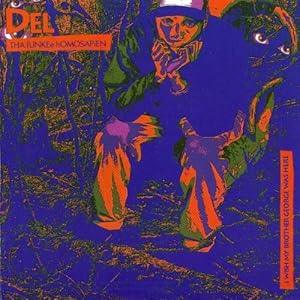
The Rockaliser 30: Del Tha Funkee Homosapien, I Wish My Brother George Was Here (1991)

[Welcome To the Rockaliser 30, a month-long series devoted to classic albums that have been eclipsed, forgotten, misheard, or otherwise not given their propers. This is Day Six. Archive here.] 

In the early 90’s, West Coast ghettos were full of furious rappers who sold drugs, drove drop-tops, and got all the girls. Step to these guys, and you were in trouble--there wasn’t room in their hood for your bullshit.

Or so hip-hop fans could be forgiven for thinking. Del Tha Funkee Homosapien had no such pretensions. The East Oakland rapper represented the other side of the ghetto coin--a fanciful, wickedly intelligent “funky human being.” Oftentimes, the subjects of Del’s songs are the inverse of what his West Coast peers were spitting. Instead of hosting all night parties, Del complains about the freeloading pals staying with him and his Mom. Instead of flossin on Slauson, or rolling round on Endo, Del is moderately high while he waits at the bus stop (“The Wacky World Of Rapid Transit”). Most tellingly, instead of fronting about terrorizing his own neighborhood, Del complains about how often he gets stuck up (“Hoods Come In Dozens”).

The kicker is that Del’s album is funkier than anything else was in ‘91. He’s not only smarter than his West Coast peers, but funkier than them too. There’s a generous dollop of George Clinton in the album’s bright funk--and Clinton is the George of the album’s title. More than half the tracks sample P-Funk. Del rides this sound, sounding laid-back even as he gets worked up about Vanilla Ice, bus service, and prostitution . Production was mostly supplied by Del himself and the team that would build Death Certificate (including Ice Cube, Del’s cousin). It’s great, but Del’s the star of every track. Del’s best known work explores futuristic alienation, but it’s great to hear him on his debut, a funky human being at home in his sunny meadowz.

Thursday, July 5, 2012

The Rockaliser 30: Felt, Felt (1971)

[Welcome to the Rockaliser 30, a month-long series devoted to classic albums that have been eclipsed, forgotten, misheard, or otherwise not given their propers. This is Day Five. Archive here.]

This version of Felt is not the Birmingham post-punk group (“Sunlight Bathed The Golden Glow”), nor is it the hip-hop collaboration between Murs and Slug of Atmosphere fame. There was another Felt that operated in the early 70s, purveyors of psychedelic blues rock in the manner of Mountain or Blue Cheer. Their self-titled 1971 debut is a packed full of tasteful yet energetic psych jams, one of which stretches past the ten-minute mark. If that doesn’t sound appealing, we simply have incompatible music interests. Great psychedelic blues rock expands the mind and invigorates the soul, but it is admittedly not a type of music whose pleasures can be explained very easily.

For an album with only six songs total, Felt covers a lot of ground, from blues to jazz to pop, all without sacrificing any of the band’s essential heavy rock-ness. The first tune is probably Felt’s most “famous,” a Beatle-esque ballad called “Look At the Sun.” On that song, 17-year old singer/guitarist Myke Jackson sings in a high yet unaffected register, wistfully observing that “the sun is like a lover/growing bright and warm each day,” as the irresistible piano melody cycles through moments of hope and plaintive absolution, settling on neither. The next song “Now She’s Gone” incorporates elements of jazz guitar into the Felt aesthetic, courtesy of second guitarist Stan Lee (!). The tense jazz beat is replaced early in the song by a slower, hazy Pink Floyd-type progression, and just as the listener becomes tired of the spacey aesthetic, the jazz figure returns with more aggression and energy. The next song, “Weepin’ Mama Blues,” is indeed a slow blues burn all the way through, albeit one with an anti-Vietnam message. The slower pace suits some of Felt’s heaviest guitar moments, which are augmented by Allan Dalrymple’s furious keyboards. Smilin’ Stan’s guitar solos aren’t bad, either. The fourth track, “World,” is different kind of blues burner with a cool bass intro, a mighty Zeppelin-esque riff, and a more limber melody than “Weepin’ Mama Blues.” In this song, bassist Tommy Gilstrap gets a few really great moments, especially in tandem with drummer Mike Neel, although neither musician draws inappropriate attention to their musicality. The following song “The Change” is the 10+ minute track referred to earlier and possibly Felt’s greatest performance. Essentially this is a medley of three songs, the first of which is their heaviest riff yet (think Black Sabbath this time) punctuated by moments of high-end blues soloing. The remainder of the song alternates between a rudimentary boogie with wah-wah solos and an epic extended riff that becomes more and more intense as the running time expands. If you’re someone who can admit to liking “Stairway To Heaven” and “November Rain,” this crosses a similar threshold of epicness. The last song, “Destination” returns to a pleasant, inoffensive jazz rhythm, dramatically ratcheting down the tension from “The Change.” Like “Now She’s Gone,” jazz elements alternate with bluesier sequences, but this time the jazz parts are more about setting mood and less about generating contrasting space to rock out.

Felt is a strange, airy album that lays a subtle groove but nevertheless exerts passion and instrumental fury. To me, that approach to art, more than fidelity to any particular sound, signifies what is and isn’t “classic” rock.

Wednesday, July 4, 2012

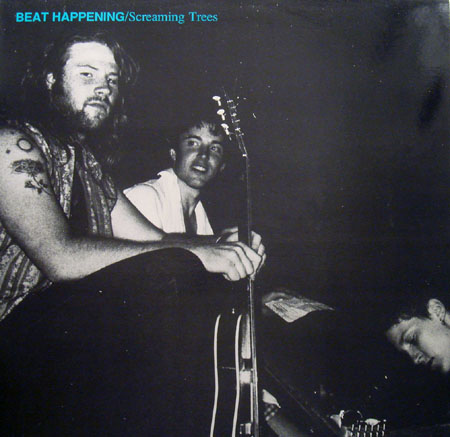
The Rockaliser 30: Beat Happening/Screaming Trees (1988)

[Welcome To the Rockaliser 30, a month-long series devoted to classic albums that have been eclipsed, forgotten, misheard, or otherwise not given their propers. This is Day Four. Archive here.] 

I’m pretty sure that my college radio station had a vinyl copy of this EP. If it didn’t, it should have--Beat Happening/Screaming Trees is a rough, wonderful distillation of late 80’s indie. It seems like a weird pairing in retrospect--the sugary dissonance of Beat Happening complimenting the dazed aggression of Screaming Trees--but an imminent, worldwide craze for Pacific Northwestern rock probably seemed unlikely in the days leading up to the International Pop Underground. Which is to say, it wouldn’t have seemed so weird back in 1988.

The aesthetic here hews closer to K Records than it does to SST. Beat Happening’s Heather Lewis and Calvin Johnson take lead vocals on three of the four tracks. Opener “Sea Babies” is probably Lewis’ most forceful vocal ever, which pairs nicely with the slightly beefier sound the Screaming Trees bring. Calvin Johnson’s bracing moans drift alongside a heavenly keboard riff on “Tale of Brave Aphrodite”--a great Beat Happening song they never would have written on their own. With closer “I Dig You” the bands play some forgotten 60’s dance craze, while Johnson does his loser romantic act. It never got old, at least while Lewis and Bret Lunsford were playing with him.

Mark Lanegan takes lead vocal only on “Polly Pereguin,” which a young rock fan and K Records obsessive from Washington thought was the best pop tune of the 80’s. It’s an earworm, for sure, with a messy riff and drumkit that sounds like Rubbermaid trash bins. I’m sure it sounded great on 80’s college radio--it still did in 2008--especially with the extra kick of distortion that low-power FM provides. It’s the sort of song you hear on the radio just once, accidentally, and never forget.


Tuesday, July 3, 2012

The Rockaliser 30: Delinquent Habits, Delinquent Habits (1996)

[Welcome To the Rockaliser 30, a month-long series devoted to classic albums that have been eclipsed, forgotten, misheard, or otherwise not given their propers. This is Day Three. Archive here.]

Latinos have been a part of hip-hop culture since the beginnings of the genre, but it took a while for artists to develop a workable strain of hip-hop that combined classic old school boom-bap with the mariachi horns and flamenco guitar licks of Latin music. As often happens, the two genres did not fit together naturally at first. Artists like Mellow Man Ace and the Beatnuts brought Spanglish and other assorted lyrical tricks to the table, but the actual combination of the two styles was still a novelty at the beginning of the 90s. Cypress Hill, arguably the first great Hispanic hip-hop group, merged some of those innovations to gangsta rap, with its vituperative collective rage against institutional racism and LAPD brutality. In terms of production, however, gangsta rap tended to be suspicious of sounds that could be construed as novelty. On Cypress Hill’s early albums, there was a resistance to genre signifiers such as brassy trumpets. The sounds were sometimes there, but never in the forefront, because the basic vocabulary had yet to be developed.

By 1996, however, artists like Big Pun and Fat Joe had precipitated a wave of Hispanic rap artists, and outside of America, a reggae and dancehall revolution was brewing. In this period before Latino crossover sounds took over pop radio, there was a lot of really interesting, even bizarre rap music that attempted to cross genres in ways that wouldn’t seem winking or overdone. Often this wouldn’t work, but sometimes some bizarre alchemy was achieved, as was the case with Delinquent Habits. Under Cypress Hill rapper Sen Dog’s tutelage, Delinquent Habits struck a mighty vain of hip-hop fusion in their self-titled debut album that resembles not much else of its genre. The group, consisting of MCs Ives and Chente Loco and DJ WizA, wedded an old school vibe to lyrics that mixed Spanglish, Spanish and English with gleeful skill. Though the group are not as influential as Cypress Hill, their debut demands reconsideration, beginning with the opening bilingual rattler “Tres Delinquentes.”As someone who doesn’t know more than a few words of Spanish, I’m not one to vouch for the two emcees’ bilingual skills, but whatever they happen to be saying, it goes along perfectly with the mariachi trumpet and acoustic guitar strums.

These brilliant exercises at genre fusion go beyond just Latin music and hip-hop. Delinquent Habits is also among the few albums this side of the Judgment Night soundtrack to feature a decent rap-rock cut with a live band, “When the Stakes Are High.” That song, the album’s final track, contains guitar work so gnarly that it could have been air-dropped into an Anthrax or Suicidal Tendencies song. Like many cuts on the album, it can seem off-putting and schizophrenic at first, but Ives and Loco’s raps hold everything together. They could throw together brilliant hooks, too: “Juvy ain’t shit but practice for the state pen/Out for a month and I’m back innnnnn” being a good one. Videos were made for two singles, “Tres Delinquentes” and “Lower Eastside,” but the album’s greatest accomplishment is probably the eighth track, “Good Times.” A reflective, emotional number anchored by a mournful Clarence White guitar sample (from the Byrds version of Dylan’s “Lay Lady Lay”) the chorus of “Good Times” is its message: “Even though I said my life was bad/I reminisce on all the good times that I had.” Rejecting both the macho pride in violence and the operatic self-pity of many inner-city autobiographical raps, Ives and Chente Loco suggest that the bad side of growing up can easily poison one’s childhood recollections. However, by contrasting those memories with fleeting moments of genuine happiness, one can make productive, uplifting art. Not an original message, nor is it necessarily a perfect argument, but this is a nuanced, thoughtful view of transcending individual experience that is rarely expressed so plainly. Delinquent Habits is full of hybrid moments like that, and nearly all of them work.

Monday, July 2, 2012

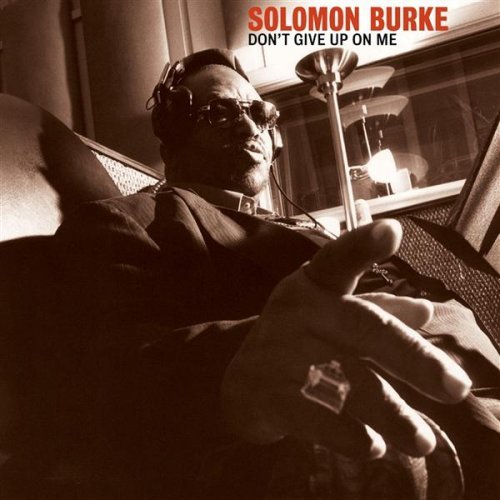
The Rockaliser 30: Solomon Burke, Don't Give Up On Me (2002)

[Welcome To the Rockaliser 30, a month-long series devoted to classic albums that have been eclipsed, forgotten, misheard, or otherwise not given their propers. This is Day Two. Archive here.]

Solomon Burke’s honorific, the “King of Rock ‘n’ Soul,” wasn’t exactly self-proclaimed, but it was a title he grabbed and ran with. If it seems like a title out of step with his commercial successes (modest) or critical standing (respected, not revered), that’s because it probably is.

But the goodwill Burke inspires can be seen in the songwriting credits of Don’t Give Up On Me, his 2002 comeback. Rock Gods such as Bob Dylan, Van Morrison, Tom Waits, Dan Penn, Elvis Costello, Brian Wilson, and Nick Lowe all responded to Burke’s call and contributed original material.

Truthfully, I didn’t realize Burke didn’t write these songs until I’d already heard them ten times. His imprint on every moment is unmistakable. Consider the delicate folk of the title track: Burke desperately, proudly begs his lover for another chance: “If I don’t get it right today/There’s always tomorrow/and tomorrow night.” The song is almost a duet between Burke’s husky cry and the wistful organ of Rudy Copeland, who played organ in Burke’s church. When the song ends with Burke moaning “please, please, please/don’t give up on me,” you hear echoes of James Brown’s classic, only sung with the wisdom and urgency of a man in his sixties.

Throughout Don’t Give Up On Me, Burke sings with passion and authority--the man was a preacher, after all. His phrasing is impeccable. His voice can’t drift up to those high notes, but he mines the earthy lower registers of his instrument. On the smoky “Flesh And Blood” he even turns his mouth into a trombone.

The Don’t Give Up On Me band provides Burke with big backdrops on each of these songs, playing a rootsy soul and folk. This is one of the best organ albums since Blonde On Blonde, and musically not too far from Dylan’s “Love & Theft”. The tone is sometimes comic, which works well with Burke’s big personality. But things often get dark--three-quarters of this album sounds like it was recorded in the early morning hours. Songs about powerlessness bring out Burke’s most powerful vocals--the title track, “Fast Train,” “Soul Searchin’”, “Sit This One Out.”


The rock luminaries here all turn in material that suits the big man well. But the front-to-back quality of Don’t Give Up On Me begs the question: were there songs that the King of Rock ‘n’ Soul couldn’t imbue with passion, couldn’t make his own?

Sunday, July 1, 2012

The Rockaliser 30: Hawkwind, Warrior on the Edge of Time (1975)

[Welcome To the Rockaliser 30, a month-long series devoted to classic albums that have been eclipsed, forgotten, misheard, or otherwise not given their propers. This is Day One. Archive here.] 

In 1972, the prolific science fiction writer Michael Moorcock published a semi-autobiographical book called Breakfast In the Ruins: A Novel of Inhumanity, which included a note claiming that the author had recently died of lung cancer. This was meant to be a joke, but in the pre-Internet age, fans were distraught at the news, with no immediate way of telling whether that part of the book was meant to be speculative or serious. Author Neil Gaiman, a fan of Moorcock's since childhood, would later write a short essay and comic “One Life Furnished in Early Moorcock,” which amusingly quotes Moorcock in a 1976 interview, commenting on the response to his Breakfast In The Ruins joke:
That fucking biography. Shortly after it came out I was at a Hawkwind gig, stoned out of my brain, and these people kept coming up to me, and I thought I was dead. They kept saying, "You’re dead, you’re dead." Later I realized what they were saying, "But we thought you were dead."
There's something about this surreal scenario, of a British author being told "you're dead, you're dead" by random passersby to the soundtrack of one of Hawkwind's legendary 70s live shows, which is typical of the diabolically reflexive creative synergy between this particular writer and band, which is like nothing else in rock history (Robert Hunter and the Grateful Dead do not come close). Between them, they shared a love of grand, epic world-building, but they were also pranksters at heart, and they didn’t mind if some of their high concepts struck listeners as nonsensical or silly. Hawkwind’s third studio album, 1972’s Doremi Fasol Latido, featured the David Brock-written “Space Is Deep,” which contained elements of Moorcock’s “Black Corridor” poem, appearing again as the song “Black Corridor” on the live album Space Ritual. Moorcock wrote a few other songs for the group in this period, and sometimes joined the band onstage, often whenever main vocalist Robert Calvert was hallucinating too intensely to perform. Their collaborative process would reach fruition with Warrior on the Edge of Time, the culmination of Hawkwind’s staggering five-album run of early 70s masterpieces and an eerily powerful science-fiction concept album.

Admittedly, as with most concept albums, the storyline is barely coherent. I consider Moorcock to be one of the best science fiction authors, but his often alienating prose style did not always translate into compelling theme or character, even with memorable lyrical buzzwords like “the sands of time,” “corridors of flame,” and references to the mythologies of iconic Moorcock characters like Elric of Melniboné being bandied about. Spacey, psychedelic lyrics were always part of the Hawkwind sound, but that was usually a byproduct of the music itself, along with its sludgy Krautrock grooves, backwards vocal effects, wild bits of free jazz violin, and impenetrably murky production. With Warrior on the Edge of Time, the band built the music around Moorcock’s concepts, rather than any particular storyline, and the transitions between the conventional rock tunes, epic space jams and spoken-word sound collages (read by Moorcock himself) are much smoother as a result. One very notable transition is found in the opening double KO of “Assault & Battery/”The Golden Void,” two of Hawkwind’s most epic and mind-blowing compositions, which reinforce each other seamlessly. The same is also true of the final two songs, the speedy rockers “Kings of Speed” and “Motorhead”--the latter, of course, was bassist Lemmy’s mid-70s statement of purpose and last contribution to the group.

Moorcock’s lyrical strategy was not to write a linear fantasy tale, but to apply his facility for arresting high concept imagery in a manner that reinforces the strangeness of the music. With the possible exceptions of Philip K. Dick and J.G. Ballard, he was probably the only sci-fi thinker at the time good enough to pull off something this weird. With its surreal sense of dramatics and unpredictable pacing, Warrior on the Edge of Time is the ideal conceptual intersection between writer and band, two of the twentieth century's most endearingly unrestrained creative forces.


Saturday, June 30, 2012

The Rockaliser 30 Begins

We at Rockaliser haven’t written much lately, but prepare for an onslaught of new material starting tomorrow. Welcome, old and new readers, curious bystanders, and hopelessly lost googlers, to a month-long celebration of awesome music we are calling the Rockaliser 30.

Over the course of July, my colleague Aaron Mendelson and I will be nominating an album each day that we believe ranks among the best music ever made. The process for getting an album into the 30 was simple: we each drew up a list of albums we felt deserved further scrutiny or recognition, and then narrowed our lists down to fifteen entrants each. Between the two of us, that adds up to thirty albums total. Simple math, simple methodology.

The original pitch for this was something along the lines of “mini 33 1/3 books about albums that despite being really good are not very well known, are perceived as too niche-y or eccentric, are not an artist’s most beloved, or have a miniscule cult audience.” This is emphatically not a list of “most underrated” albums, or anything to that effect. These are albums that have been eclipsed, forgotten, misheard, or otherwise not given their propers. Music listeners in 2012 have short attention spans, and these records seem like they’ve slipped through the cracks in our conversations.

Yes, this is another music list, although it’s not in any particular order, and it’s not comprehensive, diverse, or an “edgy” alternative to a Rolling Stone list or anything else. Again, this is purely about what offers aural pleasure in its most concentrated form. Over the course of these next four weeks, expect to see entries that run the gamut from 70’s jazz fusion to twee grunge to the New Wave of British Heavy Metal to the most unlikely of Neil Young LPs (or one of the most unlikely). No matter how these albums are rated in the public mind, in our estimation they deserve to occupy spots next to revered classics London Calling, Exile On Main St., 154, Illmatic etc. The Rockaliser 30 is about recognizing the forgotten albums that are as good as those masterpieces. Call it “Left of the Canon,” to bastardize something the young Paul Westerberg said.

***

Happily, that's not even the end of the July festivities. Stay tuned at the end of the month, when we’ll share some major news about upcoming projects from your Rockaliser scribes. Although those who pay attention to our Twitter account may already have an inkling of what I’m talking about…anyway check back for that.

And start checking Rockaliser.com, which is this exact same blog at a slightly different and much more memorable URL.

Elsewhere on the web you can find us on This Is My Jam, where you can see what songs we are currently obsessing over, and Formspring, where you can ask us questions, about the Rockaliser 30 or anything beyond—we shall try to answer even the most rambling of queries, and that’s another Rockaliser guarantee.

One more bit of news: we got a big spike in traffic (in Rockaliser terms) when my esteemed colleague’s piece on Eric Clapton’s history of racist invective was linked to in passing by the gossip site Gawker, in Mobutu Sese Seko’s article “Kid Rock Is Soul-Fucking America.” We are of course honored to be included even tangentially in Gawker’s brave ongoing battle against “hipster racism,” whatever that means. That aside, check out the Clapton piece--it holds up.