[Welcome To the Rockaliser 30, a month-long series devoted to classic albums that have been eclipsed, forgotten, misheard, or otherwise not given their propers. This is Day Twelve. Archive here.]
Galaxie 500 are legends, Low are elder statesmen, and Codiene have their own goddamn Numero box set. When will Texas slowcore get some respect? The crystal-clear trances of Austin’s American Analog Set were among the genre’s best. And that band wasn’t as impressive as Dallas’ Bedhead.
Bedhead (and their offshoot, The New Year) revolved around brothers Matt and Bubba Kadane, whose slowly swelling guitar lines are their groups’ most distinctive sound. Bedhead only recorded three albums, all good but none more indelible than their 1994 debut, WhatFunLifeWas.
In the 90’s, quiet verses exploding into loud choruses were a fixture of alternative hitmaking. It’s a style associated with the Pixies and popularized by Nirvana, although it predates both groups. Bedhead’s music spurns this formula completely. Theirs songs begin quietly, with chilly, forlorn guitar from the Kadanes, and extremely nondescript vocals. But, without exploding at any one moment, they grow in intensity and volume. By the end of “Living Well”--or any song on this album, really--the band leap up several decibels. Bedhead’s songs move linearly, beginning in slowcore territory, but never ending up in a state you’d call “hushed.”
Low’s debut, I Could Live In Hope also came in 1994. You can see why both bands were called slowcore, although it’s a label they each abhorred. But the differences between I Could Live In Hope and Bedhead's debut are instructive. Low work towards a quiet, slow reverie, and asked their fans to sit down at concerts. Bedhead aim for the same state of rapt attention, with similar modesty but at louder volumes. They never attempt to ratchet the rock up all at once, but have patience and they’ll get there soon enough.
WhatFunLifeWas’ secret weapon is its buried pop impulse, most audible on standout “The Unpredicable Landlord.” But the pop here is always latent, slyly suggested rather than shoved in your face. Power-pop this is not. Other tunes have a twinge of country (“To The Ground”), befitting their Texas roots. But Bedhead were not a group to beat you over the head with anything. Their debut has a steely restraint to it--its songs are quiet, clear and precise, until they grow into something entirely different.
[Welcome To the Rockaliser 30, a month-long series devoted to classic albums that have been eclipsed, forgotten, misheard, or otherwise not given their propers. This is Day Eleven. Archive here.]
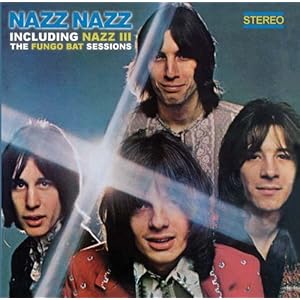
Before embarking on a legendary run of 70s solo albums, Todd Rundgren paid his dues as a guitarist and songwriter on the Philadelphia rock circuit. His band, the Nazz (alternately “Nazz”) was a local success for a while in the late 60s, first as a teenybopper group in the vein of the Monkees, then as a heavy psychedelic rock quartet along the lines of Cream or Blue Cheer. Outside of Philadelphia, though, the band struggle with a breakthrough hit—their first album, Nazz, featured the single “Open My Eyes”/”Hello It’s Me,” which was initially unsuccessful. The former song would later appear on the psychedelic compilation Nuggets, while a re-recording of the latter would become one of Rundgren’s biggest solo hits. By the time the Nazz got around to cutting the songs that would form the material for their second and third albums, Nazz Nazz and Nazz III, Rundgren was already chafing at the restrictions imposed by his band mates and his record label. No one was pleased with the guitarist’s sudden interest in Laura Nyro-style piano ballads (Rundgren was dating Nyro at the time). Moreover, Rundgren’s increased propensity for genre-hopping and studio experimentation left little room for songwriting contributions from bassist Carson Van Osten and keyboardist Robert “Stewkey” Antoni. Rundgren’s original plan was to release all the songs from the sessions as a double album called Fungo Bat, but most of his piano tunes were left off the record, and the remaining rockers were released as Nazz Nazz. Rundgren left the band in disgust, and thus began his storied solo career. The remaining songs were released, after the Nazz had broken up and without their consent, as Nazz III. The latter two entries in the Nazz discography have their individual charms, but the 2006 release of Nazz Nazz/Nazz III: The Fungo Bat Sessions combines them definitively, demonstrating that these songs were part of the same sessions for a reason. If you separate out the bonus tracks from each CD, this is the album Rundgren intended to make from the beginning. It’s an insanely encyclopedic collection of riffs on 60s acid rock—most, but not all, of the British variety—and in typical Rundgren fashion, the album bursts with brightly covered pop arrangements, epic guitar breakdowns, and moments that defy even the broadly inclusive parameters of “psychedelia.” The album’s first song, “Forget All About It,” is a veritable symphony of rocking psychedelic hooks, shimmering through a cascade of bells and squealy guitars like a proto-punk Byrds. Even by Nuggets standards, this is aggressive, forward-thinking psych rock. Other songs, like “Under the Ice” seem to precipitate the extended riff groove of hard rockers like Thin Lizzy. Still other songs present “Rundgren-ized” takes on the Yardbirds, the Association, and Syd Barrett-era Pink Floyd. The first record ends with a 10+ minute epic jam (Todd's first of many) “A Beautiful Song,” which banks on the buildup of stately horns and sweeping strings in a manner not unlike the Floyd’s “Atom Heart Mother Suite.” That staggering song predicts some of Todd’s later long-form songwriting, as well as his contributions to prog rock side project Utopia. As a discrete listening experience, Nazz III may seem even more lacking than its predecessor, but as the second part of TheFungo BatSessions, it highlights two elements that are less present in Nazz Nazz: Van Osten’s songwriting contributions, and Rundgren’s studio weirdness. Van Osten’s best tune is “Christopher Columbus,” a Cream-ish riff monster that pokes fun at the Italian explorer. Rundgren’s hardest rocker on the record, “Magic Me,” is similarly intense, although it is performed with a devilish sense of humor. And then there are the ballads—”Only One Winner,” “You Are My Window”— Tin Pan Alley piano of the type you would never hear on a Cream record, and another sign of things to come. Consider how the White Album may have sounded if the second LP had been released as its own album—it would likely be characterized as a lesser collection of studio cast-offs and B-sides. In the same vein, Nazz III and Nazz Nazz make a lot less sense without each other for context. Copies of The Fungo Bat Sessions are incredibly difficult to find—you can snag a used copy on Amazon for $40—but it’s worth the effort, if only for a chance to listen to Todd Rundgren’s first forgotten opus the way he imagined it. Here’s a secret that even a lot of Todd fans don’t know: forget the Runts, this is where his solo career begins.
[Welcome To the Rockaliser 30, a month-long series devoted to classic albums that have been eclipsed, forgotten, misheard, or otherwise not given their propers. This is Day Ten. Archive here.]
The soundtrack to a film Neil Young directed in 1972, Journey Through The Past is a truly cobbled together effort. It’s more scattershot than most bootlegs, but does a good job surveying the work that Young and his peers produced from the mid-60’s onward. The quality of this material--most of it live versions and studio outtakes--is blessedly high, enough to make this confusing collection a rewarding listen. It also serves as a reminder that, no matter how isolated and alone Young sounded on record, he came from a specific scene and often relied heavily on his collaborators to step up his game.
This is particularly evident given that a quarter of the album is live versions of CSNY and Buffalo Springfield tunes. There’s a stomping “Mr. Soul,” with some shimmering guitar work. “Rock and Roll Woman” is another highlight, whose backing vocals bring to mind Beach Boys harmonies stranded in the prairie.
There’s also a 16-minute “Words (Between The Lines Of Age).” While it’s nearly three times as long as the version on Harvest, I’d be lying if I said it actually sounds that different. It’s the same song, probably from the same sessions, given more time to let the dread sink in.
A great, possibly definitive “Southern Man” sees Young and Stills stretching the song out into a scrappy, vindictive jam. Not everything is a clear improvement, though, and several songs show up here in abbreviated form. Many are interspersed, oddly, with studio dialogue.
Young saves the weirdest stuff for the end. The Tony & Susan Alamo Christian Foundation Orchestra & Chorus get two songs, one of them “Handel’s Messiah.” They also do a tune by a the guy who scored Double Indemnity, on which they sound like a gypsy caravan. The penultimate track, “Soldier,” is the only new Young composition on Journey Through The Past. It’s a searching piano ballad, in keeping with the gloomy material Young would exorcise from himself on his next few albums.
Journey Through The Past closes with “Let’s Go Away For Awhile,” the Pet Sounds instrumental. The subdued grandeur of Brian Wilson’s tune matches some of Journey Through The Past, other parts not so much. But it’s a fitting close, in its way, to an album that ranges across American music, too restless to settle in any one place.
[Welcome To the Rockaliser 30, a month-long series devoted to classic albums that have been eclipsed, forgotten, misheard, or otherwise not given their propers. This is Day Nine. Archive here.]
The Los Angeles punk scene of the 70s is sometimes undeservedly characterized as the dark and nihilistic outcome of the ‘77 punk aesthetic, as if there was something about the decadent Hollywood desert landscape that bred tougher, less arty groups than their New York equivalents. This is probably because the most popular and cited documents of the scene, such as Penelope Spheeris’ concert documentary The Decline of Western Civilization, tend to focus on the likes of X, the Germs, the Weirdos and others. They were some of the finest punk groups of their era, but onstage they couldn’t help but darkly invert notions of conventional Hollywood glamour, armed with sheer black bondage superhero costumes that made Malcolm McClaren’s “Sex” boutique look like a Men’s Warehouse. These bands spit at and picked fights with their openly hostile audiences and indulged in self-mutilation onstage that often straddled the line between “challenging performance art” and “a cry for help.” Surely, there were plenty of dark and nihilistic groups in both New York City and London that displayed contempt for their audiences, but there was something special about the LA breed, as if the music itself embodied the failed aspirations of the city’s most lost and destitute dreamers.
However, LA punk had its arty and funny sides too. For anyone looking for a primer on the scene with a more diverse edge, the compilation Dangerhouse Records Vol. 1 is an ideal way to sample the breadth of material available. Sure, there are contributions from X and the Weirdos, but you also get performances from artists like Black Randy, whose strangled yelps resemble the Weirdos’ unfiltered aggression in the same way that Talking Heads resemble the Ramones—other than their shared geography and “punk” designation, not much at all. Most of the album’s thirteen songs work as brief, enjoyable singles on their own, but the unpredictable order is what makes this collection really stand out.
1. The Randoms, “Let’s Get Rid Of NY.” Certainly a perspective that even native New Yorkers understand, this rumbling blast of anti-pomposity features suitably shouty vocals that become more and more detached as the singer lays into NYC’s self-absorbed nature (”Fashion there is really passion/airplanes there is always crashin’”). The chorus hook isn’t much more than the title and three chords, but it works.
2. The Weirdos, “Solitary Confinement.” This is perhaps my favorite Weirdos song, somehow even more exuberant than their hyperbolic classic “We’ve Got the Neutron Bomb.” When it came to songwriting, this band clearly subscribed to one truism (”Kick out the jams, motherfucker”). Of all the LA bands, they remind me most of protopunk/metal icons like the Dictators or the MC5. Few groups were as giddy in their nihilism as these guys.
3. Black Randy & The Metrosquad, “Trouble At the Cup.” Not a song that strictly rocks, but a good introduction to the demented poetry of Black Randy, who sounds a bit like Richard Hell as he bleats about the LAPD over an electronic shuffle and some rudimentary guitar screeches. His style isn’t for everyone but this cover of “Say It Loud (I’m Black and I’m Proud)” might convince you (or turn you off completely).
4. The Deadbeats, “Let’s Shoot Maria.” Leonard Bernstein and West Side Story are surprisingly common reference points for punks. This song takes a fairly direct lyrical route into parody: “Maria/I just shot a girl named Maria,” the singer shrieks, and then comes the punchline: “Gonna finish off what Gary Gilmore started!” (yet another common punk reference point, GG). What makes this song really work is the dynamic tension between the verse and chorus, the latter of which bursts out of the ether with aggressive guitar and saxophone mellifluously mixed together.
5. The Eyes, “Disneyland.” After the claustrophobic “Let’s Shoot Maria,” “Disneyland” is an airy shot of uncut Nuggets organ melodies wedded to some smart lyrics about the Anaheim, CA institution--specifically regarding what might happen, were it on fire. The keyboards and the vocal style both convey a sense of childish innocence that contrasts amusingly with the final slogan: “Blow up Disneyland! Blow up Disneyland!” How the Mouse didn’t unsheathe its lawyers on this, I’m not sure.
6. The Dils, “Class War.” I was mostly familiar with the Dils through the song “Mr. Big” on the Rhino compilation No Thanks! That was a fairly poppy tune by LA punk standards, whereas “Class War” is mostly anchored by two chords (and a corresponding two-note solo). When it comes to unstoppable grooves, these guys can’t match X or the Germs. But there is something about “Class War” that precipitates what would become a more radio-ready strain of California hardcore punk. Green Day were probably taking notes.
7. The Avengers, “We Are the One.” This was another single I was mostly familiar with through No Thanks! The Avengers actually hail from San Francisco, but they are most associated with Dangerhouse Records, so the inclusion works. Regardless of their place in LA punk, this is a mighty anthem with great, rolling drum fills and neat female call-and-response vocals. The group recently released its own career-spanning compilation, which was interesting timing, given their name—hopefully the Avengers also stays off the Mouse’s radar.
8. Rhino 39, “Prolixin Stomp.” This song resembles Devo’s “Uncontrollable Urge,”with a little bit of Wire’s “Straight Line.” Like the Dils, Rhino 39 aren’t the most dynamic punk performers, but there is a jaunty vibe to this tune that befits its subject matter. The low-key style works as a contrast to the Avengers’ sincerity.
9. The Bags, “Survive.” Alice Bag is another LA punk legend whose name is barely recognized outside the city. This song starts appealingly with finger snaps, some open hi-hat jazz drumming and gothic-tinged guitar arpeggios, before evolving into a heavy riff that then builds speed into a heavy punk groove. It doesn’t have the most elegant songwriting construction, but Alice Bag really knows how to play off each discrete section in style.
10. The Alley Cats, “Nothing Means Nothing Anymore.” The opening riff slightly recalls the Dead Kennedys’ “Too Drunk To Fuck” a little, although this song came first. The drumming is fleet-fingered and inventive, and just when the riff is about to overstay its welcome, there is an appealing breakdown that leads into a righteous chorus. Singer Randy Stodola has a tear in his voice that makes his howls of anguish in the chorus simultaneously reflective and liberating.
11. Howard Werth, “Obsolete.” Howard Werth was a late-60s/early 70s British art rocker who was best-known as part of a prog rock group called Audience. According to David Brown, who wrote the liner notes to this compilation, Werth was intended to be the comp’s “token mainstream rock artist.” Unlike the other groups, Werth wrote this song specifically for the record. With its mid-tempo boogie groove and its Ozzy Osbourne-ish vocals, “Obsolete” could have derailed the whole collection, but it turned out to be a prime slab of conventional rock tune-age. The guitars are still dirty enough to work, and the clear, bright melody sits interestingly between the Alley Cats and X selections.
12. X, “Los Angeles.” For those punk completists who fear overlap, rest easy—this is not the same version of “Los Angeles” that would end up on the album of the same name. Lacking Ray Manzarek’s production sheen, this version of the song has more live-sounding vocals and less fuzz in the guitars. As an anthem for the city, or any city really, it has rarely been bettered.
[Welcome To the Rockaliser 30, a month-long series devoted to classic albums that have been eclipsed, forgotten, misheard, or otherwise not given their propers. This is Day Eight. Archive here.]
In 1971, Caetano Veloso was exiled from his native Brazil and singing in a second language, a man alienated in practically every respect. In A Little More Blue’s opener, Veloso runs through a litany of tragic moments, ending each verse with the observation that he feels even worse than he did when they happened. A little more blue than then.
Veloso’s songs on Blue are a world away from the Tropicalia he was writing at the end of the 60’s, including the iconic tunes he penned for Os Mutantes. Here he mines a rich vein of psych-folk that sounds a bit, well, alien. It’s Veloso’s own, Brazilian both in the accented English (every line sounds like it was delivered with both eyes closed), and the jazzy inflections. The strange noises that fly out of his mouth (see "Maria Bethania" below) might strike some as bizarre, but they're an outgrowth of his creative drive, and sound natural among the incantations here.
Blue was recorded in London, a city that appears in the lyrics. It’s an album that has few peers, outside of Veloso’s own catalog, but it does remind me of another classic downer-folk LP--Robyn Hitchcock’s I Often Dream Of Trains. Both albums are pure London--two of the million moods that city has inspired--in their spaced-out and depressed meditations.
Veloso muses on his sister, Christmas, and violent Mexican films during Blue. But “If You Hold A Stone” is his centerpiece, and it’s monstrous one. In it, Caetano lays out an iconic sound, at once folksy, distinctly South American, and momentous. It’s a song that looks you dead in the eye, demands your attention, and only grows from there:
If you hold a stone/hold it in your hand/if you feel the weight/never be late/to understand
On the page, Veloso’s lyric looks like an aphorism, but in his song it’s mythic. He’s joined by a chorus, and weaves his way through the lyric, adding extra syllables to “understand.” It’s the work of a great songwriter, and a great singer, fighting despair with the few tools left to him.
[Welcome To the Rockaliser 30, a month-long series devoted to classic albums that have been eclipsed, forgotten, misheard, or otherwise not given their propers. This is Day Seven. Archive here.]
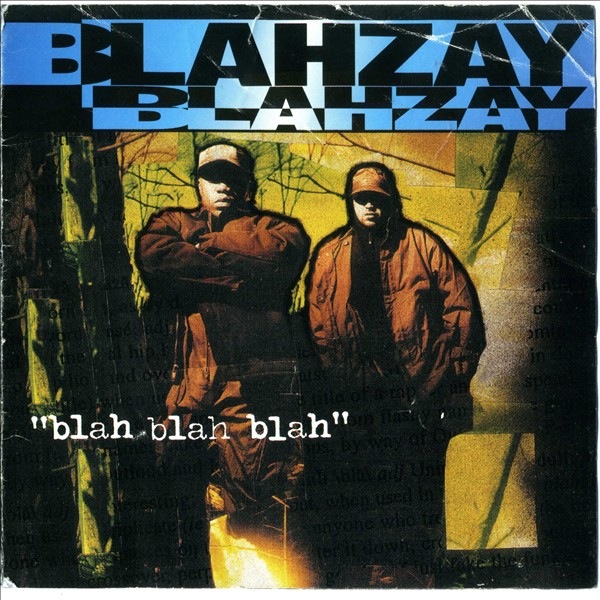
There’s what some enthusiasts refer to, perhaps too casually, as “no-bullshit” hip-hop, and then there are albums like Blahzay Blahzay’s Blah Blah Blah, which sidestep determinations of BS altogether by inverting the principles of normative rap posturing. This is one of the finest East Coast releases of the mid-90s, but it doesn’t sound exactly of its time—parts of it hit the purest pleasure centers of the brain like an early 90s Golden Age record, other parts summon the ghosts of earlier eras. It’s a record that resists easy determinations, especially since it’s the only full-length release ever put out by Blahzay Blahzay. There’s something refreshingly literal about the duo’s approach to hip-hop sonics, as one might expect from the union of a rapper who calls himself “Outloud” and a DJ with the moniker “Cuttin’”. The name Blah Blah Blah may invoke literal nonsense as its cover, but the content inside couldn’t contrast more sharply—as Outloud brags on standout track “Pain I Feel,” “I drop clarity like keratin.”
Blahzay Blahzay was designed from the beginning to be an important but peripheral force on New York rap. Outloud and Cuttin’ first got together in 1985, more than a decade before Blah Blah Blah was released, and in that period the duo produced songs for Juice Crew artists like Craig G. and Masta Ace. They took a lot of time putting out their own material, but their careful approach paid off when their 1995 single “Danger” became a smash hit. “Danger” also features Outloud’s densely orchestrated flow schemes, really laying the accents on internal rhymes like “Surged most preferred from the verbs and the words.” The rapping is amazingly good on “Danger,” and on Blah Blah Blah in full. One particularly ambiguous rap performance is “Good Cop/Bad Cop,” which dramatizes the interactions between two NYPD officers as one “good” cop becomes suspicious of a “bad” cop’s racism and abuse of power. It’s one of the few hip-hop songs that really sells a policeman’s perspective in an engaging, non-reductive fashion.
Cuttin’s beats are often even more extraordinary than Outloud’s thoughtful, critical raps. The sample featured on Blah Blah Blah’s “Intro” is taken from the Mahavishnu Orchestra’s mesmerizing fusion anthem “You Know You Know” (New York hip-hop, then and now, was one of the few scenes to take Mahavishnu-Weather Report jazz fusion seriously). From the crisp piano figure of “Blah Blah Blah” to the hazy organ of “Don’t Let This Rap Shit Fool You” to the sauntering guitar line that appears at 2:18 of “Pain I Feel,” the album is a trove of memorable sound combinations. In terms of emcee/DJ musical synergy, Blahzay Blahzay should at least be spoken of in the same terms as Gang Starr or Pete Rock & CL Smooth. Why they limited their output to one album and a maxi-single (“Not Now” b/w “Dat Shit,” from 2000), I’m not entirely sure, but it could be that Blahzay Blahzay was one of those groups that preferred the background, and only needed to prove what they could do once. Would that the architects of so many promising hip-hop debuts have done the same, modern hip-hop culture might be far less ego-driven.
[Welcome To the Rockaliser 30, a month-long series devoted to classic albums that have been eclipsed, forgotten, misheard, or otherwise not given their propers. This is Day Six. Archive here.]
In the early 90’s, West Coast ghettos were full of furious rappers who sold drugs, drove drop-tops, and got all the girls. Step to these guys, and you were in trouble--there wasn’t room in their hood for your bullshit.
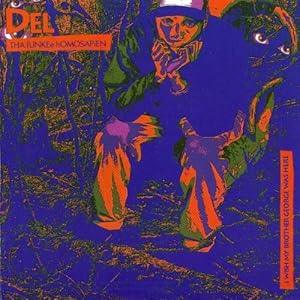
Or so hip-hop fans could be forgiven for thinking. Del Tha Funkee Homosapien had no such pretensions. The East Oakland rapper represented the other side of the ghetto coin--a fanciful, wickedly intelligent “funky human being.” Oftentimes, the subjects of Del’s songs are the inverse of what his West Coast peers were spitting. Instead of hosting all night parties, Del complains about the freeloading pals staying with him and his Mom. Instead of flossin on Slauson, or rolling round on Endo, Del is moderately high while he waits at the bus stop (“The Wacky World Of Rapid Transit”). Most tellingly, instead of fronting about terrorizing his own neighborhood, Del complains about how often he gets stuck up (“Hoods Come In Dozens”).
The kicker is that Del’s album is funkier than anything else was in ‘91. He’s not only smarter than his West Coast peers, but funkier than them too. There’s a generous dollop of George Clinton in the album’s bright funk--and Clinton is the George of the album’s title. More than half the tracks sample P-Funk. Del rides this sound, sounding laid-back even as he gets worked up about Vanilla Ice, bus service, and prostitution . Production was mostly supplied by Del himself and the team that would build Death Certificate (including Ice Cube, Del’s cousin). It’s great, but Del’s the star of every track. Del’s best known work explores futuristic alienation, but it’s great to hear him on his debut, a funky human being at home in his sunny meadowz.
[Welcome to the Rockaliser 30, a month-long series devoted to classic albums that have been eclipsed, forgotten, misheard, or otherwise not given their propers. This is Day Five. Archive here.]
This version of Felt is not the Birmingham post-punk group (“Sunlight Bathed The Golden Glow”), nor is it the hip-hop collaboration between Murs and Slug of Atmosphere fame. There was another Felt that operated in the early 70s, purveyors of psychedelic blues rock in the manner of Mountain or Blue Cheer. Their self-titled 1971 debut is a packed full of tasteful yet energetic psych jams, one of which stretches past the ten-minute mark. If that doesn’t sound appealing, we simply have incompatible music interests. Great psychedelic blues rock expands the mind and invigorates the soul, but it is admittedly not a type of music whose pleasures can be explained very easily.
For an album with only six songs total, Felt covers a lot of ground, from blues to jazz to pop, all without sacrificing any of the band’s essential heavy rock-ness. The first tune is probably Felt’s most “famous,” a Beatle-esque ballad called “Look At the Sun.” On that song, 17-year old singer/guitarist Myke Jackson sings in a high yet unaffected register, wistfully observing that “the sun is like a lover/growing bright and warm each day,” as the irresistible piano melody cycles through moments of hope and plaintive absolution, settling on neither. The next song “Now She’s Gone” incorporates elements of jazz guitar into the Felt aesthetic, courtesy of second guitarist Stan Lee (!). The tense jazz beat is replaced early in the song by a slower, hazy Pink Floyd-type progression, and just as the listener becomes tired of the spacey aesthetic, the jazz figure returns with more aggression and energy. The next song, “Weepin’ Mama Blues,” is indeed a slow blues burn all the way through, albeit one with an anti-Vietnam message. The slower pace suits some of Felt’s heaviest guitar moments, which are augmented by Allan Dalrymple’s furious keyboards. Smilin’ Stan’s guitar solos aren’t bad, either. The fourth track, “World,” is different kind of blues burner with a cool bass intro, a mighty Zeppelin-esque riff, and a more limber melody than “Weepin’ Mama Blues.” In this song, bassist Tommy Gilstrap gets a few really great moments, especially in tandem with drummer Mike Neel, although neither musician draws inappropriate attention to their musicality. The following song “The Change” is the 10+ minute track referred to earlier and possibly Felt’s greatest performance. Essentially this is a medley of three songs, the first of which is their heaviest riff yet (think Black Sabbath this time) punctuated by moments of high-end blues soloing. The remainder of the song alternates between a rudimentary boogie with wah-wah solos and an epic extended riff that becomes more and more intense as the running time expands. If you’re someone who can admit to liking “Stairway To Heaven” and “November Rain,” this crosses a similar threshold of epicness. The last song, “Destination” returns to a pleasant, inoffensive jazz rhythm, dramatically ratcheting down the tension from “The Change.” Like “Now She’s Gone,” jazz elements alternate with bluesier sequences, but this time the jazz parts are more about setting mood and less about generating contrasting space to rock out.
Felt is a strange, airy album that lays a subtle groove but nevertheless exerts passion and instrumental fury. To me, that approach to art, more than fidelity to any particular sound, signifies what is and isn’t “classic” rock.