[Welcome To the Rockaliser 30, a month-long series devoted to classic albums that have been eclipsed, forgotten, misheard, or otherwise not given their propers. This is Day Fifteen. Archive here.] Although rarely mentioned outside of his collaborations with Gil Scott-Heron, Brian Jackson’s multi-instrumental acumen and deep sense of groove were integral to the creation of nearly all the radical poet’s records between 1971 (Pieces of a Man) and 1980 (1980). During that ten-year interval, Scott-Heron witnessed the ignominious end of one presidency, suffered through two others, and warned of the impending, socially cataclysmic regime of former Hollywood actor “Re-Ron,” or alternately “Ron Raygun,” as he liked to joke. Interestingly, the first album that Scott-Heron and Jackson share proper co-credit, Winter In America, was released at the crisis point of the Watergate scandal, a few months before Nixon would resign. That album also began a gradual pivot away from the spoken-word jazz piano compositions that had been a fixture of Scott-Heron’s solo career ever since he sat down to play piano on “Who’ll Pay Reparations For My Soul?” on debut album Small Talk at 125th & Lenox. On his first few LPs, Scott-Heron’s songwriting was anchored by his serviceable-but-plain jazz figures, but on Winter In America, Jackson’s Rhodes electric piano began asserting itself as the duo’s dominant sonic indicator. Gil Scott-Heron never left his jazz training fully behind, but compare a breezy composition like “Lady Day and John Coltrane” from Pieces of a Man to a late-70s roaring funk monster like “Angel Dust,” from Secrets, and you definitely get a feeling of deepening progression. Clearly, much of this forward emphasis on groove can be attributed to what Brian Jackson brought with his Rhodes electric piano. Released halfway through Jimmy Carter’s presidency, Secrets is Scott-Heron’s leanest collection of tunes. And yet, despite featuring one of his best-known songs “Angel Dust,” the album has been out-of-print for years. There’s never been much renewed interest in his back catalog, even after his death in 2011. One listen to “Angel Dust” should be enough to change anyone’s mind on that score. An evocative recreation of the mindset of a PCP addict, “Angel Dust” is really about Jackson’s fluid synth bass line, which wobbles its way around brief interjections of guitar and flute as Scott-Heron delivers one of his most anguished vocal performances. I cannot praise the bass work on this song enough.
The rest of the LP matches the intensity of "Angel Dust." “Madison Avenue” is an attack on Manhattan’s culture of consumption with a mighty breakdown and an appealingly agile jazz guitar solo at the end. “Cane” is a tragic ballad inspired by the Harlem Renaissance poet Jean Toomer and his novel of the same name, which focuses on two female characters from the book, Karintha and Amy. This song is one of Gil's earliest pro-feminist anthems (”For often as our flowers grow/men will try to cut them down”), a subject that would ultimately become the central focus of his swan song, 2010's I’m New Here. Picking up the pace dramatically, “Third World Revolution” is Gil’s call to revolutionary action, aided by a tight piano groove and some judicious cowbell. “Better Days Ahead” is the record’s slowest ballad, resting on the strength of Scott-Heron’s gentle, optimistic croons. “Three Miles Down” contains one of Jackson’s synthiest bass productions and an oppressive metaphor for impotent rage against white society: “Feels like I’m working in a graveyard three miles down.” And that’s just 2/3 of the record. Every song on this album is a killer; even the album cover ranks among the poet's best.
[Welcome To the Rockaliser 30, a month-long series devoted to classic albums that have been eclipsed, forgotten, misheard, or otherwise not given their propers. This is Day Fourteen. Archive here.]
Before he was a punchline, Rick James was an amazing funk musician. That much is clear from the first seconds of Street Songs opener “Give It To Me Baby.” It's a masterclass in soul, insanely generous in its blend of angry bass, wild synth, rubbermouthed vocals, prancing guitar, and the Temptations’ Melvin Franklin (the narrator’s lady love doesn’t feel so generous, after Rick comes home unashamedly intoxi-caay-ted).
It’s an attack plan James draws on often during Street Songs, whether he’s dishing on ghetto realness (“Ghetto Life”) or complaining about how boring his hometown of Buffalo, New York is (“Below the Funk (Pass the J)”). Street Songs is proto-gransta rap, with its pounding rhythms, anti-police screeds, inner-city sleeze, emphasis on Rick's sexual prowess, and craven pop moves.
The tempos vary, but these are all vivid songs. They’re lascivious, mostly, but the musicianship and songwriting have a professionalism that befits James’ corporate home, on Motown Records. James’ expressive, elastic vocals match his funky creations. Even the slow jam, a duet with Teena Marie, manages to twist what was essentially a bone thrown to Quiet Storm radio into a compelling and genuinely emotional eight minutes.
Street Songs also contains one of the great New Wave singles. I’m guessing you’ve heard that one, and it’s no joke either.
[Welcome To the Rockaliser 30, a month-long series devoted to classic albums that have been eclipsed, forgotten, misheard, or otherwise not given their propers. This is Day Thirteen. Archive here.] The city of Lexington, KY is not known for its proximity to any regional funk scene, but it is home to two military bases, one of which once stationed a US army lieutenant named Manzel Bush in the early 70s. Bush, also a keyboardist and songwriter, began performing heavy, jazzy funk instrumentals with guitarist John L. Van Dyke and drummer Steve Garner in 1973. The trio never got signed, but they landed an interested producer, Shad O’Shea, who got the group a bit of session time in a brand new Cincinnati recording studio. Two 45s would make up the entirety of Manzel’s initial output: “Space Funk” b/w “Jump Street,” released in 1977, and “Midnight Theme” b/w “Sugar Dreams,” released two years later. By that point, Bush had left music to continue his career in the armed forces, his eponymous band had ceased to exist, and fate seemed to have consigned their lush breakbeats to obscurity. Today, the band is just as obscure, but the beats for “Space Funk” and “Midnight Theme” are an inseparable part of hip-hop's DNA. Manzel’s tiny output has been sampled by everyone from Cypress Hill to Grandmaster Flash to KRS-One to Biz Markie. One listen to either “Space Funk” or “Midnight Theme” will easily demonstrate why both beats persist. Both songs coast on the unstoppable momentum of their opening grooves, which were perfect for breaking even during the more complicated jazz bits. “Space Funk” begins as a jittery set of alternating bass-snare paradiddles, which is cool enough, but wait until the bass synth part kicks in—it’ll kick you in the teeth. Likewise, “Midnight Theme” begins with a heavy, loose yet metronomic beat, commendable on its own when sampled in songs like “Plug Tunin’” or “How I Could Just Kill a Man,” but when the sweet jazz piano builds and builds, it takes the song to the next level, and then another level beyond that. Even with the glut of notable samples to his credit, Bush's contributions to hip-hop remained under the radar. In 2004, DJs Kenny Dope and the Undercover Brother, two aficionados of obscure disco jazz funk-type stuff, put together the definitive Manzel release, Midnight Theme. In addition to multiple remixed versions of “Space Funk,” “Midnight Theme” and their respective B-sides, the DJs found and remixed six previously unreleased Manzel recordings. How these utter gems were left in the studio, I have no idea. Cuts like “Evil, Wicked, Mean and Nasty” and “It’s Over Now” are so unfiltered and joyous, they’re like the platonic funk I conjure in dreams. With no vocalist taking prominence, the album is all about taking groove past the point of sober expectation, and boy does it get pretty glorious at points. Though not everyone got the vibe—a critic from The Jazz Times decried Midnight Theme as cheesy, saying it “sound[s] like outtakes from failed blaxploitation flicks of that era.” I pity the jazz critic who sees that as a bad thing.
Since it’s a retrospective collection of a few recordings from the 1970s, many of which were previously unreleased, one might say that Midnight Theme does not count as a proper front-to-back album experience. Perhaps not by definition. But in terms of what I expect from great albums, especially in terms of the pleasure principle that separates truly addictive works of art from the merely excellent, these songs are transportive rhapsodies of the highest order. Manzel was, simply, a purveyor of the deepest funk of its kind.
[Welcome To the Rockaliser 30, a month-long series devoted to classic albums that have been eclipsed, forgotten, misheard, or otherwise not given their propers. This is Day Twelve. Archive here.]
Galaxie 500 are legends, Low are elder statesmen, and Codiene have their own goddamn Numero box set. When will Texas slowcore get some respect? The crystal-clear trances of Austin’s American Analog Set were among the genre’s best. And that band wasn’t as impressive as Dallas’ Bedhead.
Bedhead (and their offshoot, The New Year) revolved around brothers Matt and Bubba Kadane, whose slowly swelling guitar lines are their groups’ most distinctive sound. Bedhead only recorded three albums, all good but none more indelible than their 1994 debut, WhatFunLifeWas.
In the 90’s, quiet verses exploding into loud choruses were a fixture of alternative hitmaking. It’s a style associated with the Pixies and popularized by Nirvana, although it predates both groups. Bedhead’s music spurns this formula completely. Theirs songs begin quietly, with chilly, forlorn guitar from the Kadanes, and extremely nondescript vocals. But, without exploding at any one moment, they grow in intensity and volume. By the end of “Living Well”--or any song on this album, really--the band leap up several decibels. Bedhead’s songs move linearly, beginning in slowcore territory, but never ending up in a state you’d call “hushed.”
Low’s debut, I Could Live In Hope also came in 1994. You can see why both bands were called slowcore, although it’s a label they each abhorred. But the differences between I Could Live In Hope and Bedhead's debut are instructive. Low work towards a quiet, slow reverie, and asked their fans to sit down at concerts. Bedhead aim for the same state of rapt attention, with similar modesty but at louder volumes. They never attempt to ratchet the rock up all at once, but have patience and they’ll get there soon enough.
WhatFunLifeWas’ secret weapon is its buried pop impulse, most audible on standout “The Unpredicable Landlord.” But the pop here is always latent, slyly suggested rather than shoved in your face. Power-pop this is not. Other tunes have a twinge of country (“To The Ground”), befitting their Texas roots. But Bedhead were not a group to beat you over the head with anything. Their debut has a steely restraint to it--its songs are quiet, clear and precise, until they grow into something entirely different.
[Welcome To the Rockaliser 30, a month-long series devoted to classic albums that have been eclipsed, forgotten, misheard, or otherwise not given their propers. This is Day Eleven. Archive here.]
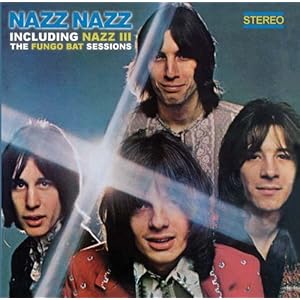
Before embarking on a legendary run of 70s solo albums, Todd Rundgren paid his dues as a guitarist and songwriter on the Philadelphia rock circuit. His band, the Nazz (alternately “Nazz”) was a local success for a while in the late 60s, first as a teenybopper group in the vein of the Monkees, then as a heavy psychedelic rock quartet along the lines of Cream or Blue Cheer. Outside of Philadelphia, though, the band struggle with a breakthrough hit—their first album, Nazz, featured the single “Open My Eyes”/”Hello It’s Me,” which was initially unsuccessful. The former song would later appear on the psychedelic compilation Nuggets, while a re-recording of the latter would become one of Rundgren’s biggest solo hits. By the time the Nazz got around to cutting the songs that would form the material for their second and third albums, Nazz Nazz and Nazz III, Rundgren was already chafing at the restrictions imposed by his band mates and his record label. No one was pleased with the guitarist’s sudden interest in Laura Nyro-style piano ballads (Rundgren was dating Nyro at the time). Moreover, Rundgren’s increased propensity for genre-hopping and studio experimentation left little room for songwriting contributions from bassist Carson Van Osten and keyboardist Robert “Stewkey” Antoni. Rundgren’s original plan was to release all the songs from the sessions as a double album called Fungo Bat, but most of his piano tunes were left off the record, and the remaining rockers were released as Nazz Nazz. Rundgren left the band in disgust, and thus began his storied solo career. The remaining songs were released, after the Nazz had broken up and without their consent, as Nazz III. The latter two entries in the Nazz discography have their individual charms, but the 2006 release of Nazz Nazz/Nazz III: The Fungo Bat Sessions combines them definitively, demonstrating that these songs were part of the same sessions for a reason. If you separate out the bonus tracks from each CD, this is the album Rundgren intended to make from the beginning. It’s an insanely encyclopedic collection of riffs on 60s acid rock—most, but not all, of the British variety—and in typical Rundgren fashion, the album bursts with brightly covered pop arrangements, epic guitar breakdowns, and moments that defy even the broadly inclusive parameters of “psychedelia.” The album’s first song, “Forget All About It,” is a veritable symphony of rocking psychedelic hooks, shimmering through a cascade of bells and squealy guitars like a proto-punk Byrds. Even by Nuggets standards, this is aggressive, forward-thinking psych rock. Other songs, like “Under the Ice” seem to precipitate the extended riff groove of hard rockers like Thin Lizzy. Still other songs present “Rundgren-ized” takes on the Yardbirds, the Association, and Syd Barrett-era Pink Floyd. The first record ends with a 10+ minute epic jam (Todd's first of many) “A Beautiful Song,” which banks on the buildup of stately horns and sweeping strings in a manner not unlike the Floyd’s “Atom Heart Mother Suite.” That staggering song predicts some of Todd’s later long-form songwriting, as well as his contributions to prog rock side project Utopia. As a discrete listening experience, Nazz III may seem even more lacking than its predecessor, but as the second part of TheFungo BatSessions, it highlights two elements that are less present in Nazz Nazz: Van Osten’s songwriting contributions, and Rundgren’s studio weirdness. Van Osten’s best tune is “Christopher Columbus,” a Cream-ish riff monster that pokes fun at the Italian explorer. Rundgren’s hardest rocker on the record, “Magic Me,” is similarly intense, although it is performed with a devilish sense of humor. And then there are the ballads—”Only One Winner,” “You Are My Window”— Tin Pan Alley piano of the type you would never hear on a Cream record, and another sign of things to come. Consider how the White Album may have sounded if the second LP had been released as its own album—it would likely be characterized as a lesser collection of studio cast-offs and B-sides. In the same vein, Nazz III and Nazz Nazz make a lot less sense without each other for context. Copies of The Fungo Bat Sessions are incredibly difficult to find—you can snag a used copy on Amazon for $40—but it’s worth the effort, if only for a chance to listen to Todd Rundgren’s first forgotten opus the way he imagined it. Here’s a secret that even a lot of Todd fans don’t know: forget the Runts, this is where his solo career begins.
[Welcome To the Rockaliser 30, a month-long series devoted to classic albums that have been eclipsed, forgotten, misheard, or otherwise not given their propers. This is Day Ten. Archive here.]
The soundtrack to a film Neil Young directed in 1972, Journey Through The Past is a truly cobbled together effort. It’s more scattershot than most bootlegs, but does a good job surveying the work that Young and his peers produced from the mid-60’s onward. The quality of this material--most of it live versions and studio outtakes--is blessedly high, enough to make this confusing collection a rewarding listen. It also serves as a reminder that, no matter how isolated and alone Young sounded on record, he came from a specific scene and often relied heavily on his collaborators to step up his game.
This is particularly evident given that a quarter of the album is live versions of CSNY and Buffalo Springfield tunes. There’s a stomping “Mr. Soul,” with some shimmering guitar work. “Rock and Roll Woman” is another highlight, whose backing vocals bring to mind Beach Boys harmonies stranded in the prairie.
There’s also a 16-minute “Words (Between The Lines Of Age).” While it’s nearly three times as long as the version on Harvest, I’d be lying if I said it actually sounds that different. It’s the same song, probably from the same sessions, given more time to let the dread sink in.
A great, possibly definitive “Southern Man” sees Young and Stills stretching the song out into a scrappy, vindictive jam. Not everything is a clear improvement, though, and several songs show up here in abbreviated form. Many are interspersed, oddly, with studio dialogue.
Young saves the weirdest stuff for the end. The Tony & Susan Alamo Christian Foundation Orchestra & Chorus get two songs, one of them “Handel’s Messiah.” They also do a tune by a the guy who scored Double Indemnity, on which they sound like a gypsy caravan. The penultimate track, “Soldier,” is the only new Young composition on Journey Through The Past. It’s a searching piano ballad, in keeping with the gloomy material Young would exorcise from himself on his next few albums.
Journey Through The Past closes with “Let’s Go Away For Awhile,” the Pet Sounds instrumental. The subdued grandeur of Brian Wilson’s tune matches some of Journey Through The Past, other parts not so much. But it’s a fitting close, in its way, to an album that ranges across American music, too restless to settle in any one place.
[Welcome To the Rockaliser 30, a month-long series devoted to classic albums that have been eclipsed, forgotten, misheard, or otherwise not given their propers. This is Day Nine. Archive here.]
The Los Angeles punk scene of the 70s is sometimes undeservedly characterized as the dark and nihilistic outcome of the ‘77 punk aesthetic, as if there was something about the decadent Hollywood desert landscape that bred tougher, less arty groups than their New York equivalents. This is probably because the most popular and cited documents of the scene, such as Penelope Spheeris’ concert documentary The Decline of Western Civilization, tend to focus on the likes of X, the Germs, the Weirdos and others. They were some of the finest punk groups of their era, but onstage they couldn’t help but darkly invert notions of conventional Hollywood glamour, armed with sheer black bondage superhero costumes that made Malcolm McClaren’s “Sex” boutique look like a Men’s Warehouse. These bands spit at and picked fights with their openly hostile audiences and indulged in self-mutilation onstage that often straddled the line between “challenging performance art” and “a cry for help.” Surely, there were plenty of dark and nihilistic groups in both New York City and London that displayed contempt for their audiences, but there was something special about the LA breed, as if the music itself embodied the failed aspirations of the city’s most lost and destitute dreamers.
However, LA punk had its arty and funny sides too. For anyone looking for a primer on the scene with a more diverse edge, the compilation Dangerhouse Records Vol. 1 is an ideal way to sample the breadth of material available. Sure, there are contributions from X and the Weirdos, but you also get performances from artists like Black Randy, whose strangled yelps resemble the Weirdos’ unfiltered aggression in the same way that Talking Heads resemble the Ramones—other than their shared geography and “punk” designation, not much at all. Most of the album’s thirteen songs work as brief, enjoyable singles on their own, but the unpredictable order is what makes this collection really stand out.
1. The Randoms, “Let’s Get Rid Of NY.” Certainly a perspective that even native New Yorkers understand, this rumbling blast of anti-pomposity features suitably shouty vocals that become more and more detached as the singer lays into NYC’s self-absorbed nature (”Fashion there is really passion/airplanes there is always crashin’”). The chorus hook isn’t much more than the title and three chords, but it works.
2. The Weirdos, “Solitary Confinement.” This is perhaps my favorite Weirdos song, somehow even more exuberant than their hyperbolic classic “We’ve Got the Neutron Bomb.” When it came to songwriting, this band clearly subscribed to one truism (”Kick out the jams, motherfucker”). Of all the LA bands, they remind me most of protopunk/metal icons like the Dictators or the MC5. Few groups were as giddy in their nihilism as these guys.
3. Black Randy & The Metrosquad, “Trouble At the Cup.” Not a song that strictly rocks, but a good introduction to the demented poetry of Black Randy, who sounds a bit like Richard Hell as he bleats about the LAPD over an electronic shuffle and some rudimentary guitar screeches. His style isn’t for everyone but this cover of “Say It Loud (I’m Black and I’m Proud)” might convince you (or turn you off completely).
4. The Deadbeats, “Let’s Shoot Maria.” Leonard Bernstein and West Side Story are surprisingly common reference points for punks. This song takes a fairly direct lyrical route into parody: “Maria/I just shot a girl named Maria,” the singer shrieks, and then comes the punchline: “Gonna finish off what Gary Gilmore started!” (yet another common punk reference point, GG). What makes this song really work is the dynamic tension between the verse and chorus, the latter of which bursts out of the ether with aggressive guitar and saxophone mellifluously mixed together.
5. The Eyes, “Disneyland.” After the claustrophobic “Let’s Shoot Maria,” “Disneyland” is an airy shot of uncut Nuggets organ melodies wedded to some smart lyrics about the Anaheim, CA institution--specifically regarding what might happen, were it on fire. The keyboards and the vocal style both convey a sense of childish innocence that contrasts amusingly with the final slogan: “Blow up Disneyland! Blow up Disneyland!” How the Mouse didn’t unsheathe its lawyers on this, I’m not sure.
6. The Dils, “Class War.” I was mostly familiar with the Dils through the song “Mr. Big” on the Rhino compilation No Thanks! That was a fairly poppy tune by LA punk standards, whereas “Class War” is mostly anchored by two chords (and a corresponding two-note solo). When it comes to unstoppable grooves, these guys can’t match X or the Germs. But there is something about “Class War” that precipitates what would become a more radio-ready strain of California hardcore punk. Green Day were probably taking notes.
7. The Avengers, “We Are the One.” This was another single I was mostly familiar with through No Thanks! The Avengers actually hail from San Francisco, but they are most associated with Dangerhouse Records, so the inclusion works. Regardless of their place in LA punk, this is a mighty anthem with great, rolling drum fills and neat female call-and-response vocals. The group recently released its own career-spanning compilation, which was interesting timing, given their name—hopefully the Avengers also stays off the Mouse’s radar.
8. Rhino 39, “Prolixin Stomp.” This song resembles Devo’s “Uncontrollable Urge,”with a little bit of Wire’s “Straight Line.” Like the Dils, Rhino 39 aren’t the most dynamic punk performers, but there is a jaunty vibe to this tune that befits its subject matter. The low-key style works as a contrast to the Avengers’ sincerity.
9. The Bags, “Survive.” Alice Bag is another LA punk legend whose name is barely recognized outside the city. This song starts appealingly with finger snaps, some open hi-hat jazz drumming and gothic-tinged guitar arpeggios, before evolving into a heavy riff that then builds speed into a heavy punk groove. It doesn’t have the most elegant songwriting construction, but Alice Bag really knows how to play off each discrete section in style.
10. The Alley Cats, “Nothing Means Nothing Anymore.” The opening riff slightly recalls the Dead Kennedys’ “Too Drunk To Fuck” a little, although this song came first. The drumming is fleet-fingered and inventive, and just when the riff is about to overstay its welcome, there is an appealing breakdown that leads into a righteous chorus. Singer Randy Stodola has a tear in his voice that makes his howls of anguish in the chorus simultaneously reflective and liberating.
11. Howard Werth, “Obsolete.” Howard Werth was a late-60s/early 70s British art rocker who was best-known as part of a prog rock group called Audience. According to David Brown, who wrote the liner notes to this compilation, Werth was intended to be the comp’s “token mainstream rock artist.” Unlike the other groups, Werth wrote this song specifically for the record. With its mid-tempo boogie groove and its Ozzy Osbourne-ish vocals, “Obsolete” could have derailed the whole collection, but it turned out to be a prime slab of conventional rock tune-age. The guitars are still dirty enough to work, and the clear, bright melody sits interestingly between the Alley Cats and X selections.
12. X, “Los Angeles.” For those punk completists who fear overlap, rest easy—this is not the same version of “Los Angeles” that would end up on the album of the same name. Lacking Ray Manzarek’s production sheen, this version of the song has more live-sounding vocals and less fuzz in the guitars. As an anthem for the city, or any city really, it has rarely been bettered.
[Welcome To the Rockaliser 30, a month-long series devoted to classic albums that have been eclipsed, forgotten, misheard, or otherwise not given their propers. This is Day Eight. Archive here.]
In 1971, Caetano Veloso was exiled from his native Brazil and singing in a second language, a man alienated in practically every respect. In A Little More Blue’s opener, Veloso runs through a litany of tragic moments, ending each verse with the observation that he feels even worse than he did when they happened. A little more blue than then.
Veloso’s songs on Blue are a world away from the Tropicalia he was writing at the end of the 60’s, including the iconic tunes he penned for Os Mutantes. Here he mines a rich vein of psych-folk that sounds a bit, well, alien. It’s Veloso’s own, Brazilian both in the accented English (every line sounds like it was delivered with both eyes closed), and the jazzy inflections. The strange noises that fly out of his mouth (see "Maria Bethania" below) might strike some as bizarre, but they're an outgrowth of his creative drive, and sound natural among the incantations here.
Blue was recorded in London, a city that appears in the lyrics. It’s an album that has few peers, outside of Veloso’s own catalog, but it does remind me of another classic downer-folk LP--Robyn Hitchcock’s I Often Dream Of Trains. Both albums are pure London--two of the million moods that city has inspired--in their spaced-out and depressed meditations.
Veloso muses on his sister, Christmas, and violent Mexican films during Blue. But “If You Hold A Stone” is his centerpiece, and it’s monstrous one. In it, Caetano lays out an iconic sound, at once folksy, distinctly South American, and momentous. It’s a song that looks you dead in the eye, demands your attention, and only grows from there:
If you hold a stone/hold it in your hand/if you feel the weight/never be late/to understand
On the page, Veloso’s lyric looks like an aphorism, but in his song it’s mythic. He’s joined by a chorus, and weaves his way through the lyric, adding extra syllables to “understand.” It’s the work of a great songwriter, and a great singer, fighting despair with the few tools left to him.