Showing posts with label List. Show all posts
Friday, January 2, 2015
Everyday Be Listening to Nathan's Favorite Records, 2014
1. D’Angelo and the Vanguard, Black Messiah
Out of nowhere, D'Angelo and his appropriately-named backup group cast a spell of hypnotic jazz-funk-hard rock-flamenco-Great American Songbook-Beefheart-There's a Riot Goin' On jams so potent that they make up for 14 years of silence.
2. Freddie Gibbs and Madlib, Piñata
Culled from years of relaxed sessions between the Gary, Indiana emcee and former Stones Throw's vinyl virtuoso, Cocaine Piñata (the semi-official title) finds Gibbs smoking Madlib's best-laid rhythms like they were nickel bags. A soul sample lover's paradise.
3. The Underachievers, The Cellar Door: Terminus Ut Exordium
As the title suggests, this LP is all about linguistic beauty unrelated to meaning. Issa Gold and AK have the endless back-and-forth energy of a young OutKast, and like that group, their tightness reinforces each other's skills.
4. Kimbra, The Golden Echo
With her stunning musicianship, ace choice in collaborators, unlimited vocal range, and twin allegiances to the groove and the avant-garde, the New Zealand pop star is in a class with only one other artist: Janelle Monae.
5. Schoolboy Q, Oxymoron
Schoolboy is the edgiest, nerviest, most unpredictable rapper in the Top Dawg roster and perhaps on the entire West Coast. Oxymoron is a gangsta/confessional record that is alternately a scary, hopeful, and thrilling window into the mind of a restless thinker.
6. Boris, Noise
Another year, another Boris album with a so-generic-it's-audacious title, another set of explosive churning stadium rockers that never go anywhere one expects. "Angel" is the 19-minute monster of the year.
7. Goat, Commune
Do I care about Goat's devotion to Swedish vodou traditions and communal mysticism? Not really. But their music is enveloped in pleasure, bursting with dozens of uncharacteristic influences (afrobeat, psychedelia, drone, Beatlesque melodies) that will dizzy the listener who attempts to identify them.
8. Sturgill Simpson, Metamodern Sounds in Country Music
The psychedelic qualities of this record are overstated--this is outlaw country-rock in the Kris Kristofferson, Gene Clark mode that is stronger because it demonstrates Simpson's authentic songwriting before lightly breaking the Nashville sonic mold (unforgettable album closer "It Ain't All Flowers").
9. Big K.R.I.T., Cadillactica
No one seems willing to anoint Big K.R.I.T. "king of the south," so he made this 15-song case. This time, he leaves the production to others and refines his songwriting and hooks. Is there a better rapper in America?
10. Run the Jewels, RTJ2
Best listened to divorced from thinkpieces on Ferguson, etc. (as if Killer Mike and El-P were the first rappers ever to protest police brutality), I prefer to think of RTJ2 as the best rap-rock record since the Judgment Night soundtrack.
Labels:
2014,
Big K.R.I.T.,
Boris,
D'Angelo,
Freddie Gibbs,
goat,
Kimbra,
List,
Madlib,
Run The Jewels,
Schoolboy Q,
Sturgill Simpson,
The Underachievers
Monday, December 30, 2013
Another Extraordinary Year: Nathan's 10 Best Albums of 2013
Though the album came out in January and had leaked before the year began, Harlem's newest favorite son Rocky nevertheless provided the masterpiece to beat in 2013. His impeccable ear and experimentation with extreme bass ranges and extraordinary beats led to an album of incalculable riches--spacey, immediately memorable club jams ("Goldie," "Fuckin' Problems"), great collaborations ("PMW"), dalliances with genres outside of hip-hop (the improbably wonderful Skrillex production "Wild for the Night") and the greatest posse record in many many moons ("1 Train"), all providing one amazing rush after another, 12 times in a row.
2. Janelle Monáe, The Electric Lady
Speaking of many moons, Ms. Monáe had been mostly off the grid since the release of The ArchAndroid in 2010. Turns out she was fine-tuning a record that was maybe even better, more cohesive and sonically varied, in addition to demonstrating an unprecedented level of craftmanship and sheer exultant pleasure that reached rapturous levels at times. Monáe's prodigious voice, joyous production, and empowering, socially relevant lyrics were among a few of the album's virtues, which were otherwise brimming.
3. Daft Punk, Random Access Memories
The opening thesis is "give life back to music": two robots survey the current EDM landscape and find it lacking in the type of warmth and humanity out of which great dance music originally came. Hence the collaborators--Nile Rodgers, Giorgio Moroder, Paul Williams--who help the robots provide the album with the depth, feeling, and occasional melancholy of a great lost 70s disco LP.
4. Nick Cave and the Bad Seeds, Push the Sky Away
The album title is a perfect four-word metaphor for an elder man's futile fight against mortality. After rocking hard with Grinderman and executing a brilliant string of late-career gems, Cave scales back the aggression and punkish energy a bit here. This is his On the Beach, an album that does not rock so much, but slowly builds through a molasses of top-shelf songwriting, wonderful orchestration, and literary, confessional lyrics.
5. My Bloody Valentine, mbv
Their last album may have come out when I was 6, but MBV's latest sounded the furthest thing from a reunion record. It was as if the last 22 years had suddenly vanished in an ether of aggressive flange, tremolo, and pitch-bending along with the familiar distortion, metronomic backbeat, and barely audible vocals we know so well. Ambitious and mind-bending, only the album's song titles were generic.
6. In Solitude, Sister
Yeah, it's one of those token metal albums that non-metal heads take to. So what? I will take my bluesy, riff-oriented hard rock however I can, and Sweden's In Solitude provided the year's most refreshing slab of British 70s metal-indebted jams. Each song has rhythm and panache, as well as hooks that buzzsaw their way into the listener's memory banks.
7. Marnie Stern, The Chronicles of Marnia
The greatest guitarist in America really pushed against her limitations on this, her fourth LP and first without longtime drummer Zach Hill. Her offbeat approach to fret tapping is still there, but is more effectively integrated into the songs than ever. And Stern's voice has a really lovely and longing quality now, something I never expected. Kid Millions admirably takes over for Hill on drums and together the two musicians provide moments of appealing still and calm in between sets of Stern's normally frenetic guitar/drum alchemy.
8. Richard Thompson, Electric
The elder folkie and guitar hero goes the stripped-down power trio route, which emphasizes Thompson's great axe skills. The result is a late-career success that is muscular and hard-rocking, while still immersed in Thompson's Celtic and folk-based songwriting. Thompson has always been a great player, but his guitar solos throughout this album are, I cannot emphasize this enough, particularly kick-ass.
9. Thundercat, Apocalypse
An unfairly gifted bassist who collaborates with everyone from New Zealand pop star Kimbra to Suicidal Tendencies, Thundercat produced a next-level jazz funk LP that sounded like nothing else in 2013. His complex and layered bass skills were a perfect match with Flying Lotus' shimmering and psychedelic production. The result was a brilliant concoction of sweet jazzy smooth jams plus the occasional roaring funk classic ("Oh Sheit! It's X").
10. Flatbush Zombies, Better Off Dead
2013 was an extraordinary year for hip-hop, no question. This list could have consisted entirely of Danny Brown, Juicy J, Pusha T, Run the Jewels, the Underachievers, Action Bronson, Spaceghostpurrp, just to begin with. But one mixtape that I kept coming back to was this one, by a young group out of Brooklyn's "Beast Coast" scene. The Zombies are a loopy three-piece that inventively plays with golden age boom-bap with a bit of horror movie edge (think Gravediggaz crossed with ODB to start). With the work of two hyper-quick emcees (Meech and Juice) as well as one of NYC's great new producing talents (Erick Arc Elliott), the result is a product that would have stood tall with the best of early 90s rap.
Monday, January 14, 2013
Rockaliser Radio III
After last year's legendary convergence, the third edition of Rockaliser Radio finds your hosts at odds over which albums, precisely, were the ten best in a music-rich 2012. Richness, in fact, was the only theme: Aaron and Nathan may differ over the relative merit of Odd Future's "Oldie," but they could agree that Rick Ross' Rich Forever is a punishingly great mixtape.
Were there any dark, sarcastic lyrics in 2012? Did any bands make songs that sounded like Beach House songs? Is R. Kelly just some washed-up New Jack Swing star?
Click the above widget to find out all that, and more!* The nearly three-hour podcast is also available to download here.
*How many great psychedelic records emerged from Australia and Northern Sweden, combined? Might one fairly call Odd Future notorious? Did Dr. Dre spend enough time guesting on his protoge's albums? How many dead presidents were excoriated in rap songs? Do any musicians hail from the city of New Orleans? Does Aaron still speak Spanish? What the fuck was that El-P album called, anyway? How many times will your hosts imitate the Rick Ross grunt? Which 2013 single has a chorus that sounds like you just inhaled a mountain of uncut cocaine?
Since you asked, here are our 2012 Top Ten lists, sans commentary, verbal stumbling and digressions:
Aaron M's 2012 Favorites:
1. R. Kelly, Write Me Back
2. Goat, World Music
3. Kendrick Lamar good kid, m.A.A.d city
4. Miguel, Kaleidoscope Dream
5. Spiritualized, Sweet Heart Sweet Light
6. Café Tacuba, El Objeto Antes Llamado Disco
7. Dinosaur Jr, I Bet On Sky
8. Tame Impala, Lonerism
9. Tennis, Young & Old
10. Rick Ross, Rich Forever
Were there any dark, sarcastic lyrics in 2012? Did any bands make songs that sounded like Beach House songs? Is R. Kelly just some washed-up New Jack Swing star?
Click the above widget to find out all that, and more!* The nearly three-hour podcast is also available to download here.
*How many great psychedelic records emerged from Australia and Northern Sweden, combined? Might one fairly call Odd Future notorious? Did Dr. Dre spend enough time guesting on his protoge's albums? How many dead presidents were excoriated in rap songs? Do any musicians hail from the city of New Orleans? Does Aaron still speak Spanish? What the fuck was that El-P album called, anyway? How many times will your hosts imitate the Rick Ross grunt? Which 2013 single has a chorus that sounds like you just inhaled a mountain of uncut cocaine?
Since you asked, here are our 2012 Top Ten lists, sans commentary, verbal stumbling and digressions:
Aaron M's 2012 Favorites:
1. R. Kelly, Write Me Back
2. Goat, World Music
3. Kendrick Lamar good kid, m.A.A.d city
4. Miguel, Kaleidoscope Dream
5. Spiritualized, Sweet Heart Sweet Light
6. Café Tacuba, El Objeto Antes Llamado Disco
7. Dinosaur Jr, I Bet On Sky
8. Tame Impala, Lonerism
9. Tennis, Young & Old
10. Rick Ross, Rich Forever
1. Killer Mike, R.A.P. Music
2. Large Professor, Professor @ Large
3. Big Boi, Vicious Lies and Dangerous Rumors
4. Rick Ross, Rich Forever
5. Future of the Left, The Plot Against Common Sense
6. Curren$y, The Stoned Immaculate
7. Donald Fagen, Sunken Condos
8. Galactic, Carnivale Electricos
9. (Tie) Quakers, Quakers and Geoff Barrow and Ben Salisbury, Drokk: Music Inspired by Mega-City One
10. Odd Future, The OF Tape Vol. 2
2. Large Professor, Professor @ Large
3. Big Boi, Vicious Lies and Dangerous Rumors
4. Rick Ross, Rich Forever
5. Future of the Left, The Plot Against Common Sense
6. Curren$y, The Stoned Immaculate
7. Donald Fagen, Sunken Condos
8. Galactic, Carnivale Electricos
9. (Tie) Quakers, Quakers and Geoff Barrow and Ben Salisbury, Drokk: Music Inspired by Mega-City One
10. Odd Future, The OF Tape Vol. 2
Thursday, July 19, 2012
The Rockaliser 30: King Curtis, Hot Sax, Cool Licks (2000)
[Welcome To the Rockaliser 30, a month-long series devoted to classic albums that have been eclipsed, forgotten, misheard, or otherwise not given their propers. This is Day Nineteen. Archive here.]
“Did you ever hear a tenor sax/swingin’ like a rusty axe?” As opening lines go, that's a not-inaccurate bit of music criticism. The question comes from the Coasters’ 1959 recording of Leiber and Stoller’s “That Is Rock and Roll,” one of many early rock songs to feature the exceptional session playing of legendary saxophonist King Curtis. Curtis cut plenty of solo tunes during the 1950s and early 60s, showcasing his braying, stomping, gloriously powerful sax mettle, and in between solo performances he recorded equally amazing session work on group hits such as the Coasters’ “Yakety Yak,” Chuck Willis’ “What Am I Living For?” and Joe Liggins & His Honeydrippers' “The Honeydripper.” These songs, plus about twenty additional instrumentals, make up the bulk of Hot Sax, Cool Licks, the most enjoyable and comprehensive collection of Curtis’ session work available.
Curtis’ sax style—delirious, unhinged, operating way outside the proprieties of “tasteful” jazz playing—was one of the foundational sounds of rock 'n' roll. Younger music fans may not remember a time when rock songs regularly featured “dynamite saxophone solos,” but Curtis’ instrumental influence extends even beyond succeeding generations of sax performers. His closest stylistic peers at the time were not fellow tenor sax players, but outrageous R&B performers like Little Richard and Johnny “Guitar” Watson. Like those artists, Curtis’ was capable of adding level upon level of foot-stomping flavor to what were sometimes colorless, workmanlike recordings of early R&B standards. Check out the pre-glam stomp of his take on “IFIC,” for instance, the bubbly tear of his instrument bringing the song’s primal blues pressure to a boil. Curtis was brilliant at bending notes so hard and heavy that they came out sounding almost distorted. in that sense, he is perhaps an unstated influence on the next several decades’ worth of electric guitar skree noises.
Here’s another example of how Curtis elevated every recording he played on: as I mentioned, among the other great cuts on Hot Sax, Cool Licks are two versions of “The Honeydripper.” One features the original vocals of Joe Liggins & His Honeydrippers, while the other (“Part II”) replaces the vocal melody with Curtis’ playing. And boy, does he absolutely wreck Version II. Curtis somehow matches the vocal lines note for note, but adds all these weird bends and greasy bwaaaamp noises. Early on in the song, he breaks out a quick solo that’s so fun and decadent it could have been dropped into the Stooges’ Funhouse twenty years later.
Like many of the early architects of rock n roll, King Curtis’ music tends to be more appreciated than it is enjoyed, but his style is the furthest thing from old-fashioned. As long as killer solos continue to have their appreciators, Hot Sax, Cool Licks will remain a key document of the early rock 'n' roll scene.
“Did you ever hear a tenor sax/swingin’ like a rusty axe?” As opening lines go, that's a not-inaccurate bit of music criticism. The question comes from the Coasters’ 1959 recording of Leiber and Stoller’s “That Is Rock and Roll,” one of many early rock songs to feature the exceptional session playing of legendary saxophonist King Curtis. Curtis cut plenty of solo tunes during the 1950s and early 60s, showcasing his braying, stomping, gloriously powerful sax mettle, and in between solo performances he recorded equally amazing session work on group hits such as the Coasters’ “Yakety Yak,” Chuck Willis’ “What Am I Living For?” and Joe Liggins & His Honeydrippers' “The Honeydripper.” These songs, plus about twenty additional instrumentals, make up the bulk of Hot Sax, Cool Licks, the most enjoyable and comprehensive collection of Curtis’ session work available.
Curtis’ sax style—delirious, unhinged, operating way outside the proprieties of “tasteful” jazz playing—was one of the foundational sounds of rock 'n' roll. Younger music fans may not remember a time when rock songs regularly featured “dynamite saxophone solos,” but Curtis’ instrumental influence extends even beyond succeeding generations of sax performers. His closest stylistic peers at the time were not fellow tenor sax players, but outrageous R&B performers like Little Richard and Johnny “Guitar” Watson. Like those artists, Curtis’ was capable of adding level upon level of foot-stomping flavor to what were sometimes colorless, workmanlike recordings of early R&B standards. Check out the pre-glam stomp of his take on “IFIC,” for instance, the bubbly tear of his instrument bringing the song’s primal blues pressure to a boil. Curtis was brilliant at bending notes so hard and heavy that they came out sounding almost distorted. in that sense, he is perhaps an unstated influence on the next several decades’ worth of electric guitar skree noises.
Here’s another example of how Curtis elevated every recording he played on: as I mentioned, among the other great cuts on Hot Sax, Cool Licks are two versions of “The Honeydripper.” One features the original vocals of Joe Liggins & His Honeydrippers, while the other (“Part II”) replaces the vocal melody with Curtis’ playing. And boy, does he absolutely wreck Version II. Curtis somehow matches the vocal lines note for note, but adds all these weird bends and greasy bwaaaamp noises. Early on in the song, he breaks out a quick solo that’s so fun and decadent it could have been dropped into the Stooges’ Funhouse twenty years later.
Like many of the early architects of rock n roll, King Curtis’ music tends to be more appreciated than it is enjoyed, but his style is the furthest thing from old-fashioned. As long as killer solos continue to have their appreciators, Hot Sax, Cool Licks will remain a key document of the early rock 'n' roll scene.
Tuesday, July 17, 2012
The Rockaliser 30: Frankie Cutlass, Politics & Bullshit (1996)
[Welcome To the Rockaliser 30, a month-long series devoted to classic albums that have been eclipsed, forgotten, misheard, or otherwise not given their propers. This is Day Seventeen. Archive here.]
A great hip-hop DJ cultivates an individual technique as personal and recognizable as any other type of instrumentalist. A discerning listener who can't distinguish a TR-808 from an MPX-500 can still appreciate the stylistic differences between exemplars of the craft like Pete Rock, DJ Premier and the RZA. What production techniques the Puerto Rican producer Frankie Cutlass added to the early 90s scene, I’m not really sure. His second album Politics & Bullshit continues to impress me with its sonic detail, as it has since I first heard the album’s gateway posse cut “The Cypher, Part 3.” That song features the talents of, respectively and in ascending order of quality, Craig G., Roxanne Shante, Biz Markie and Big Daddy Kane. In a fashion it is a spiritual sequel to one of the first posse records, Marley Marl’s “The Symphony.” Though recorded a decade apart, both songs utilize the same sample from Otis Redding’s “Hard To Handle,” and the classic Juice Crew team of Craig G. and Big Daddy Kane appear on both cuts. The difference between Cutlass’ beat and Marl’s is that Cutlass deviates further from the original sample, which appears only sporadically in his version. The remainder of Cutlass’ contribution is a combination of siren sounds and keyboard stabs anchored by propulsively clipped bass. It may not immediately grab the listener, but it’s a really enjoyable beat to listen to and presumably rap over, as Biz Markie’s exuberantly comical verse seems to suggest.
Politics & Bullshit is also a throwback to an earlier period in hip-hop when DJ albums tended to have the most guest emcee performances, and along with that, the most diverse pool of performers. I defy anyone to name a rap album, from any era, that has a stronger collection of guest stars than Politics & Bullshit. Of the album’s eleven songs total, only two feature the main performer solo. Aside from the principals of “The Cypher, Part 3,” Cutlass also divvies up rhymespace for Heltah Skeltah, the Lost Boyz, M.O.P., Sadat X from Brand Nubian, June Lover, Fat Joe, Mobb Deep, Kool G. Rap, Smif-n-Wessun, Keith Murray, and Busta Rhymes. If that isn’t a “murderers row” of rap talent, it certainly beats any selection of rappers I’ve seen, outside of the odd Arsenio Hall farewell performance jam.
It isn’t just that the rappers selected are strong—with a less focused DJ at the helm, that wouldn't matter. Cutlass is great at placing just the right emcee team on the same track for maximum vocal contrast. A good example of this is the third song, “Focus,” whose verse work is divided between the Lost Boyz and M.O.P. Apart from their reps as legendary 90s rap groups, their respective styles could not be more different. The Lost Boyz' Mr. Cheeks, famous for gently romantic songs like “Me and My Crazy World,” was among the most placid rap performers of the era. The group M.O.P., on the other hand, had two outlandishly stentorian emcees. The beat for “Focus” is on the more subdued end of the spectrum, and leading off with the Lost Boyz the marriage of beat and rhyme is entirely appropriate. But when M.O.P. comes in, the calibration between DJ and emcee is inverted, but instead of the song flying off the rails, it creates a new and surprising dimension. It’s two completely different approaches to rap wedded to a single beat, but it’s all organic.
A great hip-hop DJ cultivates an individual technique as personal and recognizable as any other type of instrumentalist. A discerning listener who can't distinguish a TR-808 from an MPX-500 can still appreciate the stylistic differences between exemplars of the craft like Pete Rock, DJ Premier and the RZA. What production techniques the Puerto Rican producer Frankie Cutlass added to the early 90s scene, I’m not really sure. His second album Politics & Bullshit continues to impress me with its sonic detail, as it has since I first heard the album’s gateway posse cut “The Cypher, Part 3.” That song features the talents of, respectively and in ascending order of quality, Craig G., Roxanne Shante, Biz Markie and Big Daddy Kane. In a fashion it is a spiritual sequel to one of the first posse records, Marley Marl’s “The Symphony.” Though recorded a decade apart, both songs utilize the same sample from Otis Redding’s “Hard To Handle,” and the classic Juice Crew team of Craig G. and Big Daddy Kane appear on both cuts. The difference between Cutlass’ beat and Marl’s is that Cutlass deviates further from the original sample, which appears only sporadically in his version. The remainder of Cutlass’ contribution is a combination of siren sounds and keyboard stabs anchored by propulsively clipped bass. It may not immediately grab the listener, but it’s a really enjoyable beat to listen to and presumably rap over, as Biz Markie’s exuberantly comical verse seems to suggest.
Politics & Bullshit is also a throwback to an earlier period in hip-hop when DJ albums tended to have the most guest emcee performances, and along with that, the most diverse pool of performers. I defy anyone to name a rap album, from any era, that has a stronger collection of guest stars than Politics & Bullshit. Of the album’s eleven songs total, only two feature the main performer solo. Aside from the principals of “The Cypher, Part 3,” Cutlass also divvies up rhymespace for Heltah Skeltah, the Lost Boyz, M.O.P., Sadat X from Brand Nubian, June Lover, Fat Joe, Mobb Deep, Kool G. Rap, Smif-n-Wessun, Keith Murray, and Busta Rhymes. If that isn’t a “murderers row” of rap talent, it certainly beats any selection of rappers I’ve seen, outside of the odd Arsenio Hall farewell performance jam.
It isn’t just that the rappers selected are strong—with a less focused DJ at the helm, that wouldn't matter. Cutlass is great at placing just the right emcee team on the same track for maximum vocal contrast. A good example of this is the third song, “Focus,” whose verse work is divided between the Lost Boyz and M.O.P. Apart from their reps as legendary 90s rap groups, their respective styles could not be more different. The Lost Boyz' Mr. Cheeks, famous for gently romantic songs like “Me and My Crazy World,” was among the most placid rap performers of the era. The group M.O.P., on the other hand, had two outlandishly stentorian emcees. The beat for “Focus” is on the more subdued end of the spectrum, and leading off with the Lost Boyz the marriage of beat and rhyme is entirely appropriate. But when M.O.P. comes in, the calibration between DJ and emcee is inverted, but instead of the song flying off the rails, it creates a new and surprising dimension. It’s two completely different approaches to rap wedded to a single beat, but it’s all organic.
Wednesday, July 11, 2012
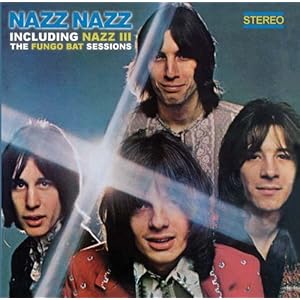
The Rockaliser 30: The Nazz, Nazz Nazz/Nazz III: The Fungo Bat Sessions (1968)
Before embarking on a legendary run of 70s solo albums, Todd Rundgren paid his dues as a guitarist and songwriter on the Philadelphia rock circuit. His band, the Nazz (alternately “Nazz”) was a local success for a while in the late 60s, first as a teenybopper group in the vein of the Monkees, then as a heavy psychedelic rock quartet along the lines of Cream or Blue Cheer. Outside of Philadelphia, though, the band struggle with a breakthrough hit—their first album, Nazz, featured the single “Open My Eyes”/”Hello It’s Me,” which was initially unsuccessful. The former song would later appear on the psychedelic compilation Nuggets, while a re-recording of the latter would become one of Rundgren’s biggest solo hits.
By the time the Nazz got around to cutting the songs that would form the material for their second and third albums, Nazz Nazz and Nazz III, Rundgren was already chafing at the restrictions imposed by his band mates and his record label. No one was pleased with the guitarist’s sudden interest in Laura Nyro-style piano ballads (Rundgren was dating Nyro at the time). Moreover, Rundgren’s increased propensity for genre-hopping and studio experimentation left little room for songwriting contributions from bassist Carson Van Osten and keyboardist Robert “Stewkey” Antoni. Rundgren’s original plan was to release all the songs from the sessions as a double album called Fungo Bat, but most of his piano tunes were left off the record, and the remaining rockers were released as Nazz Nazz. Rundgren left the band in disgust, and thus began his storied solo career. The remaining songs were released, after the Nazz had broken up and without their consent, as Nazz III.
The latter two entries in the Nazz discography have their individual charms, but the 2006 release of Nazz Nazz/Nazz III: The Fungo Bat Sessions combines them definitively, demonstrating that these songs were part of the same sessions for a reason. If you separate out the bonus tracks from each CD, this is the album Rundgren intended to make from the beginning. It’s an insanely encyclopedic collection of riffs on 60s acid rock—most, but not all, of the British variety—and in typical Rundgren fashion, the album bursts with brightly covered pop arrangements, epic guitar breakdowns, and moments that defy even the broadly inclusive parameters of “psychedelia.” The album’s first song, “Forget All About It,” is a veritable symphony of rocking psychedelic hooks, shimmering through a cascade of bells and squealy guitars like a proto-punk Byrds. Even by Nuggets standards, this is aggressive, forward-thinking psych rock. Other songs, like “Under the Ice” seem to precipitate the extended riff groove of hard rockers like Thin Lizzy. Still other songs present “Rundgren-ized” takes on the Yardbirds, the Association, and Syd Barrett-era Pink Floyd. The first record ends with a 10+ minute epic jam (Todd's first of many) “A Beautiful Song,” which banks on the buildup of stately horns and sweeping strings in a manner not unlike the Floyd’s “Atom Heart Mother Suite.” That staggering song predicts some of Todd’s later long-form songwriting, as well as his contributions to prog rock side project Utopia.
As a discrete listening experience, Nazz III may seem even more lacking than its predecessor, but as the second part of The Fungo Bat Sessions, it highlights two elements that are less present in Nazz Nazz: Van Osten’s songwriting contributions, and Rundgren’s studio weirdness. Van Osten’s best tune is “Christopher Columbus,” a Cream-ish riff monster that pokes fun at the Italian explorer. Rundgren’s hardest rocker on the record, “Magic Me,” is similarly intense, although it is performed with a devilish sense of humor. And then there are the ballads—”Only One Winner,” “You Are My Window”— Tin Pan Alley piano of the type you would never hear on a Cream record, and another sign of things to come.
Consider how the White Album may have sounded if the second LP had been released as its own album—it would likely be characterized as a lesser collection of studio cast-offs and B-sides. In the same vein, Nazz III and Nazz Nazz make a lot less sense without each other for context. Copies of The Fungo Bat Sessions are incredibly difficult to find—you can snag a used copy on Amazon for $40—but it’s worth the effort, if only for a chance to listen to Todd Rundgren’s first forgotten opus the way he imagined it. Here’s a secret that even a lot of Todd fans don’t know: forget the Runts, this is where his solo career begins.
Saturday, July 7, 2012
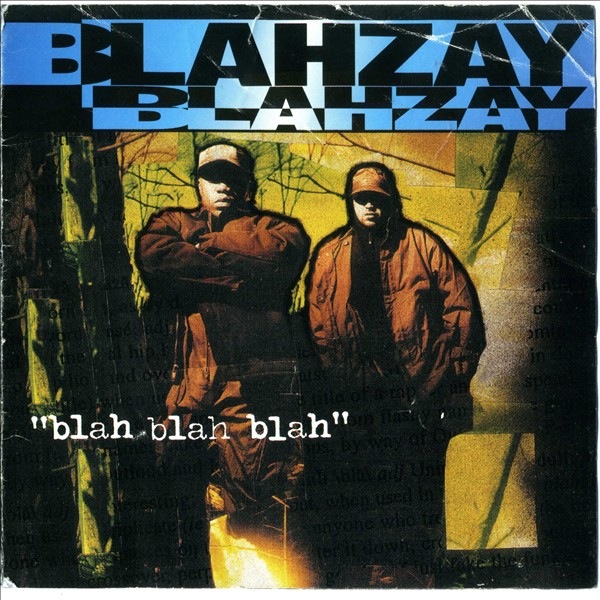
The Rockaliser 30: Blahzay Blahzay, Blah Blah Blah (1996)
[Welcome To the Rockaliser 30, a month-long series devoted to classic albums that have been eclipsed, forgotten, misheard, or otherwise not given their propers. This is Day Seven. Archive here.]
There’s what some enthusiasts refer to, perhaps too casually, as “no-bullshit” hip-hop, and then there are albums like Blahzay Blahzay’s Blah Blah Blah, which sidestep determinations of BS altogether by inverting the principles of normative rap posturing. This is one of the finest East Coast releases of the mid-90s, but it doesn’t sound exactly of its time—parts of it hit the purest pleasure centers of the brain like an early 90s Golden Age record, other parts summon the ghosts of earlier eras. It’s a record that resists easy determinations, especially since it’s the only full-length release ever put out by Blahzay Blahzay. There’s something refreshingly literal about the duo’s approach to hip-hop sonics, as one might expect from the union of a rapper who calls himself “Outloud” and a DJ with the moniker “Cuttin’”. The name Blah Blah Blah may invoke literal nonsense as its cover, but the content inside couldn’t contrast more sharply—as Outloud brags on standout track “Pain I Feel,” “I drop clarity like keratin.”
Blahzay Blahzay was designed from the beginning to be an important but peripheral force on New York rap. Outloud and Cuttin’ first got together in 1985, more than a decade before Blah Blah Blah was released, and in that period the duo produced songs for Juice Crew artists like Craig G. and Masta Ace. They took a lot of time putting out their own material, but their careful approach paid off when their 1995 single “Danger” became a smash hit. “Danger” also features Outloud’s densely orchestrated flow schemes, really laying the accents on internal rhymes like “Surged most preferred from the verbs and the words.” The rapping is amazingly good on “Danger,” and on Blah Blah Blah in full. One particularly ambiguous rap performance is “Good Cop/Bad Cop,” which dramatizes the interactions between two NYPD officers as one “good” cop becomes suspicious of a “bad” cop’s racism and abuse of power. It’s one of the few hip-hop songs that really sells a policeman’s perspective in an engaging, non-reductive fashion.
Cuttin’s beats are often even more extraordinary than Outloud’s thoughtful, critical raps. The sample featured on Blah Blah Blah’s “Intro” is taken from the Mahavishnu Orchestra’s mesmerizing fusion anthem “You Know You Know” (New York hip-hop, then and now, was one of the few scenes to take Mahavishnu-Weather Report jazz fusion seriously). From the crisp piano figure of “Blah Blah Blah” to the hazy organ of “Don’t Let This Rap Shit Fool You” to the sauntering guitar line that appears at 2:18 of “Pain I Feel,” the album is a trove of memorable sound combinations. In terms of emcee/DJ musical synergy, Blahzay Blahzay should at least be spoken of in the same terms as Gang Starr or Pete Rock & CL Smooth. Why they limited their output to one album and a maxi-single (“Not Now” b/w “Dat Shit,” from 2000), I’m not entirely sure, but it could be that Blahzay Blahzay was one of those groups that preferred the background, and only needed to prove what they could do once. Would that the architects of so many promising hip-hop debuts have done the same, modern hip-hop culture might be far less ego-driven.
There’s what some enthusiasts refer to, perhaps too casually, as “no-bullshit” hip-hop, and then there are albums like Blahzay Blahzay’s Blah Blah Blah, which sidestep determinations of BS altogether by inverting the principles of normative rap posturing. This is one of the finest East Coast releases of the mid-90s, but it doesn’t sound exactly of its time—parts of it hit the purest pleasure centers of the brain like an early 90s Golden Age record, other parts summon the ghosts of earlier eras. It’s a record that resists easy determinations, especially since it’s the only full-length release ever put out by Blahzay Blahzay. There’s something refreshingly literal about the duo’s approach to hip-hop sonics, as one might expect from the union of a rapper who calls himself “Outloud” and a DJ with the moniker “Cuttin’”. The name Blah Blah Blah may invoke literal nonsense as its cover, but the content inside couldn’t contrast more sharply—as Outloud brags on standout track “Pain I Feel,” “I drop clarity like keratin.”
Blahzay Blahzay was designed from the beginning to be an important but peripheral force on New York rap. Outloud and Cuttin’ first got together in 1985, more than a decade before Blah Blah Blah was released, and in that period the duo produced songs for Juice Crew artists like Craig G. and Masta Ace. They took a lot of time putting out their own material, but their careful approach paid off when their 1995 single “Danger” became a smash hit. “Danger” also features Outloud’s densely orchestrated flow schemes, really laying the accents on internal rhymes like “Surged most preferred from the verbs and the words.” The rapping is amazingly good on “Danger,” and on Blah Blah Blah in full. One particularly ambiguous rap performance is “Good Cop/Bad Cop,” which dramatizes the interactions between two NYPD officers as one “good” cop becomes suspicious of a “bad” cop’s racism and abuse of power. It’s one of the few hip-hop songs that really sells a policeman’s perspective in an engaging, non-reductive fashion.
Cuttin’s beats are often even more extraordinary than Outloud’s thoughtful, critical raps. The sample featured on Blah Blah Blah’s “Intro” is taken from the Mahavishnu Orchestra’s mesmerizing fusion anthem “You Know You Know” (New York hip-hop, then and now, was one of the few scenes to take Mahavishnu-Weather Report jazz fusion seriously). From the crisp piano figure of “Blah Blah Blah” to the hazy organ of “Don’t Let This Rap Shit Fool You” to the sauntering guitar line that appears at 2:18 of “Pain I Feel,” the album is a trove of memorable sound combinations. In terms of emcee/DJ musical synergy, Blahzay Blahzay should at least be spoken of in the same terms as Gang Starr or Pete Rock & CL Smooth. Why they limited their output to one album and a maxi-single (“Not Now” b/w “Dat Shit,” from 2000), I’m not entirely sure, but it could be that Blahzay Blahzay was one of those groups that preferred the background, and only needed to prove what they could do once. Would that the architects of so many promising hip-hop debuts have done the same, modern hip-hop culture might be far less ego-driven.
Thursday, July 5, 2012
The Rockaliser 30: Felt, Felt (1971)
[Welcome to the Rockaliser 30, a month-long series devoted to classic albums that have been eclipsed, forgotten, misheard, or otherwise not given their propers. This is Day Five. Archive here.]
This version of Felt is not the Birmingham post-punk group (“Sunlight Bathed The Golden Glow”), nor is it the hip-hop collaboration between Murs and Slug of Atmosphere fame. There was another Felt that operated in the early 70s, purveyors of psychedelic blues rock in the manner of Mountain or Blue Cheer. Their self-titled 1971 debut is a packed full of tasteful yet energetic psych jams, one of which stretches past the ten-minute mark. If that doesn’t sound appealing, we simply have incompatible music interests. Great psychedelic blues rock expands the mind and invigorates the soul, but it is admittedly not a type of music whose pleasures can be explained very easily.
For an album with only six songs total, Felt covers a lot of ground, from blues to jazz to pop, all without sacrificing any of the band’s essential heavy rock-ness. The first tune is probably Felt’s most “famous,” a Beatle-esque ballad called “Look At the Sun.” On that song, 17-year old singer/guitarist Myke Jackson sings in a high yet unaffected register, wistfully observing that “the sun is like a lover/growing bright and warm each day,” as the irresistible piano melody cycles through moments of hope and plaintive absolution, settling on neither. The next song “Now She’s Gone” incorporates elements of jazz guitar into the Felt aesthetic, courtesy of second guitarist Stan Lee (!). The tense jazz beat is replaced early in the song by a slower, hazy Pink Floyd-type progression, and just as the listener becomes tired of the spacey aesthetic, the jazz figure returns with more aggression and energy. The next song, “Weepin’ Mama Blues,” is indeed a slow blues burn all the way through, albeit one with an anti-Vietnam message. The slower pace suits some of Felt’s heaviest guitar moments, which are augmented by Allan Dalrymple’s furious keyboards. Smilin’ Stan’s guitar solos aren’t bad, either. The fourth track, “World,” is different kind of blues burner with a cool bass intro, a mighty Zeppelin-esque riff, and a more limber melody than “Weepin’ Mama Blues.” In this song, bassist Tommy Gilstrap gets a few really great moments, especially in tandem with drummer Mike Neel, although neither musician draws inappropriate attention to their musicality. The following song “The Change” is the 10+ minute track referred to earlier and possibly Felt’s greatest performance. Essentially this is a medley of three songs, the first of which is their heaviest riff yet (think Black Sabbath this time) punctuated by moments of high-end blues soloing. The remainder of the song alternates between a rudimentary boogie with wah-wah solos and an epic extended riff that becomes more and more intense as the running time expands. If you’re someone who can admit to liking “Stairway To Heaven” and “November Rain,” this crosses a similar threshold of epicness. The last song, “Destination” returns to a pleasant, inoffensive jazz rhythm, dramatically ratcheting down the tension from “The Change.” Like “Now She’s Gone,” jazz elements alternate with bluesier sequences, but this time the jazz parts are more about setting mood and less about generating contrasting space to rock out.
Felt is a strange, airy album that lays a subtle groove but nevertheless exerts passion and instrumental fury. To me, that approach to art, more than fidelity to any particular sound, signifies what is and isn’t “classic” rock.
Tuesday, July 3, 2012
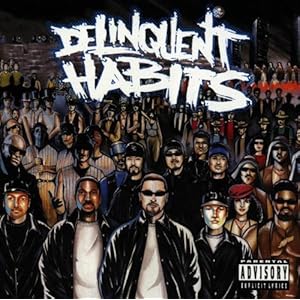
The Rockaliser 30: Delinquent Habits, Delinquent Habits (1996)
Latinos have been a part of hip-hop culture since the beginnings of the genre, but it took a while for artists to develop a workable strain of hip-hop that combined classic old school boom-bap with the mariachi horns and flamenco guitar licks of Latin music. As often happens, the two genres did not fit together naturally at first. Artists like Mellow Man Ace and the Beatnuts brought Spanglish and other assorted lyrical tricks to the table, but the actual combination of the two styles was still a novelty at the beginning of the 90s. Cypress Hill, arguably the first great Hispanic hip-hop group, merged some of those innovations to gangsta rap, with its vituperative collective rage against institutional racism and LAPD brutality. In terms of production, however, gangsta rap tended to be suspicious of sounds that could be construed as novelty. On Cypress Hill’s early albums, there was a resistance to genre signifiers such as brassy trumpets. The sounds were sometimes there, but never in the forefront, because the basic vocabulary had yet to be developed.
By 1996, however, artists like Big Pun and Fat Joe had precipitated a wave of Hispanic rap artists, and outside of America, a reggae and dancehall revolution was brewing. In this period before Latino crossover sounds took over pop radio, there was a lot of really interesting, even bizarre rap music that attempted to cross genres in ways that wouldn’t seem winking or overdone. Often this wouldn’t work, but sometimes some bizarre alchemy was achieved, as was the case with Delinquent Habits. Under Cypress Hill rapper Sen Dog’s tutelage, Delinquent Habits struck a mighty vain of hip-hop fusion in their self-titled debut album that resembles not much else of its genre. The group, consisting of MCs Ives and Chente Loco and DJ WizA, wedded an old school vibe to lyrics that mixed Spanglish, Spanish and English with gleeful skill. Though the group are not as influential as Cypress Hill, their debut demands reconsideration, beginning with the opening bilingual rattler “Tres Delinquentes.”As someone who doesn’t know more than a few words of Spanish, I’m not one to vouch for the two emcees’ bilingual skills, but whatever they happen to be saying, it goes along perfectly with the mariachi trumpet and acoustic guitar strums.
These brilliant exercises at genre fusion go beyond just Latin music and hip-hop. Delinquent Habits is also among the few albums this side of the Judgment Night soundtrack to feature a decent rap-rock cut with a live band, “When the Stakes Are High.” That song, the album’s final track, contains guitar work so gnarly that it could have been air-dropped into an Anthrax or Suicidal Tendencies song. Like many cuts on the album, it can seem off-putting and schizophrenic at first, but Ives and Loco’s raps hold everything together. They could throw together brilliant hooks, too: “Juvy ain’t shit but practice for the state pen/Out for a month and I’m back innnnnn” being a good one. Videos were made for two singles, “Tres Delinquentes” and “Lower Eastside,” but the album’s greatest accomplishment is probably the eighth track, “Good Times.” A reflective, emotional number anchored by a mournful Clarence White guitar sample (from the Byrds version of Dylan’s “Lay Lady Lay”) the chorus of “Good Times” is its message: “Even though I said my life was bad/I reminisce on all the good times that I had.” Rejecting both the macho pride in violence and the operatic self-pity of many inner-city autobiographical raps, Ives and Chente Loco suggest that the bad side of growing up can easily poison one’s childhood recollections. However, by contrasting those memories with fleeting moments of genuine happiness, one can make productive, uplifting art. Not an original message, nor is it necessarily a perfect argument, but this is a nuanced, thoughtful view of transcending individual experience that is rarely expressed so plainly. Delinquent Habits is full of hybrid moments like that, and nearly all of them work.
Sunday, July 1, 2012
The Rockaliser 30: Hawkwind, Warrior on the Edge of Time (1975)
[Welcome To the Rockaliser 30, a month-long series devoted to classic albums that have been eclipsed, forgotten, misheard, or otherwise not given their propers. This is Day One. Archive here.]
In 1972, the prolific science fiction writer Michael Moorcock published a semi-autobiographical book called Breakfast In the Ruins: A Novel of Inhumanity, which included a note claiming that the author had recently died of lung cancer. This was meant to be a joke, but in the pre-Internet age, fans were distraught at the news, with no immediate way of telling whether that part of the book was meant to be speculative or serious. Author Neil Gaiman, a fan of Moorcock's since childhood, would later write a short essay and comic “One Life Furnished in Early Moorcock,” which amusingly quotes Moorcock in a 1976 interview, commenting on the response to his Breakfast In The Ruins joke:
Admittedly, as with most concept albums, the storyline is barely coherent. I consider Moorcock to be one of the best science fiction authors, but his often alienating prose style did not always translate into compelling theme or character, even with memorable lyrical buzzwords like “the sands of time,” “corridors of flame,” and references to the mythologies of iconic Moorcock characters like Elric of Melniboné being bandied about. Spacey, psychedelic lyrics were always part of the Hawkwind sound, but that was usually a byproduct of the music itself, along with its sludgy Krautrock grooves, backwards vocal effects, wild bits of free jazz violin, and impenetrably murky production. With Warrior on the Edge of Time, the band built the music around Moorcock’s concepts, rather than any particular storyline, and the transitions between the conventional rock tunes, epic space jams and spoken-word sound collages (read by Moorcock himself) are much smoother as a result. One very notable transition is found in the opening double KO of “Assault & Battery/”The Golden Void,” two of Hawkwind’s most epic and mind-blowing compositions, which reinforce each other seamlessly. The same is also true of the final two songs, the speedy rockers “Kings of Speed” and “Motorhead”--the latter, of course, was bassist Lemmy’s mid-70s statement of purpose and last contribution to the group.
Moorcock’s lyrical strategy was not to write a linear fantasy tale, but to apply his facility for arresting high concept imagery in a manner that reinforces the strangeness of the music. With the possible exceptions of Philip K. Dick and J.G. Ballard, he was probably the only sci-fi thinker at the time good enough to pull off something this weird. With its surreal sense of dramatics and unpredictable pacing, Warrior on the Edge of Time is the ideal conceptual intersection between writer and band, two of the twentieth century's most endearingly unrestrained creative forces.
In 1972, the prolific science fiction writer Michael Moorcock published a semi-autobiographical book called Breakfast In the Ruins: A Novel of Inhumanity, which included a note claiming that the author had recently died of lung cancer. This was meant to be a joke, but in the pre-Internet age, fans were distraught at the news, with no immediate way of telling whether that part of the book was meant to be speculative or serious. Author Neil Gaiman, a fan of Moorcock's since childhood, would later write a short essay and comic “One Life Furnished in Early Moorcock,” which amusingly quotes Moorcock in a 1976 interview, commenting on the response to his Breakfast In The Ruins joke:
That fucking biography. Shortly after it came out I was at a Hawkwind gig, stoned out of my brain, and these people kept coming up to me, and I thought I was dead. They kept saying, "You’re dead, you’re dead." Later I realized what they were saying, "But we thought you were dead."There's something about this surreal scenario, of a British author being told "you're dead, you're dead" by random passersby to the soundtrack of one of Hawkwind's legendary 70s live shows, which is typical of the diabolically reflexive creative synergy between this particular writer and band, which is like nothing else in rock history (Robert Hunter and the Grateful Dead do not come close). Between them, they shared a love of grand, epic world-building, but they were also pranksters at heart, and they didn’t mind if some of their high concepts struck listeners as nonsensical or silly. Hawkwind’s third studio album, 1972’s Doremi Fasol Latido, featured the David Brock-written “Space Is Deep,” which contained elements of Moorcock’s “Black Corridor” poem, appearing again as the song “Black Corridor” on the live album Space Ritual. Moorcock wrote a few other songs for the group in this period, and sometimes joined the band onstage, often whenever main vocalist Robert Calvert was hallucinating too intensely to perform. Their collaborative process would reach fruition with Warrior on the Edge of Time, the culmination of Hawkwind’s staggering five-album run of early 70s masterpieces and an eerily powerful science-fiction concept album.
Admittedly, as with most concept albums, the storyline is barely coherent. I consider Moorcock to be one of the best science fiction authors, but his often alienating prose style did not always translate into compelling theme or character, even with memorable lyrical buzzwords like “the sands of time,” “corridors of flame,” and references to the mythologies of iconic Moorcock characters like Elric of Melniboné being bandied about. Spacey, psychedelic lyrics were always part of the Hawkwind sound, but that was usually a byproduct of the music itself, along with its sludgy Krautrock grooves, backwards vocal effects, wild bits of free jazz violin, and impenetrably murky production. With Warrior on the Edge of Time, the band built the music around Moorcock’s concepts, rather than any particular storyline, and the transitions between the conventional rock tunes, epic space jams and spoken-word sound collages (read by Moorcock himself) are much smoother as a result. One very notable transition is found in the opening double KO of “Assault & Battery/”The Golden Void,” two of Hawkwind’s most epic and mind-blowing compositions, which reinforce each other seamlessly. The same is also true of the final two songs, the speedy rockers “Kings of Speed” and “Motorhead”--the latter, of course, was bassist Lemmy’s mid-70s statement of purpose and last contribution to the group.
Moorcock’s lyrical strategy was not to write a linear fantasy tale, but to apply his facility for arresting high concept imagery in a manner that reinforces the strangeness of the music. With the possible exceptions of Philip K. Dick and J.G. Ballard, he was probably the only sci-fi thinker at the time good enough to pull off something this weird. With its surreal sense of dramatics and unpredictable pacing, Warrior on the Edge of Time is the ideal conceptual intersection between writer and band, two of the twentieth century's most endearingly unrestrained creative forces.
Saturday, June 30, 2012
The Rockaliser 30 Begins
Over the course of July, my colleague Aaron Mendelson and I will be nominating an album each day that we believe ranks among the best music ever made. The process for getting an album into the 30 was simple: we each drew up a list of albums we felt deserved further scrutiny or recognition, and then narrowed our lists down to fifteen entrants each. Between the two of us, that adds up to thirty albums total. Simple math, simple methodology.
The original pitch for this was something along the lines of “mini 33 1/3 books about albums that despite being really good are not very well known, are perceived as too niche-y or eccentric, are not an artist’s most beloved, or have a miniscule cult audience.” This is emphatically not a list of “most underrated” albums, or anything to that effect. These are albums that have been eclipsed, forgotten, misheard, or otherwise not given their propers. Music listeners in 2012 have short attention spans, and these records seem like they’ve slipped through the cracks in our conversations.
Yes, this is another music list, although it’s not in any particular order, and it’s not comprehensive, diverse, or an “edgy” alternative to a Rolling Stone list or anything else. Again, this is purely about what offers aural pleasure in its most concentrated form. Over the course of these next four weeks, expect to see entries that run the gamut from 70’s jazz fusion to twee grunge to the New Wave of British Heavy Metal to the most unlikely of Neil Young LPs (or one of the most unlikely). No matter how these albums are rated in the public mind, in our estimation they deserve to occupy spots next to revered classics London Calling, Exile On Main St., 154, Illmatic etc. The Rockaliser 30 is about recognizing the forgotten albums that are as good as those masterpieces. Call it “Left of the Canon,” to bastardize something the young Paul Westerberg said.
***
Happily, that's not even the end of the July festivities. Stay tuned at the end of the month, when we’ll share some major news about upcoming projects from your Rockaliser scribes. Although those who pay attention to our Twitter account may already have an inkling of what I’m talking about…anyway check back for that.
And start checking Rockaliser.com, which is this exact same blog at a slightly different and much more memorable URL.
Elsewhere on the web you can find us on This Is My Jam, where you can see what songs we are currently obsessing over, and Formspring, where you can ask us questions, about the Rockaliser 30 or anything beyond—we shall try to answer even the most rambling of queries, and that’s another Rockaliser guarantee.
One more bit of news: we got a big spike in traffic (in Rockaliser terms) when my esteemed colleague’s piece on Eric Clapton’s history of racist invective was linked to in passing by the gossip site Gawker, in Mobutu Sese Seko’s article “Kid Rock Is Soul-Fucking America.” We are of course honored to be included even tangentially in Gawker’s brave ongoing battle against “hipster racism,” whatever that means. That aside, check out the Clapton piece--it holds up.
Sunday, January 8, 2012
Rockaliser Radio 2: Rockcast of Consensus
Recalling vintage 1994-era Siskel & Ebert, your Rockaliser writers have independently cast the same vote for 2011's best album, and it's not what you think...unless you've browsed through this blog in the past week and read our lists in written form, here and here--then you know it's Destroyer's Kaputt.
1. Destroyer, Kaputt
2. Fucked Up, David Comes To Life
3. The Pains of Being Pure At Heart, Belong
4. PJ Harvey, Let England Shake
5. St. Vincent, Strange Mercy
6. Shabazz Palaces, Black Up
7. Wye Oak, Civilian
8. Big K.R.I.T., Return of 4Eva
9. Low, C'mon
10. Van Hunt, What Were You Hoping For?
1. Destroyer, Kaputt
2. Raphael Saadiq, Stone Rollin'
3. DJ Quik, The Book of David
4. Big K.R.I.T., Return of 4Eva
5. Fucked Up, David Comes To Life
6. Blouse, Blouse
7. Boris, New Album
8. A$AP Rocky, LiveLoveA$AP
9. Mutemath, Odd Soul
10. Yuck, Yuck
Thanks to my colleague for an excellent conversation, and for introducing me to a few artists (Van Hunt, Shabazz Palaces) who would have otherwise slipped past my radar. Thus endeth the season of Rockaliser EOY festivities--time to get on to some real writing!
Wednesday, January 4, 2012
Nathan's Favorite Music, 2011 Edition

1. Destroyer, Kaputt
The smoothest, most immersive listening experience of 2011, by a considerable margin. Singer/songwriter Dan Bejar takes a few compositional cues from AOR and soft rock but this nine-song set is the opposite of anodyne--it constantly teems with fresh ideas, from the silvery disco pulse beneath to the proudly anachronistic flute and sax solos on top. If there's a theme to this list, it's that the best music of 2011 didn't care what year it was.
2. Raphael Saadiq, Stone Rollin'
Saadiq is a veteran showman, producer and arranger, but his bounteous command of classic soul productions usually lags behind his skills as a songwriter. Not so with Stone Rollin', an album of immaculately-orchestrated tributes to different eras of soul, entirely devoid of retro-gazing. In 2011, no album made more mellifluous use of the Mellotron, an instrument not traditionally associated with soul and R&B, modern or otherwise.
3. DJ Quik, The Book of David
He may call himself a "crucial if not lesser-known artist from the West" but the pristine beats of The Book of David demonstrate that Quik, if not before, definitely now deserves a place in the top tier of West Coast hip-hop. Few late-career rap albums are as restlessly committed to an unstoppable groove--in Quik's eyes, funk and hip-hop are always mutually reinforced properties, etymologically unrelated to the overprocessed goo-goo synths of much modern hip-hop.
4. Big K.R.I.T., Return of 4Eva
Though Big K.R.I.T. has garnered a reputation as a Southern rap virtuoso, his 2011 mixtape Return of 4Eva is more than just a collection of a creatively-expressed drawly Southernisms spat over crunkified click tracks. K.R.I.T. is also rapper of great depth and range, and his evocations of life in rural Meridian, Mississippi give this album a country flavor that puts most rap from the city, Southern or otherwise, to shame.
5. Fucked Up, David Comes To Life
Just when you thought Fucked Up's massive three-guitar sound couldn't get bigger, they embark on the most epic undertaking of their career--a three-part, eighteen-song concept album about a dude in a lightbulb factory. The overall "concept" might be a bit lost among the fuzz and stentorian talk-vox, but the twin totems of beauty and aggression endemic in Fucked Up's best work are still there, to a transcendent, almost tiring degree.
6. Blouse, Blouse
Call them a dream-pop trio from Portland, but that really fails to do the sounds of Blouse justice. Coasting on the familiar 80s combination of gothic synths and ethereal lady vocals, Blouse makes novel use of common instrumental techniques. Their self-titled debut album is alarmingly dense, averaging an impressive two or three massive hooks per track. Consistency of this sort is harder than it looks.
7. Boris, New Album
In a characteristic move, the beloved Japanese metal band Boris set out to confuse fans as much as possible by releasing three albums in 2011. Attention Please was the more electronic-oriented release, while Heavy Rocks concentrated more on the band's aggressive punk-metal roots--but it was New Album, occupying a nebulous middle between those two extremes, that I found the most compelling. From careening Timbaland percussion stabs to string-laden metal monsters to the occasional dalliance with J-Pop, the diversity of tunes contained was unmatched in metal, or anywhere else.
8. A$AP Rocky, LiveLoveA$AP
As my colleague has previously noted, 2011 was a big year for insurgent rap from the likes of Odd Future, Lil B, Danny Brown, etc, but I bet that in 2012 I won't be spinning anything from that 2011 repertoire as often as LiveLoveA$AP, Harlem rapper A$AP Rocky's breakthrough mixtape. Augmented by spacey, codeine-inflected beats from the likes of Clams Casino and Spaceghostpurrp, 24-year old A$AP spits like a emcee repping an extra decade's worth of self-assurance. The result is a rare mixtape with almost too many classic tracks to name offhand.
9. Mutemath, Odd Soul
Bands like New Orleans' Mutemath--solid, dependable and exciting purveyors of mainstream blues rock--are an undervalued commodity in America. Mining everything from classic NO jazz to Peter Green-style blues guitar freakouts, Odd Soul is first and foremost an album filled with remarkable performances, from musicians who have clearly spent years learning to play together aggressively and effectively. There's a soulful side to these heavy riffs that give this a more playful and funky edge than recent material from, say, the Black Keys or other blues rock revivalists.
10. Yuck, Yuck
Speaking of bands not made for these times--the London-based Yuck might have garnered more comparisons to Dinosaur Jr. and Pavement than any other artist in 2011, but that doesn't take any value away from the explosive energy of this debut. In my opinion, Yuck isn't a perfect album (it does lose some energy towards the end), but as far as debuts go I cannot imagine a more youthful-sounding rejoinder to the pre-end times rhetoric of so much "2011 in music" think pieces.
Honorable Mention: Gil Scott-Heron and Jamie XX, We're New Here
A year ago, I gave Gil Scott-Heron's I'm New Here the highest accolades on my list of 2010's best albums. Back then, it was his big comeback album, but now it has become his swan song--Scott-Heron died in May, ostensibly during the planning stages for a followup to I'm New Here. A few months before, however, XL Recordings put out a remixed version of the album, with new productions from Jamie Smith (the bassist/singer from the xx). Though Gil Scott-Heron's vocal contributions are the same as before, We're New Here is at least 60% its own beast, and at the very least, a more rattly, electronic type of experience than the original I'm New Here. It isn't exactly a different album, but I would be remiss if I did not mention it in some fashion--it, as well as its dead creator, one of the greatest poets and musicians of the last 50 years. RIP once more Gil--and Poly, Gary Moore, Teena Marie, etc. etc.
Labels:
2011,
A$AP Rocky,
Big K.R.I.T.,
Blouse,
Boris,
Destroyer,
DJ Quik,
Fucked Up,
Gil Scott-Heron,
List,
Mutemath,
Raphael Saadiq,
The xx,
Yuck
Monday, January 2, 2012
Refrain From Being Lame: Aaron's Favorites, 2011
1. Destroyer, Kaputt
An icy melange--flutes, saxophones, synthesyzers, Sibel Thrasher--that travels from diaphanous to propulsive, from merely wry to really and truly devastating.
2. Fucked Up, David Comes To Life
A band with a talent for outdoing itself, even when that no longer seems possible. Fucked Up's trio of guitars again concoct a sound as large as their vocalist, with melodies arriving from every angle. David has few roots in punk, but courses with the life-saving power that made punk special in the first place.
3. The Pains Of Being Pure At Heart, Belong
2. Fucked Up, David Comes To Life
A band with a talent for outdoing itself, even when that no longer seems possible. Fucked Up's trio of guitars again concoct a sound as large as their vocalist, with melodies arriving from every angle. David has few roots in punk, but courses with the life-saving power that made punk special in the first place.
3. The Pains Of Being Pure At Heart, Belong
Pains have emerged from the library stacks, with their bookish songcraft intact. Ecstasy may have been a catalyst, by the sounds of it, but their idea of the perfect rock LP suffers not a bit from being twenty years old.
4. PJ Harvey, Let England Shake
Harvey's dense folk passes by in a violent rush, unsparing in its studies of war, death, and ideology. The most restless songwriter since Neil Young, PJ hasn't repeated herself once, here brandishing her autoharp as a weapon.
5. St. Vincent, Strange Mercy
Annie Clark's guitar work is so texturally weird I often forget she's actually playing a guitar. Strange Mercy's buoyant art-rock is shot through with strange undercurrents--songs like "Cruel," "Suregon," and "Year Of The Tiger" dash in new directions each time I play them.
6. Shabazz Palaces, Black Up
The sound of a man driven mad by the noise of the city, filtered through beats constructed on a glowing monitor in total darkness. Or so I imagine: what I know for sure is that Shabazz Palaces' debut marks the most stunning reinvention since Daniel Dumile first donned a mask.
7. Wye Oak, Civilian
On their third, Wassner and Stack cut back on the blasts of surging guitar, following a tenser, more post-punk path. Wye Oak are still the most mournful rock band on the planet.
8. Big K.R.I.T., Return of 4Eva
9. Low, C'mon
Low make American Music in the way Neil Young does: brilliantly, toying with convention according to their idiosyncrasies. The Sparhawks' vision is, of course, a terrifying one.
10. Van Hunt, What Were You Hoping For?
A record that seems to have exploded out of Paisley Park--Van Hunt's cacophony is soulful, punkish and dripping in day glo. He's the rare songwriter making music about the Great Recession that sounds and feels like our times. Maybe that's the mechanism...
I wrote about most of these artists during 2011: Destroyer, Fucked Up, TPOBP@H, PJ Harvey, St. Vincent, Wye Oak, Low
4. PJ Harvey, Let England Shake
Harvey's dense folk passes by in a violent rush, unsparing in its studies of war, death, and ideology. The most restless songwriter since Neil Young, PJ hasn't repeated herself once, here brandishing her autoharp as a weapon.
5. St. Vincent, Strange Mercy
Annie Clark's guitar work is so texturally weird I often forget she's actually playing a guitar. Strange Mercy's buoyant art-rock is shot through with strange undercurrents--songs like "Cruel," "Suregon," and "Year Of The Tiger" dash in new directions each time I play them.
6. Shabazz Palaces, Black Up
The sound of a man driven mad by the noise of the city, filtered through beats constructed on a glowing monitor in total darkness. Or so I imagine: what I know for sure is that Shabazz Palaces' debut marks the most stunning reinvention since Daniel Dumile first donned a mask.
7. Wye Oak, Civilian
On their third, Wassner and Stack cut back on the blasts of surging guitar, following a tenser, more post-punk path. Wye Oak are still the most mournful rock band on the planet.
8. Big K.R.I.T., Return of 4Eva
Big K.R.I.T. references OutKast on two of his album's first three songs, but he's not just recreating the funk and bounce of vintage Kast. K.R.I.T., who mans the boards as well as the mic, pays tribute to the South by crafting a new addition to its canon.
9. Low, C'mon
Low make American Music in the way Neil Young does: brilliantly, toying with convention according to their idiosyncrasies. The Sparhawks' vision is, of course, a terrifying one.
10. Van Hunt, What Were You Hoping For?
I wrote about most of these artists during 2011: Destroyer, Fucked Up, TPOBP@H, PJ Harvey, St. Vincent, Wye Oak, Low
Thursday, October 13, 2011
Taking Souvenirs: R.E.M.'s 10 Best Albums
R.E.M. recently called it quits. I can't think of another band who had a decade as incredible as R.E.M.'s first, save for the Beatles (whose decade was only eight years). R.E.M. are one of my favorites, one of the greats. Listening to these records again has been my way of saying goodbye.
1. Murmur (1983)
1. Murmur (1983)
Peter Buck’s shiny, ringing Rickenbacker paints in faded
yellows, buoyed by the most melodic and modest of rhythm sections. The singer doesn't mumble, just pieces together syllables. Murmur exudes aura, and the band's gift was letting us live in it.
2. Life’s Rich Pageant (1986)
A louder, angrier, more engaged and more decipherable band.
At least at first—as Pageant unfolds, it
wades into sublime waters. Only a handful of records from the 80’s Amerindie
scene rival Murmur, but this is one
of them.
3. Reckoning (1984)
Murmur's sidelong attack, trained on exuberant and melancholy Americana. A record that traffics in undercurrents--Finster's art captures it well, with titles to match.
4. Chronic Town (1981)
Toss in the Hib-Tone single here. R.E.M. arrived with these
urgent, glancingly melodic oddities. They kick off their debut 7” and first EP with their very first pop moves.
5. Out Of Time (1991)
Guitar-pop that doesn’t sound huge, although the band was
getting there. R.E.M. went several directions, surveying baroque harmonies, jangle-goof and devastating mandolin.
6. Automatic For The People (1992)
An elegiac procession of tunes, stately even. Stipe commits to each line with fervor, with a range that's surprisingly varied. This is the music you hear when you're lost in thought.
7. Fables Of The Reconstruction (1985)
6. Automatic For The People (1992)
An elegiac procession of tunes, stately even. Stipe commits to each line with fervor, with a range that's surprisingly varied. This is the music you hear when you're lost in thought.
7. Fables Of The Reconstruction (1985)
You have to tear off the kudzu to unearth the brilliant
songwriting on Fables, but it’s there.
Darker and folksier, still a series of bread-crumbs.
8. Green (1988)
An uneasy mix of straight pop and dirgey folk-rock, of which
the band were newly fond. No noticeable
concessions to the major label—another fun, frightening colleciton.
9. Document (1987)
Featuring the worst production on a classic R.E.M. record, which neuters Bill Berry's drums. Thankfully, the band's sound had never been this strident before, playing with an ancient bite.
10. New Adventures In Hi-Fi (1996)
Expansive and rarely melodic, these sixty-six minutes of
arena alternative sketch a new landscape for the band. R.E.M.’s record for the
American West.
Tuesday, March 23, 2010
Frank Zappa's Ten Best Albums
I was reading this the other day, and I thought to myself, what other rock artist has the sheer depth of good material to merit a list as diverse as this one? I was thinking David Bowie, but he's only produced, at most, 12 great albums, and my choices would probably be predictable anyway (hint: Never Let Me Down doesn't make it). But then I thought to myself, who can match Dylan in terms of sheer recorded output? Lou Reed, maybe. And Frank Zappa.
Zappa and Dylan share a few defining characteristics: they're iconoclastic, genre-hopping, and not very good singers, plus they love to piss all over that already urine-drenched institution Rock Criticism (something they share with Reed as well, hm...). Upon closer inspection, though, it's easy to tell these were two people, vaguely defined as "pop stars," who nevertheless played wildly different games.
In the case of Zappa, he truly is the closest we've come to a great classical composer-as-rocker, as opposed to being merely a great guitarist or songwriter (let's forget about Roger Waters' operas, for now). The distinction between Zappa and virtually everyone else in the rock guitar game is as clear as day: for Zappa, rock music wasn't a way of life, it was merely incidental to his compositional and performance strategies. Nevertheless, he was also as prolific as they come, and having scoured through most of his repertoire (up to the 80s, honestly), I feel compelled to give my list of
THE TEN GREATEST FRANK ZAPPA ALBUMS (as chosen by Nathan)
(Note that I am lumping Frank Zappa, the Mothers of Invention, and all variations thereof because I think we can all agree they are all indelibly stamped with the personality of their primary creator.)
1. Läther
"You asshole," you're probably thinking. "Läther doesn't count--Warner Bros. wouldn't abide by Zappa releasing a quadruple album so the songs were split up into four lesser Zappa albums (Zappa In New York, Sleep Dirt, Orchestra Favorites and Studio Tan)." This is true, but it was eventually released the way Zappa intended, and it's as marvelous a 3-hour album as has ever existed, starting with some career-best fusion in "Regyptian Strut," continuing with the beautiful "Broken Hearts Are For Assholes," etc. etc. "The Adventures of Gregory Peccary" is one of his best longer pieces.
2. Zoot Allures
Unlike my No. 1, Zoot is lean and mean in addition to being a powerful experience, a showcase for some of the greatest guitar performances in rock history, including the opening blast of fuzz in "Wind Up Workin' In The Gas Station" and the mighty composition "Black Napkins," featuring fret runs so magnificent that a thousand budding electric guitarists gave up and became yuppies instead.
3. Hot Rats
The most beloved Zappa fusion album is also probably his best. Whenever I feel like having my mind blown, I listen to "Peaches en Regalia," and if for some reason I want to convulse to the guttural meanderings of Captain Beefheart, I sway along to "Willie The Pimp." The longer songs are front-to-back compelling and listenable, with none of the fat of some of Zappa's other fusion releases.
4. Over-Nite Sensation
Although this and Apostrophe (') are basically two parts are what is essentially the same album (so much so that a Classic Albums documentary lumped the two together), I prefer Over-Nite Sensation, slightly, if only because I love album opener "Camarillo Brillo" slightly more than "Don't Eat The Yellow Snow." I find the last minute of "Montana" to be irrationally exuberant, given its subject matter.
5. Freak Out!
For some people, Frank Zappa's first album with the Mothers of Invention will always be his greatest moment as a musician. In terms of weighing great songcraft against audacious experimentation ("Help, I'm A Rock!"), it certainly ranks up there. It's also probably Zappa's funniest album, and it has two of his greatest riff monsters in the form of "Hungry Freaks, Daddy" and the still-relevant "Trouble Every Day."
6. Apostrophe (')
Though, as stated earlier, I generally view this album as basically of a piece with Over-Nite Sensation, it functions as a great listening experience in his own right. The Yellow Snow/Nanook medley is a great three-part suite with wonderful drumming in particular, and the title track is one of the mightiest bass monsters ever concocted (played by Jack Bruce, I believe, whose personality didn't mesh with Zappa's at all).
7. We're Only In It For The Money
The Mothers' third album, which unlike Freak Out! takes quite a few listens to get into, WOIIFTM is still considered the classic anti-hippie polemic, featuring commentary that strikes me as alternately biting and overly simplistic. Nevertheless, it abounds with moments of compositional genius, my personal favorites being "Let's Make the Water Turn Black" and "Harry, You're A Best."
8. Waka/Jawaka
Though it will probably forever be known as Zappa's second-greatest fusion release, the only difference in terms of quality between this and Hot Rats is the lack of an opener as iconic as "Peaches en Regalia." The two shorter, poppier songs are as lovely as anything on Freak Out!, and the final title track begins with a great trumpet-induced frenzy of melody, almost Miles-ish in its exactness. It's one of my favorite moments on any Zappa album.
9. Absolutely Free
Equal parts sonic exploration and complete goof, the Mothers' second album laid out the blueprint for Zappa's future career, oscillating between longer medleys of melodic motifs and shorter, jokier songs (including yet another riff on "Louie, Louie"). I love the lascivious nature of "Why Don'tcha Do Me Right?" and the album includes one of my favorite rave-ups "Invocation & Ritual Dance of the Young Pumpkin."
10. Shut Up 'N Play Yer Guitar
A niche album to be sure, and a wildly uneven one at that, but if you're willing to sit through a lot to get through to those moments of beauty, this album acts as a great compendium for those wanting to know why Zappa is considered one of the greatest to pick up the guitar. There aren't many guitarists who can play for ten minutes and still remain as fascinating and memorable as they were at the beginning, but Zappa was a man of limitless, effortless skill and imagination.
Zappa and Dylan share a few defining characteristics: they're iconoclastic, genre-hopping, and not very good singers, plus they love to piss all over that already urine-drenched institution Rock Criticism (something they share with Reed as well, hm...). Upon closer inspection, though, it's easy to tell these were two people, vaguely defined as "pop stars," who nevertheless played wildly different games.
In the case of Zappa, he truly is the closest we've come to a great classical composer-as-rocker, as opposed to being merely a great guitarist or songwriter (let's forget about Roger Waters' operas, for now). The distinction between Zappa and virtually everyone else in the rock guitar game is as clear as day: for Zappa, rock music wasn't a way of life, it was merely incidental to his compositional and performance strategies. Nevertheless, he was also as prolific as they come, and having scoured through most of his repertoire (up to the 80s, honestly), I feel compelled to give my list of
THE TEN GREATEST FRANK ZAPPA ALBUMS (as chosen by Nathan)
(Note that I am lumping Frank Zappa, the Mothers of Invention, and all variations thereof because I think we can all agree they are all indelibly stamped with the personality of their primary creator.)
1. Läther
"You asshole," you're probably thinking. "Läther doesn't count--Warner Bros. wouldn't abide by Zappa releasing a quadruple album so the songs were split up into four lesser Zappa albums (Zappa In New York, Sleep Dirt, Orchestra Favorites and Studio Tan)." This is true, but it was eventually released the way Zappa intended, and it's as marvelous a 3-hour album as has ever existed, starting with some career-best fusion in "Regyptian Strut," continuing with the beautiful "Broken Hearts Are For Assholes," etc. etc. "The Adventures of Gregory Peccary" is one of his best longer pieces.
2. Zoot Allures
Unlike my No. 1, Zoot is lean and mean in addition to being a powerful experience, a showcase for some of the greatest guitar performances in rock history, including the opening blast of fuzz in "Wind Up Workin' In The Gas Station" and the mighty composition "Black Napkins," featuring fret runs so magnificent that a thousand budding electric guitarists gave up and became yuppies instead.
3. Hot Rats
The most beloved Zappa fusion album is also probably his best. Whenever I feel like having my mind blown, I listen to "Peaches en Regalia," and if for some reason I want to convulse to the guttural meanderings of Captain Beefheart, I sway along to "Willie The Pimp." The longer songs are front-to-back compelling and listenable, with none of the fat of some of Zappa's other fusion releases.
4. Over-Nite Sensation
Although this and Apostrophe (') are basically two parts are what is essentially the same album (so much so that a Classic Albums documentary lumped the two together), I prefer Over-Nite Sensation, slightly, if only because I love album opener "Camarillo Brillo" slightly more than "Don't Eat The Yellow Snow." I find the last minute of "Montana" to be irrationally exuberant, given its subject matter.
5. Freak Out!
For some people, Frank Zappa's first album with the Mothers of Invention will always be his greatest moment as a musician. In terms of weighing great songcraft against audacious experimentation ("Help, I'm A Rock!"), it certainly ranks up there. It's also probably Zappa's funniest album, and it has two of his greatest riff monsters in the form of "Hungry Freaks, Daddy" and the still-relevant "Trouble Every Day."
6. Apostrophe (')
Though, as stated earlier, I generally view this album as basically of a piece with Over-Nite Sensation, it functions as a great listening experience in his own right. The Yellow Snow/Nanook medley is a great three-part suite with wonderful drumming in particular, and the title track is one of the mightiest bass monsters ever concocted (played by Jack Bruce, I believe, whose personality didn't mesh with Zappa's at all).
7. We're Only In It For The Money
The Mothers' third album, which unlike Freak Out! takes quite a few listens to get into, WOIIFTM is still considered the classic anti-hippie polemic, featuring commentary that strikes me as alternately biting and overly simplistic. Nevertheless, it abounds with moments of compositional genius, my personal favorites being "Let's Make the Water Turn Black" and "Harry, You're A Best."
8. Waka/Jawaka
Though it will probably forever be known as Zappa's second-greatest fusion release, the only difference in terms of quality between this and Hot Rats is the lack of an opener as iconic as "Peaches en Regalia." The two shorter, poppier songs are as lovely as anything on Freak Out!, and the final title track begins with a great trumpet-induced frenzy of melody, almost Miles-ish in its exactness. It's one of my favorite moments on any Zappa album.
9. Absolutely Free
Equal parts sonic exploration and complete goof, the Mothers' second album laid out the blueprint for Zappa's future career, oscillating between longer medleys of melodic motifs and shorter, jokier songs (including yet another riff on "Louie, Louie"). I love the lascivious nature of "Why Don'tcha Do Me Right?" and the album includes one of my favorite rave-ups "Invocation & Ritual Dance of the Young Pumpkin."
10. Shut Up 'N Play Yer Guitar
A niche album to be sure, and a wildly uneven one at that, but if you're willing to sit through a lot to get through to those moments of beauty, this album acts as a great compendium for those wanting to know why Zappa is considered one of the greatest to pick up the guitar. There aren't many guitarists who can play for ten minutes and still remain as fascinating and memorable as they were at the beginning, but Zappa was a man of limitless, effortless skill and imagination.
Subscribe to:
Posts (Atom)