Part one is here.
"Go To Hell," Raphael Saadiq
Saadiq is a production maven--this year's Stone Rollin' sounds brilliant, even when the songs are mediocre--and nowhere is that more apparent than this track. One might expect "Go To Hell" to be dominated by bass, like Curtis Mayfield's dubby "If There's A Hell Below (We're All Going To Go)." And there is some wonderful, rolling bass here. But the treble dominates--"Hell" lifts off as soon as it starts, with its dreamy synths, and continues on an upward trajectory, fueled by strings, horns and backing vocals. Your usual palette, but especially vivid. Nothing invokes hellfire at all, and Saadiq's song soars higher and higher--this is a song that earns the lyric "we need more love in the world today"--until it enters the psychedelic promised land. Norman Whitfield would be proud.
"Muah," Electrik Red
Tricky and The-Dream's girl group project, released around the time of Love Vs. Money, bears the marks of their best work. "Muah" glides along, masking the dozen or so interlocking parts. It's complex, atmospheric music, one of the best productions on How To Be A Lady, Volume 1. And it turns out that female vocals make a lovely accompaniment to this sound, at least as good as Dream's own. The rub's in the lyrics, though. They closely resemble--how to say this--a certain male R&B auteur's idea of female empowerment. If I never hear Binkie spit her verse ("I'm not a freak, I'm not a ho/well I'm lying/but I'm classy though") again, that's fine here.
"Don't Let The Green Grass Fool You," Wilson Pickett
Wilson Pickett was a shouter with a knack for recording in the right places (the Wicked Pickett cut material at golden-era Stax and Muscle Shoals). This 1970 track found him in Philadelphia, working with Gamble and Huff just before their sound got huge. It's one of his sweeter numbers, and Pickett carries it with unusual restraint. The lyrics are a resigned plea, a mature missive from a man whose signature songs typically concern fucking. Pickett sells it though, his vocals a little more nuanced than on "Mustang Sally," even working in a few shouts where he can.
"Last Night Pt. 2," Diddy-Dirty Money
Diddy's Last Train To Paris was totally eclipsed by My Beautiful Dark Twisted Fantasy, to the point that critics deemed it only the 153rd best album of 2010. But Sean Combs' latest is quite good--star-studded and grandiose, much like Kanye's opus. Last Train is never so instantly pleasurable as on this bonus track, which Diddy mostly cedes to Dirty Money and co-writer James Fauntleroy (I think). It's a fairly straightforward Prince rip, recalling the drum programming and sparseness of "When Doves Cry" and "If I Was Your Girlfriend." Like those songs, "Last Night," peppers a lover with questions, although the questions aren't as weird in Diddy's song. To amend, "Last Night" drops a chiming, Prince-worthy melody. It's dope.
"I Got Love," Charles Wright and the Watts 103rd Street Rhythm Band
These guys are like Pavement's soul predecessors. Wright and his group jam on some of the loosest grooves ever laid down, forever sounding about to fall apart, behind the beat, and uncertain of what direction to go next. "I Got Love" is no exception to their formula, but this stoned soul number breezes by in a haze of melody and decomposing J.B.'s riffs. "I got the sun, the moon, the stars and the sky," Wright sings, "you're the only thing that can ruin my high." Maybe, maybe, but Wright sounds deeply in love, and soul this sweet has never harshed anyone's buzz.
"Shit, Damn, Motherfucker," D'Angelo
In just 45 words, D'Angelo paints an expressionistic portrait of love, rage and violence. It's delivered in the sultriest, most damaged voice--D'Angelo wasn't yet the sex symbol he became, but he sounded like one. And the slow groove, suggestive of the smoky backroom our narrator waded into, transmits the lyrics in slow-motion, stretching out each question, then flashing forward to find our man still uncertain of what's happened, even after his terrible mistake.
"Love Uprising," The Chi-Lites
The Chi-Lites do a pretty mean synthesis of The Impressions with solo Curits Mayfield. It's not a vast palette, but I mean this as a great compliment when I say that "Love Uprising" sounds like a song Mayfield could have made. "Love Uprising" works the same vibe as Superfly's "No Thing On Me (Cocaine Song)"--Eugene Record's lead resembles Mayfield's delicate vocal, and the strings summon a similar aura. Both songs are eminently hopeful. Wonderful things are possible, they say, with a little effort on our part. The 70's proved that things aren't that simple, but it saps none of these songs' power. Change starts with belief, and "Love Uprising" believes.
"Bob George," Prince
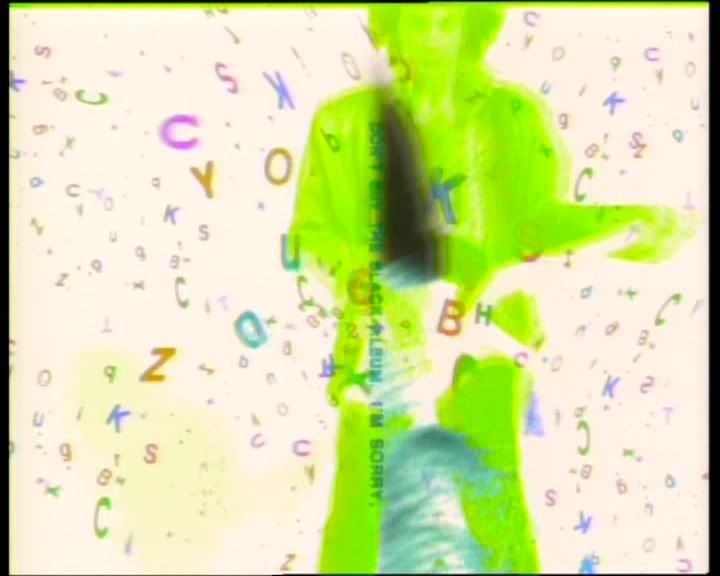
Prince didn't wan't you to buy The Black Album. Which means he doesn't want you to hear "Bob George," one of his sickest jams. Rocking a beat extremely similar to the previous year's "Housequake," it's an entire song of Prince spewing out hate. He plays a violent, vile pimp on a tear. His voice is pitched way down, and if the monologue hewed a little closer to the beat, this would be gangsta rap. It probably is anyway--the narrator unleashes gunfire, no small degree of hatred towards women and even slams the Purple One as "that skinny motherfucker with the high voice." Because you don't fuck with this dude. Who does he look like, baby? Yesterday's fool? For someone who can't stand them TV dinners, you sure eat enough of them motherfuckers.
Thursday, September 15, 2011

Monday, August 8, 2011
"David Comes To Life" By The Numbers
I caved yesterday and bought Fucked Up's David Comes To Life (my listening priorities have been elsewhere). I loved Fucked Up, and I love this beast of a record, perhaps as much as I did the last one.
I haven't necessarily loved the reviews, many of which seem pro forma. I set about determining how standardized reviews of DCTL have been, by picking out commonalities among the 28 reviews available online through Metacritic. If I had to spend another afternoon doing this, I might track occurrences of the phrases "arena," "pop," "American Idiot" and "ambitious." Extra demerits to Rolling Stone for describing Pink Eyes' vocals as a "barf-yowl." Here's the data, with the number of reviews out of 28 noting:
- That David Comes To Life has 18 songs: 13 (46%)
- That David Comes To Life is nearly 80 minutes: 19 (68%)
- That David Comes To Life is a concept album: 24 (86%)
- With a plot that is difficult to follow: 16 (57%)
- That quote lyrics: 3 (11%)
- That the album has a companion release, David's Town: 2 (7%)
- That Pink Eyes' real name is Damian Abraham: 16 (57%)
- That Abraham is physically a large man: 3 (11%)
- That Pink Eyes shouts/growls/barks etc.: 22 (79%)
- That Fucked Up have 3 guitarists: 12 (43%)
- That Fucked Up have 2 guitarists: 1 (4%)
- That Fucked Up's band name is explicit: 6 (21%)
- That David Comes To Life is a magnum opus: 5 (18%)
- That The Chemistry Of Common Life was the previous LP: 11 (39%)
- Similarities to Tommy, Quadrophenia or The Who: 9 (32%)
- Similarities to Zen Arcade or Husker Du: 8 (29%)
- Similarities to the Hold Steady: 3 (11%)
- That the album deserves four stars or equivalent: 17 out of 33 (52%)
An album like this should inspire strange, intense writing--as I imagine it will in coming months and years--rather than the narrow range of responses that greeted it.
Monday, August 1, 2011
Critical Beatdown: Round 13

Blitzen Trapper, "American Goldwing"
AM: Eric Earley doesn't have the hard living in his voice to sell a song like this. But as Cosmic American Muzak goes, this is pretty good. 3.5/5NS: There's something about "American Goldwing" that makes me actively recall the sound of the first few Grateful Dead records--the overall sound, not any song in particular. Maybe it's just that homey West Coast atmosphere wedded to pedal steel guitars. With Blitzen Trapper, even their most obvious classic rock pastiches are irresistible. 4.5/5
St. Vincent, "Surgeon"
AM: A buzzing, pulsing piece of art-pop. The opening synth-brew is wonderful on its own, but as the song gradually starts to race forward it becomes something truly special. I wasn't a convert before "Surgeon," but Annie Clark has my attention now. 5/5
NS: What makes Annie Clark's music so immediately striking? It's all about the instrumental development of songs like "Surgeon," which begins with a wash of a synth choirs and builds itself into a micro bass-funk symphony. Confounding songwriting and guitar playing throughout--this is progressive music in the best sense. 5/5
Jay-Z & Kanye West, "Otis"
AM: Yes, Jay, it does sound soulful. But juxtaposing yourself with an extended Otis Redding excerpt--that's setting yourself up to fail, though you both do well enough. Tag-teaming needs some work though. 3/5
NS: Not that there's much to complain about with "Try a Little Tenderness," but normally, I expect more subtle classic soul samplings from Mr. West. Meanwhile, Jay and Ye fire off the most rote capitalist cliches of the hip-hop leisure class, as is their wont these days. I prefer the Game's version. 2/5
Yes, "We Can Fly"
AM: I'm having trouble reviewing this one--every time I turn it on, my attention immediately turns to something else. There's actually quite a bit going on in "Fly," but it all drifts by in the airy flow. 2.5/5
NS: In the annals of Yes, this song is actually pretty exciting. Like the St. Vincent track, it builds around a panoply of noodly guitar and synth parts, which wouldn't go anywhere save for the galloping bass and new singer Benoit David's earnest delivery. Go ahead and hate, but there's not a lot of music like this anymore. 4/5
Mastodon, "Black Tongue"
AM: Mastodon hammer away at several ferocious grooves here--on this alone I can recommend "Black Tongue"--but none quite approaches world-immolating intensity. Maybe the next single? 4/5
NS: Tricky time signatures, double-tracked guitar lines, an embedded sense of dread--everything about this song is classic Mastodon. At the same time, there's also a lot of humor in this music, and the band deserves more credit than it gets for avoiding the histrionics of so much defanged mook-metal. 4/5
SuperHeavy, "Miracle Worker"
AM: Lot of cooks in the kitchen with this group, as this absurd photograph demonstrates. I have no idea how SuperHeavy came together, or what their raison d'etre is. "Miracle Worker" doesn't give any indication about either, though it is serviceable reggae. 2/5
NS: Surprising no one, this limp noodle of a mid-tempo shuffle is significantly less than the sum of its parts. If you really like generic, repetitive reggae with no bounce, with British vocals on top, grab a UB40 album instead. 1/5
AM: A buzzing, pulsing piece of art-pop. The opening synth-brew is wonderful on its own, but as the song gradually starts to race forward it becomes something truly special. I wasn't a convert before "Surgeon," but Annie Clark has my attention now. 5/5
NS: What makes Annie Clark's music so immediately striking? It's all about the instrumental development of songs like "Surgeon," which begins with a wash of a synth choirs and builds itself into a micro bass-funk symphony. Confounding songwriting and guitar playing throughout--this is progressive music in the best sense. 5/5
Jay-Z & Kanye West, "Otis"
AM: Yes, Jay, it does sound soulful. But juxtaposing yourself with an extended Otis Redding excerpt--that's setting yourself up to fail, though you both do well enough. Tag-teaming needs some work though. 3/5
NS: Not that there's much to complain about with "Try a Little Tenderness," but normally, I expect more subtle classic soul samplings from Mr. West. Meanwhile, Jay and Ye fire off the most rote capitalist cliches of the hip-hop leisure class, as is their wont these days. I prefer the Game's version. 2/5
Yes, "We Can Fly"
AM: I'm having trouble reviewing this one--every time I turn it on, my attention immediately turns to something else. There's actually quite a bit going on in "Fly," but it all drifts by in the airy flow. 2.5/5
NS: In the annals of Yes, this song is actually pretty exciting. Like the St. Vincent track, it builds around a panoply of noodly guitar and synth parts, which wouldn't go anywhere save for the galloping bass and new singer Benoit David's earnest delivery. Go ahead and hate, but there's not a lot of music like this anymore. 4/5
Mastodon, "Black Tongue"
AM: Mastodon hammer away at several ferocious grooves here--on this alone I can recommend "Black Tongue"--but none quite approaches world-immolating intensity. Maybe the next single? 4/5
NS: Tricky time signatures, double-tracked guitar lines, an embedded sense of dread--everything about this song is classic Mastodon. At the same time, there's also a lot of humor in this music, and the band deserves more credit than it gets for avoiding the histrionics of so much defanged mook-metal. 4/5
SuperHeavy, "Miracle Worker"
AM: Lot of cooks in the kitchen with this group, as this absurd photograph demonstrates. I have no idea how SuperHeavy came together, or what their raison d'etre is. "Miracle Worker" doesn't give any indication about either, though it is serviceable reggae. 2/5

NS: Surprising no one, this limp noodle of a mid-tempo shuffle is significantly less than the sum of its parts. If you really like generic, repetitive reggae with no bounce, with British vocals on top, grab a UB40 album instead. 1/5
Monday, July 25, 2011
Inspiration Information: My Music Library As Data
Last week, I woke up and turned my computer on. These are typically the first two things I do on a given day, and I was doing them especially early on this day, thanks to oppressive heat. But my computer wasn't turning on. It would start to boot up, then I'd hear a click and it would shut off. Every time. I was thinking "fuck, it's the hard drive."
I took it in that afternoon, and was told to expect the worst. My first thought was that I had lost my music files. I've spent years collecting them, listening to them, and ensuring the tags are correct. To lose my mp3s would be--and I'm not exaggerating--a tremendous blow to my well-being.
Thankfully, I don't keep most of my music on my computer's hard drive. I have an external drive for that, which I had forgotten about in my panic (aside from music, most of my life is on that hard drive). But it's a pretty precarious situation. My music is on there, and nowhere else, in many cases. I back up things I don't physically own once a year, in August. If my external hard drive stopped working tomorrow, I'd lose everything I've been listening to in the past year. I'm sure I'd remember to replace the Destroyer and Four Tops that have dominated my listening. But I probably wouldn't seek out the Vibrators' excellent first album, which I borrowed from Nathan--I doubt I'd ever hear that again.
If my library disappeared, I'd lose considerably more than files. This is why I still prefer CDs to buying music digitally. To pay for an mp3--that seems like paying for air. It's a strange experience, purchasing something you can't touch. And I never really learned that mp3s had any value. I spent a lot of time on mp3 blogs a few years ago, and was never asked for a fee. When I did college radio, labels just sent mp3s for free. When I do buy an mp3, I'm cognizant of the fact that it could disappear tomorrow.
But anyways, the reason these files are more than just data--that people would consider buying them at all--is that they're music, and they're really important to people. Losing these files is to lose the locus of every memory and connection you felt to them. To me, it's important to have the music I listened to in 2006 because that is one of few tangible connections I have to my life then. It's not that I fire up iTunes and listen to The Hold Steady all the time. But it's meaningful that I can access this music (and its personal context) when I choose to. It's even more significant with the music I wouldn't remember to seek out again--hearing the marginalia of my old listening on shuffle is one reason I love that feature so much.
So, count me as skeptical of the new cloud services. The concept itself--there's a lot to recommend it. But the idea that I would put my entire library in the hands of these companies (and pay fees that will rise once one of them corners the market)--that's crazy.* Apple, Amazon and Google don't really have my interests at heart. Trusting them to manage my music, without backing it up, is a terrible idea. Already, their services charge extra if you have a large library, or want to store music you didn't buy from their store.
I'll be holding off on the cloud, purchasing instead a second external hard drive. As for my computer--the hard drive was actually fine. It was the logic board, an even more expensive piece of equipment. But the other issue here--the precariousness of our information--has no easy fix. I have a lot invested in my data. If we're living in a time where information is easy to access, but more complicated to collect and maintain...that's a devil's bargain.
Clearly this is worse with things you've created yourself--music, writing, photos or whatever. And it's surely a bad system for archiving things. If the movie studios of the early 20th century couldn't keep tabs on their physical products, it seems unlikely that a music industry in freefall is carefully guarding its digital files for the long haul. I guess if there's a point here--been a while since I wrote a rambler like this--it's that archiving is essential. Both for a culture that respects its past, and for people who have a personal connection with their data. Because if we're going to sacrifice sound quality and physical product, surely we should get something out of it? Aside from a compromised convenience, that is.
*I don't trust YouTube to store my music either--things get yanked off there all the time.
Friday, July 1, 2011
Anti-Snark: Five Reasons Why the Lou Reed/Metallica Collab Could Be Good
 Our Cynical Music Press has treated the news of a potential Lou Reed/Metallica collaboration with the sort of derision usually reserved for fictional Park Slope racists and nefarious mp3 bloggers. This isn't surprising: few bands who makes millions of dollars are as resolutely unloved as Metallica, and given their recent track record, fans and haters alike have good reason to be skeptical. Reed's recent track record, it should be pointed out, is no less compromised by duds like his 2004 album adaptation of Edgar Allan Poe's The Raven. On the blog Metal Sucks, Anso DF writes that the album will bring out the worst in both performers:
Let’s decode the situation: A once-provocative songwriter now separated by thirty years from his good ideas (who demonstrated this fact with a 2003 album based on Edgar Allen [sic] Poe works — puh-leez) teams with flabby, out-of-touch hacks whose crazed ambition has led them to target Rolling Stone-type rockist wankers with daddy issues for their next demographic conquest. Like Lady Gaga’s attempts to woo metal people with her flimsy lip service, only in reverse.To be fair, Anso DF also has the mistaken opinion that the Velvet Underground's music is "tuneless, boring, and ear-nasty," and he seems to hate all of Reed's solo work, so maybe we should look elsewhere for an opinion. But he is right to say that Metallica hasn't released a good album in years, whether due to unwise levels of bandwagon-hopping (St. Anger) or past-mining (Death Magnetic). Why should we expect anything different from this release?
Since I'm not in the band, or David Fricke, I haven't heard any of these new tunes yet, but they're reportedly super-long, loopy and improvisational. Good signs. So is the fact that they seem to enjoy performing with each other, which, if you've watched Some Kind Of Monster, you know must be some kind of miracle. There are other reasons why I would encourage fans not to be cynical, just yet. For starters, it's time to tone down the reflexive Metallica hate: that Napster hoopla was more than a decade ago and it's not like people haven't figured out ways to download music for free since. The guys in Metallica are all gifted players with a history of great tunes behind them--no amount of Lars Ulrich douchiness can change that. And Reed is still, we can hope, capable of writing songs that will do the band justice.
Now is the time to Rage Against the Snark. Here are five reasons why I think this album might end up being among the best of the year, contra y'all haters.
1. The album is reportedly 90% done, and was completed in only a few months
Why is this a good sign? Consider both Reed and Metallica's recent track record. Each Metallica album since 1991 has taken more time to record than the last, to the point that, as most fans know, the band had to hire their own therapist during the recording of St. Anger--the process of making the album was that depressing. Death Magnetic more or less came about after Rick Rubin browbeat the band into producing music as similar to Master of Puppets as they were capable of mustering; again, the labor showed, but not in a good way. By contrast, consider that their first album, Kill 'Em All, was recorded and mastered in May 1983, sans therapists. Fricke mentions that one of the songs on the new album, "Pumping Blood," was cut live in one take--this is certainly not how Metallica normally works. The problem with Metallica's music lately is that it often sounds overdone and needlessly orchestrated, but apparently with Reed there has been a looser atmosphere, suggesting at least that some of the tracks won't be as ponderous, despite uniformly epic length.
Reed, meanwhile, used to churn out an album a year or so in the 1970s and 80s. Even something like Berlin was recorded in a slapdash fashion, with an odd assortment of musicians. Speaking of which...
2. Reed performs better with collaborators; Metallica performs better with a specific direction
This isn't an absolute given, of course, but there is evidence to suggest that both parties play better with others. Reed obviously has a working history with many musicians, whether with the Velvet Underground, then with David Bowie and Mick Ronson, all the way down to Antony Hegarty and Gorillaz. Berlin, for some reason, had Jack Bruce playing bass and Steve Winwood on organ, among others. Reed could hardly swing his guitar in the 1970s and not hit a gifted collaborator--Robert Quine, John Cale, Michael Fonfara, etc. Of course, other collaborations with the likes of Merce Cunningham are less worth exploring...
Metallica, meanwhile, have offered a guest spot or two to Marianne Faithfull, but mostly they've depended on producers Bob Rock and Rick Rubin to shepherd their material. This has clearly resulted in a downtick of usable music, with the band too beholden to the most narrow of creative processes. With someone else calling the shots, Metallica can stop concentrating on whether or not their music is radio-ready or "classic-sounding" enough, and more progressive sounds may bubble to the surface.
3. Reed tapped Metallica for this project because of their instrumental skillz
Definitely a good sign. Surely I'm not the only one who remembers that awful moment in Some Kind Of Monster when gentle Kirk Hammett is ordered by Ulrich to stop playing guitar solos. People forget what dynamic performers these guys once were: Hammett, the virtuoso who invested Van Halen's noodly theatrics with Hendrix's depth of feeling; Ulrich, earth's mightiest double bass drum pounder; Hetfield, who could play just as well as his peers but was relegated to rhythm guitar by elimination (also, Robert Trujillo, the new bassist, who seems like a nice guy). These guys could blaze through multiple time signatures, operatic instrumental breakdowns, dazzling scalar runs and moments of pure noise better than any of their peers--they made the excess of 80s metal painful and personal to a generation of misanthropes. Reed hasn't really worked with instrumentalists on this level in the past, but it appears he is utilizing them to test the boundaries of his own playing style, which suggests this may be more Metal Machine Music than Load.
4. Reed is writing the lyrics
Lou Reed may be a published poet, but he's had his share of lyrical clunkers; With Metallica, on the other hand, one would be wise to ignore the lyrics altogether. Hammett and Ulrich hopefully are no longer part of any sort of lyrical braintrust like they were on St. Anger (the band collaborated on lyrics for that album, so we will never know who to properly blame for "My lifestyle/determines my deathstyle"). Reed's songwriting hand is no guarantee the lyrics or the music will be quality, but bad Lou Reed lyrics at least tend to be weird and striking.
It's funny, but I bet if I were to randomly throw out some lyrics from Berlin and lyrics from ...And Justice For All, a lot of fans wouldn't be able to correctly identify what came from which.
5. Reed calls it "maybe the best thing done by anyone, ever"
Lou Reed has plenty of faults, both as a musician and as a notable curmudgeon, but I don't think excessive hyperbole is usually considered one of them. In fact, I seldom remember Reed expressing excitement and enthusiasm for any of his work, let alone his new material. If nothing else, it sounds from interviews as if Reed and members of Metallica are convinced they have hit upon an entirely new sound, and whether or not it proves to be terrible, it's liable by those standards to be at least more exciting than the derivative work each has done lately. Hammett says it best in that Rolling Stone piece: "It feels like we're in a different band." For any fan of Metallica, this should be exciting enough news in itself.
On the other hand, this is a pretty weak foundation for an album (and it appears they were going for a Rock N Roll Animal vibe, big mistake).
Our Concert Could Be Your Life: The Review
[Ed. Note: I apologize to readers who have been waiting on this for more than a month...for reasons that are not worth going into here, I thought this had been posted a long time ago, and I can no longer find a copy of the original article; what follows is a new draft, reconstructed somewhat from memory. Thanks to all the listeners and commenters who pointed this out and I hope you enjoy the review]
May 22nd's tribute concert for Michael Azerrad's famous book Our Band Could Be Your Life (now officially titled, I think, "Our Concert Could Be Your Life") was a slicker and shorter affair than I feared, although conversely that meant many of the sets had to be cut off after two or three songs. While the show was certainly worth way more than I paid for, one couldn't help leaving feeling whether perhaps five hours of this wasn't enough to do any of the bands justice. The large majority of sets were extremely solid and stuffed with crowd-pleasing numbers; there were also, yes, a few bands who couldn't live up to the transcendent expectations of their source material, but this wasn't really a type of event to nitpick such things. I'll try to recount some of what I witnessed, starting with a set I missed and ending with an all-star jam cover of...a major label radio hit?
Set #1: Dirty Projectors play Black Flag
I missed this first set, to my eternal consternation, because my weekly radio show was finishing up at around the same time the concert was about to start (you can hear audio of that particular show, which features telling moments of me and pal/"Save Live Music On Broadway" activist Andrew Hartwell clearly anxious to get out of there and me fumbling microphones settings as a result). After leaving a bit late and sprinting to the Bowery Ballroom, the Projectors had already ended their five-song set, and I had no idea they had played until I asked someone. I listened to the Projectors online after the fact (and you can too, at NPR!), and as expected, their set sounded restive, and faithful to the primordial rage of "Rise Above," "Thirsty and Miserable" and "Gimmie, Gimmie, Gimmie!," while fitfully making short work of "Police Story" and "Spray Paint." All these tracks are from Damaged, which disappointed this Slip It In fan, but since I wasn't there it wouldn't have mattered anyway.
Set #2: Delicate Steve plays The Minutemen
Andrew and I showed up with plenty of time to see the next band, Delicate Steve, and for a minute we were fooled into thinking we had wandered into an 80s indie rock version of The Last Waltz. Like Dirty Projectors, DS' set was heavy on the short songs, mostly instrumental at first, as is Steve's wont (and again, check out Wondervisions if you haven't). Also like the previous band, they focused on one album only, and guess which album that was? However, they concentrated on some of the weirder stuff: main player Steve Marion started out the set (I think it was him at least), with D. Boon's solo guitar instrumental "Cohesion," before moving on to amazing note-for-note versions of George Hurley's drum piece "You Need the Glory," and then Mike Watt's collage "Take 5, D." Playing those three songs straight through was a great way of paying tribute to the men behind the Minutemen, both as a cohesive, airtight unit and as individually creative musicians. To end their set, the band first brought out Les Savy Fav singer Tim Harrington to sing "This Ain't No Picnic," which (though no one noticed) he fucked up, singing each beat at half the tempo it was supposed to be at (audio for proof, at about 5 minutes in). The band adapted almost perfectly, though, to the different delivery style. After that, Lee Ranaldo came on and sang two songs: "History Lesson, Pt. II" (Replacing all the "me" pronouns with "D. Boon), and then "Jesus and Tequila," both of which first moved and then riled the crowd. Afterward, Janeane Garofalo was on stage and said that D. Boon would be proud of this concert, and one couldn't help but feel that the ghost of Boon was imbuing the room with friendly vibes.
Citay plays Mission Of Burma
Citay, a San Francisco garage act unfamiliar to me, began the trend of playing fewer, longer songs after the eleven-tune blitz of the last two acts. With a large cast of musicians that included what looked to be a hippie chick on tambourine, Citay seemed at first an odd choice to play the legendary Boston band. I can honestly report, though, that even at two songs, Citay's set was one of the highlights of the evening--even the hippie chick got in the act. Their first cover, of "Trem Two" from Vs., ably utilized multiple guitar arrangements of the famously oscillating tune, and while that song doesn't necessarily rock as hard as other Burma tunes, it was still conveyed energetically and with a great feel for the song's bewildering dynamics. This was followed by a cover of one of Burma's mightiest tunes (one of the mightiest tunes ever, really), "Peking Spring," which can be heard here and is definitely one of the two or three best performances of the night. "Peking Spring" never showed up on a Mission of Burma album proper, which is sort of a crime, but Citay may have provided a clue to why a song like this is best played live. Just an enormous, resonant sound, especially on that chorus and the "woos" at the ending. The main dude's stage banter was awful, though.
Set #4: Ted Leo plays Minor Threat
I previously wondered whether a Ted Leo solo set meant acoustic renditions of Ian MacKaye and co.'s early 80s repertoire; instead, the 40-year old Leo walked onstage alone, sans guitar, and sputtered his way through a five-song set while a prerecorded electric guitar track played behind him (according to NPR, it was a reel-to-reel tape recording by Leo, although at the time I was unsure if someone might be playing guitar live, offstage or elsewhere). Throughout the Our Concert Could Be Your Life show, I could tell that many singers needed cheat sheets to remember some of the lyrics, but this obviously wasn't a problem for Leo, who is demonstrably so steeped in hardcore that singing Minor Threat tunes is second nature. As for Leo's performance, he strutted around onstage expertly, he sang and screamed with expert timing, he made the audience part of the act, and he was appropriately forceful and respectful when winding his way through the final salute to hardcore that is "Salad Days." The song "Minor Threat," meanwhile, was treated as the anthem it is, and Leo took virtually no break between that and "Stand Up," "Filler" and "Look Back At Laugh." As expected, "Guilty Of Being White" was not played.
Set #5: Grooms play Hüsker Dü
Grooms didn't perform exactly faithful versions of Dü numbers (astonishingly, two Grant Hart tracks to one Bob Mould track!), and none of the band members seemed keen on exactly replicating the instrumental parts of Hart, Mould or Norton. Unfortunately, none of these rejiggered versions stood up to the originals. The hushed, whispered version of "Diane," for instance, was guilty of a type of dirge-y repetitiveness that was never present in the original, and while "Pink Turns To Blue" rocked somewhat, it lacked that delicious Bob Mould distorted arpeggio that provided that song's first and best hook. That was replaced with some lesser, more chimey guitar parts, but at least the soul of the song was still there. Their final cover, of "Something I Learned Today," from Zen Arcade, was even weirder, again adding some lesser, unnecessary hooks and basically breaking from that album opener's ringing intensity in favor of something stranger, maybe more Grooms-sounding. All in all, not bad, just not Hüsker Dü.
Set #6: Titus Andronicus plays the Replacements
I'm not a very big Hold Steady fan, but that didn't stop me from being amused to see Craig Finn in a police uniform, stepping on stage as Titus Andronicus finishing setting up, reciting the opening cop rant from "Kids Don't Follow" to the word, astonishingly (and the audience answering with all the right catcalls, even more astonishingly). So began Titus Andronicus' set, which leaned heavily on pre-Let It Be tunes, and no one could be more happier about that than I. Lead singer Patrick Stickles was, of course, a perfect belter of Paul Westerberg lines, and with his skinny frame and unkempt beard his look was perfectly in keeping with the 'Mats' old aesthetic. Even better was when a crowd-surfing Craig Finn climbed up onstage just in time to sing the last notes of "Kids Don't Follow" with Stickles, which led directly into Sorry Ma, Forgot To Take Out the Trash ender "Raised in the City." Stickles picked up an acoustic guitar and another guitarist brought out a violin for the last cover, of "Treatment Bound," and boy, I can't tell you how happy I was to see those first three Replacements releases honored in such a fashion. Titus Andronicus was wise to stick with some deeper cuts, and while it might have been great to see them do, say, "Bastards of Young," they proved themselves just fine without it.
Set #7: tUnE-yArDs plays Sonic Youth
Sonic Youth songs, with their odd guitar tunings and tricky melodies, are already hard to cover, and certainly doing the job without a guitar in hand makes the job even tougher. As predicted, Azzerad split the difference on Sonic Youth by hiring two bands to cover them, as it clearly took a lot out of Merrill Garbus to do even her one cover, of "Burning Spear" from Sonic Youth. That one performance seemed to be enough for the audience, and indeed it was a grin-inducing performance, even if it took a while for me to figure out what song was being played. Though the loops took a long time to build up intensity, when Garbus started singing proper she nearly brought the house down. Buoyed by the sound of a single floor tom, the song became a kind of chant, entirely appropriate for 1982-era Sonic Youth, and there was no better measure of that performance's success than witnessing Lee Ranaldo look upon her performance from backstage with approval. Of course, that wasn't the end for Da Youf accolades...
Set #8: Callers perform Sonic Youth
Callers were a late and somewhat confusing addition to this set; I had never heard them before, although my Rockaliser colleague saw them earlier open for Wye Oak, and described them as "not worth your time." That seemed to be my prevailing impression as well, even with the strong songs they covered. The most remarkable thing about Callers was their lead singer, who seemed less like Jeff Buckley to me and more like Tiny Tim, or a particularly chirpy bird. That isn't necessarily a bad thing, but the lead singer's vocal ululations during something meant to be as monotone as "Shadow of a Doubt" somehow made the song even more scary and exploitative, as if we had veered suddenly from Hitchcock into Final Destination or Saw. One of the coolest components of Sonic Youth's early sound was how Lee Ranaldo and Thurston Moore's guitar parts interlocked and alternated rhythm and lead parts, but with Callers it was all a mish-mash of woozy noodling and Norah Jones torch-singing. Unfortunately, the Callers set was probably the low point of the night, although at least the tempo picked up somewhat with "The World Looks Red."
Set #9: Dan Deacon plays the Butthole Surfers
Dan Deacon's set was when things started getting really crazy. Deacon is known for his energetic live shows, and the Buttholes are themselves no slouches in the crazy visuals department, and I knew things were going to get really good the moment someone brought out a fog machine. Deacon was flanked at all sides by a large collection of pedals, his band, and a background projection alternating pictures of Woody Harrelson, sandwiches, and other inexplicable images. Deacon's "all-star band" (a really, really strong group) started out with "Human Cannonball," and immediately the room started going nuts. Deacon handled all the Gibbytronics tricks like he had memorized them, and added a few new ideas to the proceedings as well, and the band played as if they didn't even need the vocals to back them up. This was followed, shortly, by "The Shah Sleeps In Lee Harvey's Grave," in which all the crazy lighting and fog effects were utilized in full force, as the band started flipping out and audience members started jumping on stage. After blasting through those first two songs, the band ended with the Black Sabbath-biting number "Sweet Loaf," which was seriously one of the heaviest live experiences of my life. The Surfers never get as much respect in the book for their songs as some of the other bands, but Dan Deacon's set, a true highlight, proves there's a lot more to Locust Abortion Technician and Rembrandt Pussyhorse than other people think. I would pay a lot to hear Dan Deacon yell "If you see see your mother, be sure and tell her...Satan!" again. This set was so good it was scary.
Set #10: St. Vincent plays Big Black
A lot of people seemed to be at the show specifically for St. Vincent's performance, which was evidenced by the large number of people who bailed after her performance. Annie Clark truly did Albini proud, though, even with time to only play two songs. Backed by members of Dirty Projectors and spitting through a microphone with a weird distortion effect that made her bark as menacing as Albini's, Clark immediately kicked into high-gear with "Bad Penny," holding her own on guitar against the Projectors, bending the strings with stomach-lurching precision, and somehow she sounded too perfect for her material. Of all the guitar players throughout the night, Clark was truly the one to watch, especially to someone like me who has always been curious about the opening notes of "Kerosene." That song, by the way, truly clinched her performance in that rare category of "inspirational." Props to Projectors drummer Brian McOmber, by the way, for nailing those drum machine parts live on "Kerosene."
Set #11: Wye Oak plays Dinosaur Jr.
NPR informs me that Wye Oak actually played two songs, though to me their set seemed unusually short. If there was any musician who could give Annie Clark a challenge for the title of guitar MVP, it was Wye Oak's Jenn Wazner, who shredded perfectly, note-for-note, through "Sludgefeast." Wazner so expertly replicated Mascis' parts, in fact, that I was inclined until now to forget about the extraordinary playing of drummer Andy Stack, who played with one hand while punching out bass parts on a keyboard--esentially, playing Murph and Lou Barlow simultaneously. I didn't even notice that they eventually segued into "Tarpit," albeit without a break, but before I knew it they were already gone. "Sludgefeast" and "Tarpit" are already songs that sound like each other, I guess. All in all, a predictably perfect blast of noise, if ablated.
Set #12: Buke and Gass play Fugazi
The crowd really started thinning by the time Buke and Gass (pronounced "Gase," as I found out at the show) went onstage, and while I have previously exalted this band and their album Riposte, I was somewhat disappointed by this set and the band's choice of covers. Aron Sanchez and Arone Dyer came onstage rocking all sorts of marvelous-looking homemade instruments (including their "buke" and "gass") and looked ready to tear into a mighty set before Dyer played the opening riff of "Long Division" (never Fugazi's most amazing song in my opinion) and the band settled into a groove that was somewhat propulsive, but never really picked up speed. The other cover, "Guilford Fall," had the exact same problem--this wasn't Fugazi at its most energetic, these were the later, more contemplative songs. I'll admit to nursing a crush on Arone Dyer now, and I like the band overall, but maybe they should have seen what they could have done with songs like "Public Witness Program" or "Bulldog Front." Something to shout along with, I guess.
Set #13: White Hills play Mudhoney
One of the weirder moments of the concert was witnessing the band White Hills, its singer a dead ringer for Alice Cooper and bedecked in spangled cock-rock tights, playing tunes from the resolutely anti-glamour grunge stalwarts Mudhoney. The band, to their credit, played their coverse faithfully, albeit filtered through a somewhat generic hard rock sheen. Time seemed to be running out by the time they played, and while their performance of "In 'N Out Of Grace" was certainly welcome, it did seem rushed, as if the band picked the easiest Mudhoney song they could find. The next song "When Tomorrow Hits" was less effective, but I found White Hills overall a strong trio (and one of the concert's few actual trios) with a healthy respect for the original Mudhoney material, and they hit many of the right notes.
Set #14: Yellow Ostrich plays Beat Happening
Poor Yellow Ostrich were asked to play last, per the chapter order of the book, meaning that no matter who played before, the gentle, simple melodies of Calvin Johnson would be absolutely steamrolled by Mudhoney. The band was also playing in front of a smaller audience that by this point was starting to feel concert fatigue, and unfortunately Beat Happening probably isn't the best way to bring audiences out of that stupor. The singer did "Left Behind" and "Indian Summer," each at an octave higher than the original, and the rest of the band provided mostly workmanlike instrumentation, so it's not like Yellow Ostrich ended things on a bad note. It just seemed that, after performances as explosive as "Sweet Loaf" or "Sludgefeast," everything else seems anti-climactic. Fortunately for those who stayed, this wasn't the end.
Set #15: All-Star Nirvana Jam
Remember how I said I thought I had wandered into an indie version of The Last Waltz? For the most part, there weren't that many special guests (and Mould was a no-show, despite what I predicted), but after Azerrad gave a short speech thanking the bands and the audience (during which he was commanded, by Dan Deacon, to crowd-surf), a supergroup comprised of the Dirty Projectors' rhythm section, Jenn Wazner, and Deacon tore into a cover of Nirvana's "Negative Creep," from Bleach. A more positive and supportive crowd reaction I cannot imagine; I even broke my long moratorium on moshing to get into the action, it was that exciting to witness. The most amazing song was saved for last, however: "Lithium," this time featuring Merrill Garbus on vocals. That Garbus forgot some of the lyrics towards the end mattered to no one; the Bowery Ballroom had transformed into a shrine for Kurt and all the other musicians who held this music close to their heart. It was as much a tribute to music fandom as it was to any individual musician. And so Our Concert Could Be Your Life finally ended five hours in, not with a deep Beat Happenign cut, but with a major radio hit from a multi-platinum selling major label album. It was as if the circle of influence had closed in on itself, twice. And then it was over, and that was all right, too.
Overall, Our Concert Could Be Your Life was a richly enjoyable tribute to the book and the bands profiled, and it was nice to hear people like Deacon talk about their own experiences with the book--though Azerrad would probably claim no credit, he created his own DIY community of voracious readers and fans. The show's hosts Janeane Garofalo and Eugene Mirman didn't add much in the way of comedy (other than Garofalo's odd admission that she had a crush on Bob Mould, of all people), but the show was organized so well and the bands were so willing to cooperate that no one really minded the constant breaks between sets. I think more events like Our Concert Could Be Your Life can and should be attempted; maybe, with the right time and venue, even expanded. Only a crazy person would think this wasn't worth the money, if not for any of the bands, then for the opportunity to help Azerrad crowdsurf through an audience full of fans and supporters, people who like like me who were inspired by his writing and reportage. For a second, I felt an emotion that might have been akin to that sense of shared community experience that inspired Azerrad to write his book. Moments like this in life are too great and rare to even attempt to describe in total. It was a good show.
My personal favorite performances were:
1. Dan Deacon, "Sweet Loaf"
2. St. Vincent, "Kerosene"
3. Citay, "Peking Spring"
4. Dan Deacon, "Human Cannonball"
5. tUne-YaRDs, "Burning Spear"
Again, I think you can still listen to all the performances online at NPR. If you are interested in other articles we have written on the book, check out:
-A "where-are-they-now" summary of what the OBCBYL class has been up to since the publication of the book.
-An article profiling the bands playing at Our Concert Could Be Your Life, including predictions of what might be played. Also, an addendum to that article.
If you are interested in hearing my May radio shows, in which I discuss other aspects of the book in some detail, you can stream them all here:
-Week One (The Covers)
-Week Two (The Cover-ers)
-Week Three (The Labels)
-Week Four (13 Songs)
Tuesday, June 28, 2011
R&B Listening Journal, Volume One
I'm currently hard at work, researching a book about R&B. It's for middle schoolers, the sort of thing you see in school libraries. The book isn't especially long, but I've been throwing myself into the research, taking it on as my summer project, as well as a second job (it's also a weak excuse for my recent absence here).
This means that I've listened to R&B and little else for the past month. In recent years, my exposure to the genre has grown considerably, but it's still selective--I dig the cinematic soul of the 70's, and love the Minneapolis Sound of the 80's. But New Jack Swing or Philadelphia Soul?--these are blind spots. I've made a few steps to rectify that, and to fill some embarrassing holes in my knowledge. It's been rewarding, but a little frustrating, since the book isn't really a work of criticism. That's the impetus for this possibly ongoing Listening Journal, which will highlight some of the most incredible or otherwise remarkable music I come across.
"Escapade," Janet Jackson
The opening bars of "Escapade" give the same insane rush as The-Dream's "Rockin' That Shit"--synth programming aimed straight at the pleasure centers. The chiming keyboard figure, which resurfaces for the chorus, gets even better when Janet harmonizes with it: "Don't hold back/Just have a good time." The production, by Jam and Lewis (the ex-Time maestros with seventeen number ones to their credit) is drunk on sound, mashing together the swooshing, chiming and thumping noises that their technology produces. Prince, especially "1999" and Sign 'O' The Times, is a reference point, but the song's deployment of several units of Jackson vocals gives it a unique texture. It's unusually dense for a summer jam, but that's what "Escapade" is--an invitation to get lost, to fucking enjoy yourself.
"7 Rooms Of Gloom," The Four Tops
"7 Rooms Of Gloom," The Four Tops
The Four Tops were responsible for plenty of vintage Motown--"Bernadette" is staggering--but this song intrigues me because it's such an aberration. The group apparently hated it, unsurprising for a song that sounds so un-Motown. What "7 Rooms" does resemble is 60's garage--I swear this could be a lost Nuggets classic. Levi Stubbs belts with a shout-y frustration about his girl problems. And the track has a crude crunch, hitting its aggrivated groove and just staying there. The gothic backing vocals are the only embellishment. You don't hear this much anger or psychdelica in 60's Motown; "7 Rooms" outdoes plenty of 60's garage too.
"Sadie," R. Kelly
"Sadie," R. Kelly
R. spends most of his solo debut dwelling on the carnal--this is a record whose centerpiece is the 10-minute jam "Sex Me". And, you know, he does that pretty well. It just makes "Sadie" that much more arresting. Part celebration, part remembrance, "Sadie" is Kelly's tribute to his dead mother. The organ places the song squarely in church, and the chorus rises high on Kelly's conviction and simple backing vocals. But a single detail about Sunday mornings helps fill in the portrait. 12 Play's least lascivious moment (and least hip-hop informed) is also one of its best.
"Heaven Is Ten Zillion Light Years Away," Stevie Wonder
"Heaven Is Ten Zillion Light Years Away," Stevie Wonder
Stevie Wonder's clavinet is responsible for his funkiest turns, but the instrument also informs the serene explorations of Music Of My Mind and Fulfillingness' First Finale. It lends this cut a quiet, naturalistic feel. Yet the vocals come from a place of pain--how is it that heaven seems so far away when hate and racism are so immediate? The short answer is that you don't believe in God enough. "Heaven" is pure gospel: ultimately, salvation is there, and here. Wonder's voice is joined by a small choir as the song moves towards its celestial finale. His conviction is so powerful, his talent so unique that, for these five minutes, he will make you believe.
"What'd I Say," Ray Charles
"What'd I Say," Ray Charles
An epochal song in American music. I'd thought of Ray Charles as music for parents: well-performed, tastefully arranged, too safe. But the Genius' early Atlantic recordings are gritty, sweaty stuff, of which nothing tops "What'd I Say." For seven minutes, Charles' fingers dance across his keyboard, pounding out the electrified boogie as clattering cymbals drive the thing into further frenzy. By the time you reach Part Two, with its grunted give-and-take between Charles and the Raelettes, you realize: this still sounds dangerous.
"Me & Mrs. Jones," Billy Paul
"Me & Mrs. Jones," Billy Paul
Certifiably smooth--Paul's jazzy vocals and the drifting strings will take you there. But like all good smooth music, the quiet storm of the surface masks a fraught interior. In this case, the narrator is having an affair with the married Mrs. Jones. The tension is present in the verses, but really comes out when Paul lets loose right before the chorus. He's back to smoothness ten seconds later, but his outbursts--stretching words to the breaking point, belting with a deeper intonation--color the entire song. This is considerably slower than most of the 70's Philadelphia International hits, and the scene's maestros, Kenny Gamble and Leon Huff (who wrote this song together), made a rare commercial miscalculation in following up "Me & Mrs. Jones" with a song called "Am I Black Enough For You?"
"We Need A Resolution," Aaliyah
"We Need A Resolution," Aaliyah
Aaliyah's tracks are blocky, shifting things that, on first listen, don't make sense rhythmically. On "Resolution," Static Major and Timbaland's production explores the friction produced by abutting plates of sound, while Eastern-sounding flourishes fill the center of the space. Timbo shows up at the end, spitting with admirable attitude, but only Aaliyah holds her own--her vocals are wispy, but forcefully so. Of course, Aaliyah's career never reached a state of resolution: she died shortly after Aaliyah was released. Static Major too passed before his time, a few years later, literally days before his frigid work on "Lollipop" bum rushed the charts.
Wednesday, June 15, 2011
Confiscated Dreams: Robyn Hitchcock's Ten Best Albums
This June marks the thirty-first anniversary of The Soft Boys' Underwater Moonlight. It's as good an occasion as any to celebrate the work of Soft Boy and solo artist Robyn Hitchcock, whose vast and confusing body of work is, with several exceptions, a treasure. I can't find a list of Hitchcock's best best albums online, so I'll observe the birthday of one of my very favorite albums with this career-spanning Robyn Hitchcock Top Ten.
1. Underwater Moonlight, The Soft Boys (1980)
A record whose punkish energy is so warped by the Soft Boys' surreal touch as to render it a phenomenon unto itself. Very unlike anything Hitchcock, his bandmates, contemporaries, or followers would ever produce. A twisted, shimmering jewel of an album, one of the best ever made.
2. Olé! Tarantula, Robyn Hitchcock & The Venus 3 (2006)
Achieving the long-sought synthesis of Syd Barrett with Reckoning-era, R.E.M. Robyn and his new group--which happens to include Peter Buck--play it loose and jangly, fitting accompaniment for a vocalist who has abandoned his lower register.
3. I Often Dream Of Trains, Robyn Hitchcock (1984)
The wintry Trains is the finest among Hitchcock's (many) folk-leaning efforts. It also contains some of his darkest material, circling back to schizophrenia and nostalgia even in its lighter moments.
4. A Can Of Bees, The Soft Boys (1979)
A wry, post-punk take on blues rock, sounding like a terrible nightmare that the dinosaurs and the punks could both disavow. But the Soft Boys were too good to completely obscure the heavenly melodies of their "human music."
5. Gotta Let This Hen Out!, Robyn Hitchcock and the Egyptians (1985)
Hitchcock is no virtuoso, but his taste in collaborators has been superb (Soft Boys/Egyptians bassist Andy Metcalfe deserves special mention). This live set bears witness to the prowess of the Egyptians, featuring definitive versions of several Hitchcock tunes.
6. Queen Elvis, Robyn Hitchcock and the Egyptians (1989)
Hitchcock and the Egyptians at their most majestic, with several moments of Beatlesque clarity amongst the tangled guitar figures.
7. Invisible Hits, The Soft Boys (1983)
More invisible than ever, after Yep Roc phased it out (the same is true of #9). Fuck that, these sixteen songs--scrappy oddities heavy on the low-end--are a main course, even if they are scattered footnotes.
8. Element of Light, Robyn Hitchcock and the Egyptians (1986)
Then-current production gets in the way now--not the only 80's record here to bear that distinction--but the diversity and quality of the songwriting shines through. Element's brightest moments soar, or are at least hilarious.
9. Invisible Hitchcock, Robyn Hitchcock (1986)
A ravishing hodgepodge, covering 1981-85, and featuring several stone cold classics. Askance folk and labyrinthine grooves dominate.
10. Fegmania!, Robyn Hitchcock and the Egyptians (1985)
"You've got arms and you've got legs and you've got heaven," Robyn sings in an especially distinctive Hitchcock moment. It's also telling that this is the third entrant with an exclamation point in its title. Fegmania's colorful baubles are distintively Hitchcockian--accounting for its fan-favorite status--if not always top shelf.
Subscribe to:
Posts (Atom)